It's Never Too Late: The Complete Guide to Starting Pickleball After 50
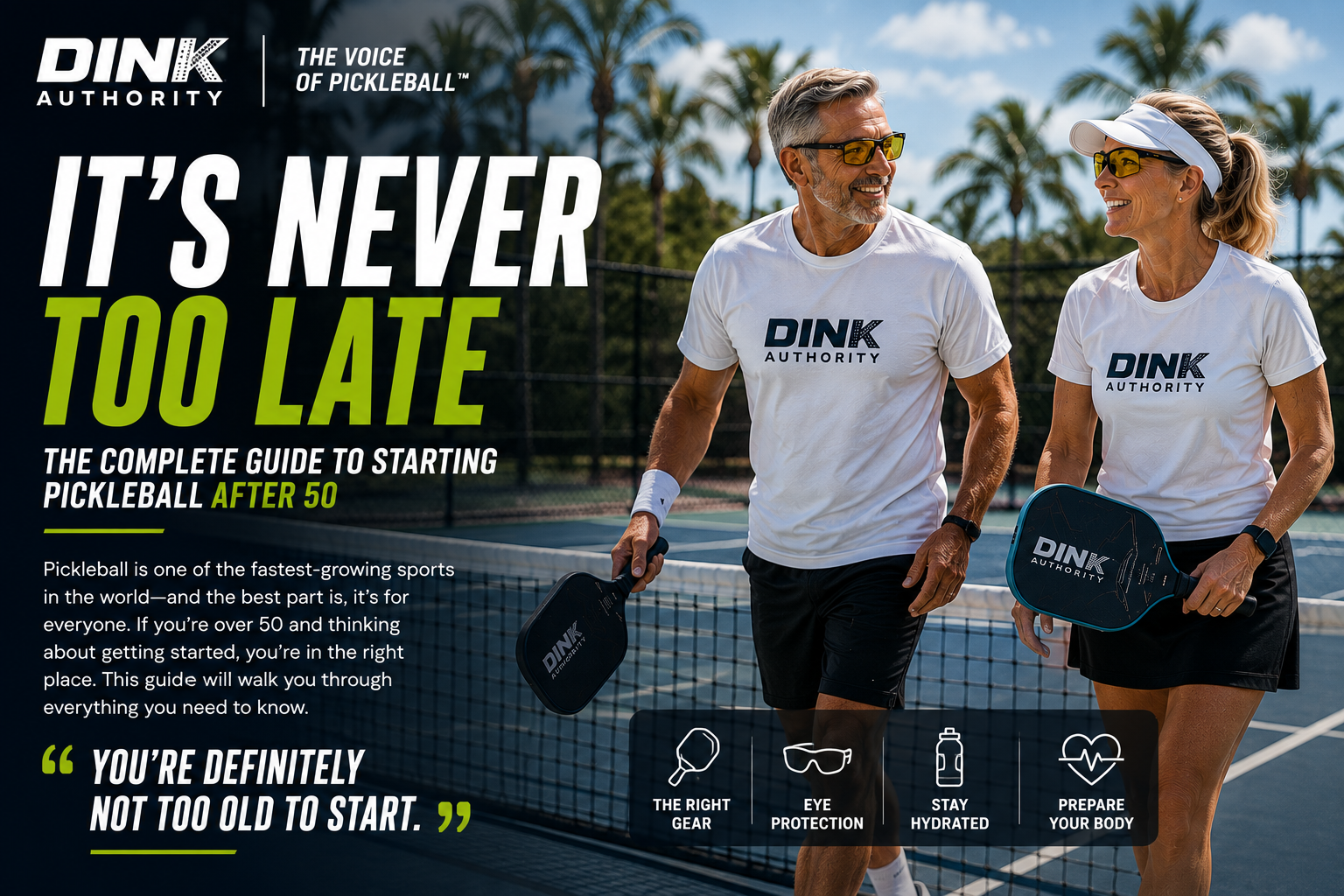
From the right gear to protecting your joints, everything you need to know to step onto the court with confidence — even if you haven't held a racket in 30 years.
Orlando, Florida — If you're over 50 and have been watching pickleball from the sidelines — literally or figuratively — this is your moment to take the step. You don't need previous experience in racket sports, you don't need to be in the best shape of your life, and you're definitely not "too old" to start. In fact, adults over 50 are one of the groups driving the fastest growth of this sport across the country.
Here's what you need to know before your first match.
The Gear: You Don't Need to Spend a Fortune to Get Started
The first thing you'll need is a paddle. For 50+ beginners, we recommend avoiding the ultra-light, high-end paddles built for competitive players — instead, look for a mid-weight paddle (between 7.5 and 8.3 ounces) with a comfortable grip for your hand. A grip that's too thick or too thin can create unnecessary strain on your wrist and elbow, so if possible, try a few before buying.
As for footwear, this is one of the most important decisions you'll make. Don't wear running shoes — they're designed for forward motion, not the quick lateral changes pickleball demands. Look for court-specific shoes (tennis, pickleball, or indoor volleyball) that offer good lateral support and ankle stability.
You don't need specialized clothing to get started. Comfortable, breathable athletic wear is enough.
Eye Protection: Non-Negotiable
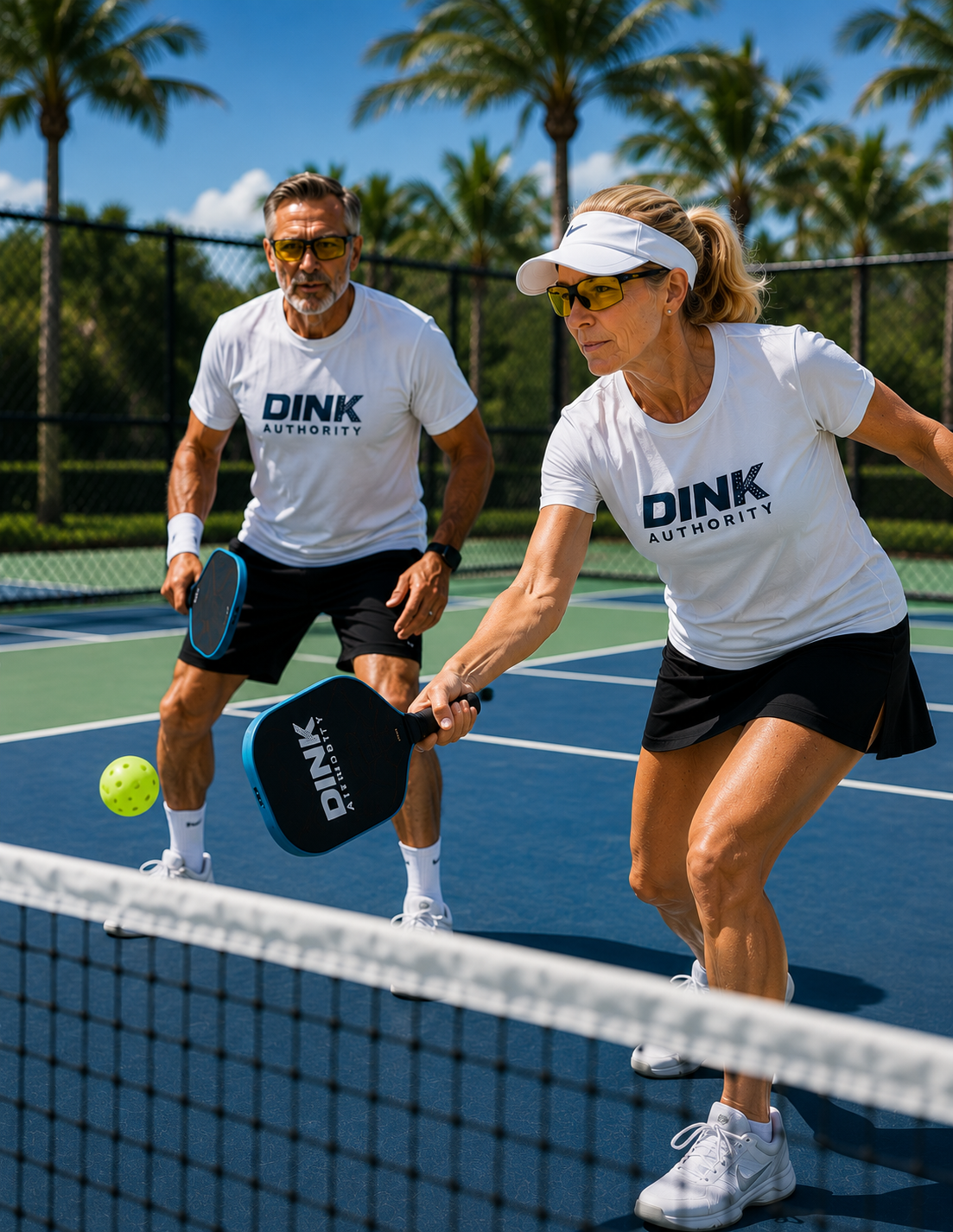
Here's something a lot of new players overlook that shouldn't be optional: protective eyewear. The pickleball travels fast, and direct hits to the face at close range at the net are more common than you'd think. You don't need to spend money on specialized sports-brand glasses — clear plastic safety glasses, the kind used in industrial or construction work, work perfectly. They fit well, they're inexpensive, and if you lose them or they get scratched, it doesn't hurt to replace them.
Here's a trick very few people know: if you can also get a yellow-tinted pair, you'll notice a real difference. Yellow lenses help improve focus and tone down light — both sunlight and artificial light on indoor courts. It's no coincidence that these are the same lenses used by shooters in target and skeet shooting: the contrast effect genuinely helps you see the ball more clearly.
The Accessories You Actually Need — and the One You Should Skip
LOVE PICKLEBALL?
Get Dink Authority Magazine updates, new editions, pro stories and event alerts.
We respect your privacy. Unsubscribe anytime.
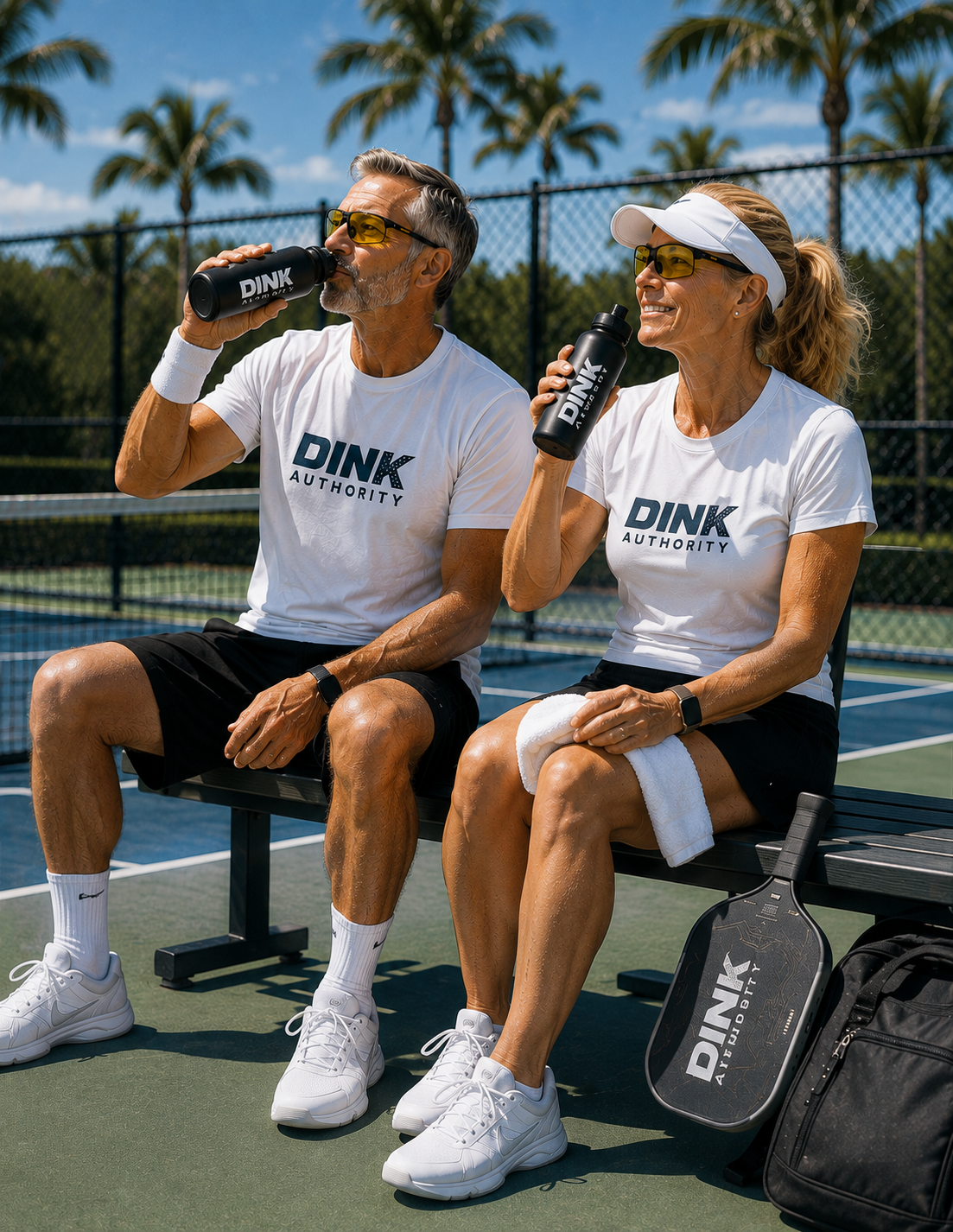
A good towel is essential. Dry off your paddle grip every chance you get — accumulated moisture makes the paddle slip in your hand at exactly the wrong moment.
A wristband also helps, especially if you sweat easily, to keep sweat from running down your arm to your hand.
What we don't recommend are golf gloves, which a lot of players use out of habit. Beyond not being the most practical option for pickleball's grip style, there's a real hygiene issue: the glove fills with sweat, stays damp inside your gear bag between matches, and over time that breeds fungus. If you sweat a lot, a towel plus a wristband is a much more practical and cleaner combination than a glove.
After playing, before putting the paddle away, apply a bit of medicated powder (antifungal talc) to the grip. It helps keep it dry and in good shape for your next session.
And, of course: water. Plenty of water, before, during, and after playing — especially if you're playing under the sun in climates like Florida's.
Physical Prep: Warming Up Isn't Optional
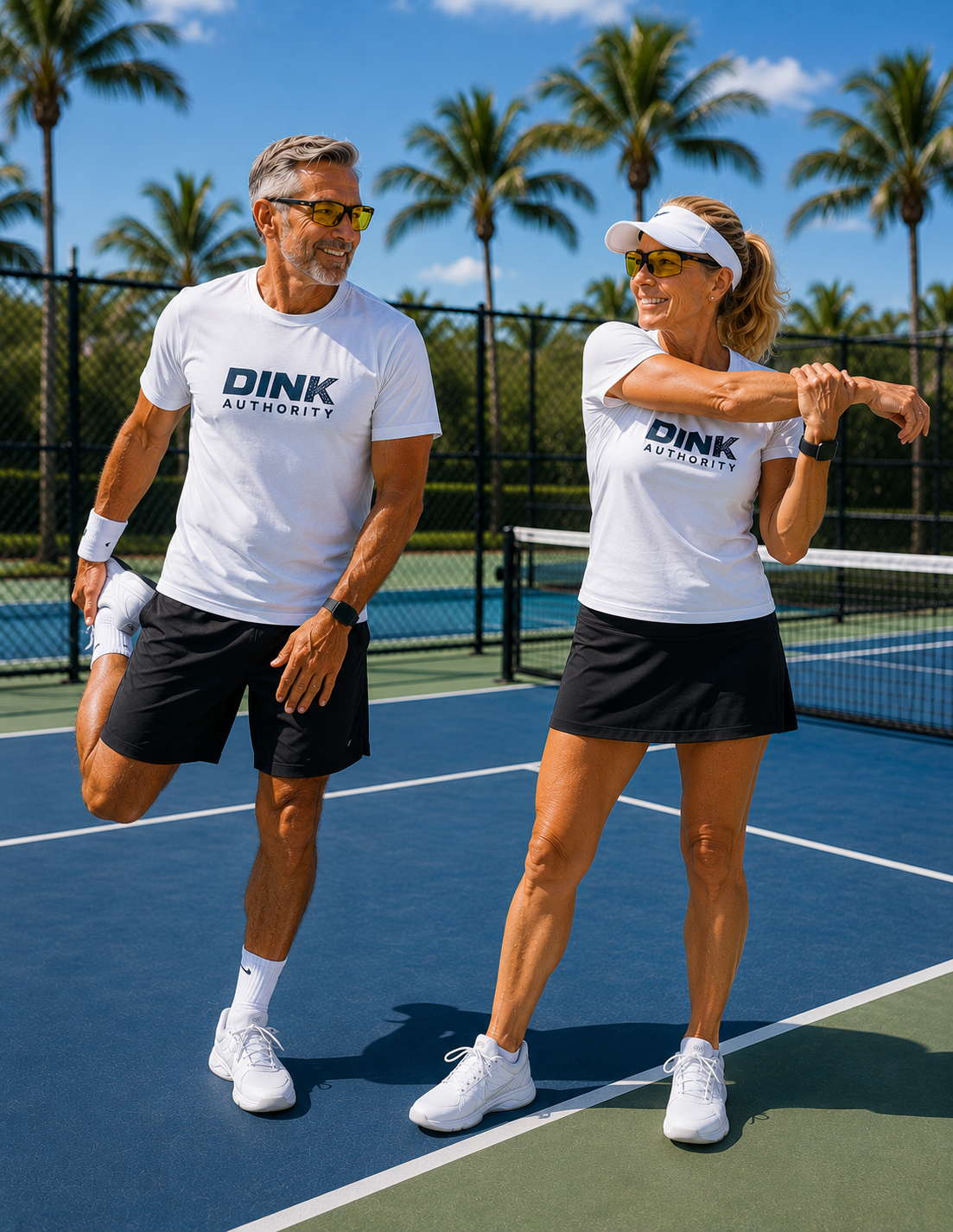
One of the most common mistakes among new players of any age — but especially after 50 — is skipping the warm-up. Spend at least 10 minutes before playing on joint mobility (ankles, knees, hips, shoulders), some light cardio to gradually raise your heart rate, and dynamic (not static) stretches for your legs and arms.
Pickleball involves movements a lot of adults don't do regularly in their day-to-day lives: quick changes of direction, sudden stops, and overhead shots. Strengthening your knees, ankles, and shoulders with simple resistance exercises — even just twice a week — can make a huge difference in preventing injuries over the medium term.
The most common injuries among 50+ players include ankle sprains (from quick direction changes), elbow tendinitis ("tennis elbow," though in pickleball it's actually even more common due to the shot mechanics), and knee issues from accumulated wear. Listening to your body, not playing through pain, and taking rest days between intense sessions are habits that will extend your time on the court, not shorten it.
Start Slow, Don't Compare Yourself
Pickleball looks deceptively simple from the outside — the court is small, the ball is light, and it seems like a relaxed game. The reality is it has its own learning curve, especially when it comes to strategy and positioning. Don't get frustrated if your first sessions feel clumsy. That's completely normal.
Most courts and clubs offer beginner clinics or "open play" sessions specifically designated for new players. Looking for these spaces instead of jumping straight into games with experienced players will give you more confidence and less pressure while you learn the basics: the serve, the "dink" (the soft shot near the net), and the rules of the non-volley zone ("the kitchen").
Good Manners: The Court Has Its Own Etiquette Too
Beyond the rules of the game, pickleball has its own culture of respect that's worth knowing from day one. Be respectful toward your partner and your opponents — celebrate good shots from the other side of the net, avoid unnecessary trash talk, and remember that most people are playing to have fun and build community, not to win at all costs. That attitude is actually one of the reasons so many older adults fall in love with this sport: the community is as good as the game itself.
Where to Play: The Community Already Exists — You Just Have to Find It
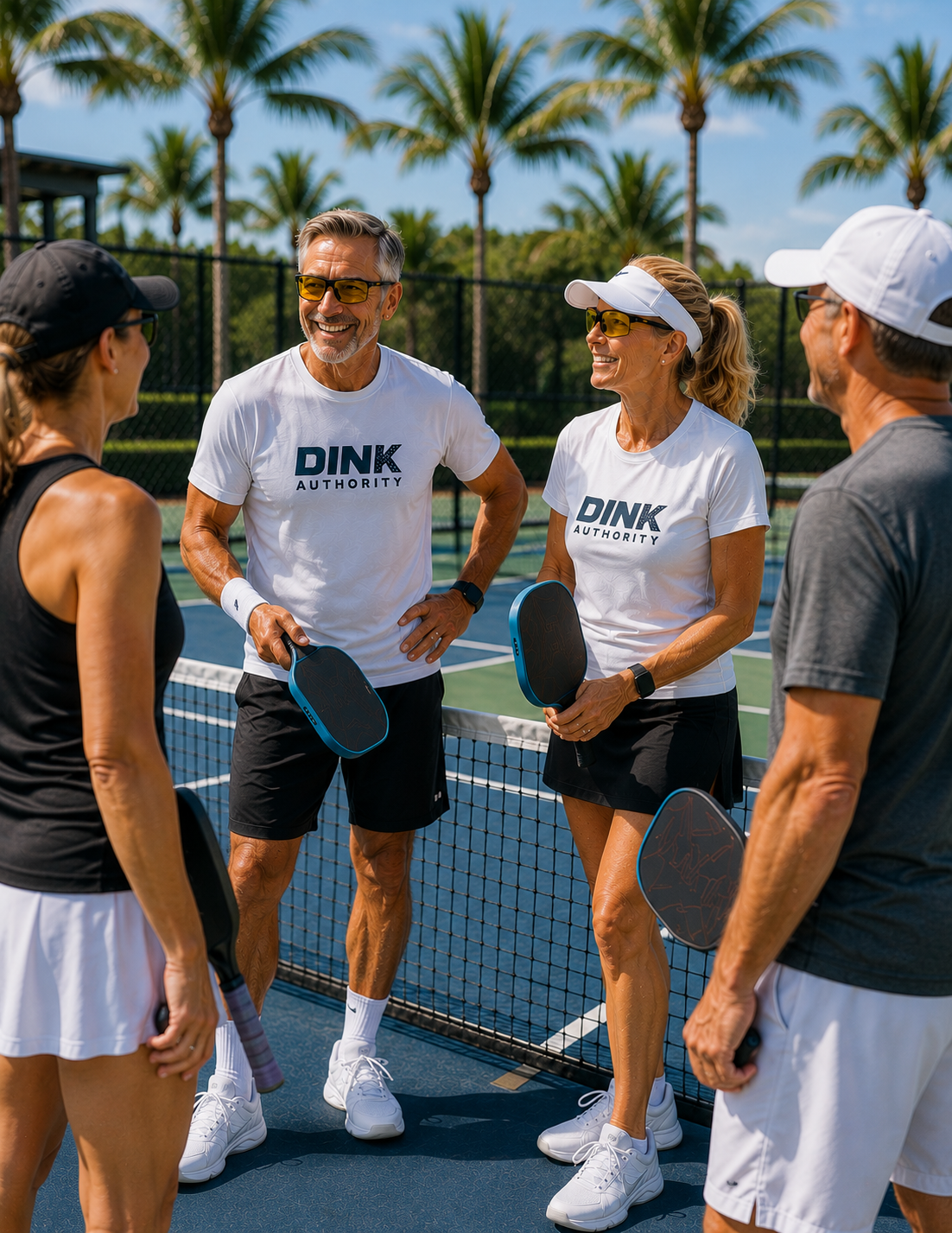
One of the best pieces of news for someone starting after 50 is that the pickleball community is already built and, for the most part, extremely welcoming. Some ways to find where to play:
Municipal recreation centers and public parks — most cities across the U.S. already have public pickleball courts, often free or low-cost
Retirement communities and senior clubs — many 55+ communities have leagues and courts dedicated exclusively to pickleball
Apps and organizing platforms — apps like DUPR, Playtime Scheduler, or local pickleball Facebook groups are great for finding sessions near you
YMCA or local gym clubs — many have already added pickleball courts or clinics to their facilities
If your city has a local pickleball league or association, joining is usually the fastest way to meet people, find playing partners at a similar level, and stay motivated with regular matches.
The Truth About Starting "Late"
There's no age limit on pickleball. The professional and amateur circuits have entire divisions dedicated to players 50, 60, and even 70+, with competitors who started playing just a few years before stepping onto the podium. The sport was designed, from its origin, to be accessible — a small court, simple rules, and a learning curve that rewards strategy and placement over raw power or pure speed.
If you've been thinking about it for a while, this is your sign. Get a paddle, a good pair of shoes, protective eyewear, and find the nearest public court. The rest — the community, the improvement, and probably a new passion — takes care of itself.
From the right gear to protecting your joints, everything you need to know to step onto the court with confidence — even if you haven't held a racket in 30 years.
Orlando, Florida — If you're over 50 and have been watching pickleball from the sidelines — literally or figuratively — this is your moment to take the step. You don't need previous experience in racket sports, you don't need to be in the best shape of your life, and you're definitely not "too old" to start. In fact, adults over 50 are one of the groups driving the fastest growth of this sport across the country.
Here's what you need to know before your first match.
The Gear: You Don't Need to Spend a Fortune to Get Started
The first thing you'll need is a paddle. For 50+ beginners, we recommend avoiding the ultra-light, high-end paddles built for competitive players — instead, look for a mid-weight paddle (between 7.5 and 8.3 ounces) with a comfortable grip for your hand. A grip that's too thick or too thin can create unnecessary strain on your wrist and elbow, so if possible, try a few before buying.
As for footwear, this is one of the most important decisions you'll make. Don't wear running shoes — they're designed for forward motion, not the quick lateral changes pickleball demands. Look for court-specific shoes (tennis, pickleball, or indoor volleyball) that offer good lateral support and ankle stability.
You don't need specialized clothing to get started. Comfortable, breathable athletic wear is enough.
Eye Protection: Non-Negotiable

Here's something a lot of new players overlook that shouldn't be optional: protective eyewear. The pickleball travels fast, and direct hits to the face at close range at the net are more common than you'd think. You don't need to spend money on specialized sports-brand glasses — clear plastic safety glasses, the kind used in industrial or construction work, work perfectly. They fit well, they're inexpensive, and if you lose them or they get scratched, it doesn't hurt to replace them.
Here's a trick very few people know: if you can also get a yellow-tinted pair, you'll notice a real difference. Yellow lenses help improve focus and tone down light — both sunlight and artificial light on indoor courts. It's no coincidence that these are the same lenses used by shooters in target and skeet shooting: the contrast effect genuinely helps you see the ball more clearly.
The Accessories You Actually Need — and the One You Should Skip
LOVE PICKLEBALL?
Get Dink Authority Magazine updates, new editions, pro stories and event alerts.
We respect your privacy. Unsubscribe anytime.
A good towel is essential. Dry off your paddle grip every chance you get — accumulated moisture makes the paddle slip in your hand at exactly the wrong moment.
A wristband also helps, especially if you sweat easily, to keep sweat from running down your arm to your hand.
What we don't recommend are golf gloves, which a lot of players use out of habit. Beyond not being the most practical option for pickleball's grip style, there's a real hygiene issue: the glove fills with sweat, stays damp inside your gear bag between matches, and over time that breeds fungus. If you sweat a lot, a towel plus a wristband is a much more practical and cleaner combination than a glove.
After playing, before putting the paddle away, apply a bit of medicated powder (antifungal talc) to the grip. It helps keep it dry and in good shape for your next session.
And, of course: water. Plenty of water, before, during, and after playing — especially if you're playing under the sun in climates like Florida's.

Physical Prep: Warming Up Isn't Optional
One of the most common mistakes among new players of any age — but especially after 50 — is skipping the warm-up. Spend at least 10 minutes before playing on joint mobility (ankles, knees, hips, shoulders), some light cardio to gradually raise your heart rate, and dynamic (not static) stretches for your legs and arms.
Pickleball involves movements a lot of adults don't do regularly in their day-to-day lives: quick changes of direction, sudden stops, and overhead shots. Strengthening your knees, ankles, and shoulders with simple resistance exercises — even just twice a week — can make a huge difference in preventing injuries over the medium term.
The most common injuries among 50+ players include ankle sprains (from quick direction changes), elbow tendinitis ("tennis elbow," though in pickleball it's actually even more common due to the shot mechanics), and knee issues from accumulated wear. Listening to your body, not playing through pain, and taking rest days between intense sessions are habits that will extend your time on the court, not shorten it.
Start Slow, Don't Compare Yourself
Pickleball looks deceptively simple from the outside — the court is small, the ball is light, and it seems like a relaxed game. The reality is it has its own learning curve, especially when it comes to strategy and positioning. Don't get frustrated if your first sessions feel clumsy. That's completely normal.
Most courts and clubs offer beginner clinics or "open play" sessions specifically designated for new players. Looking for these spaces instead of jumping straight into games with experienced players will give you more confidence and less pressure while you learn the basics: the serve, the "dink" (the soft shot near the net), and the rules of the non-volley zone ("the kitchen").
Good Manners: The Court Has Its Own Etiquette Too

Beyond the rules of the game, pickleball has its own culture of respect that's worth knowing from day one. Be respectful toward your partner and your opponents — celebrate good shots from the other side of the net, avoid unnecessary trash talk, and remember that most people are playing to have fun and build community, not to win at all costs. That attitude is actually one of the reasons so many older adults fall in love with this sport: the community is as good as the game itself.
Where to Play: The Community Already Exists — You Just Have to Find It
One of the best pieces of news for someone starting after 50 is that the pickleball community is already built and, for the most part, extremely welcoming. Some ways to find where to play:
Municipal recreation centers and public parks — most cities across the U.S. already have public pickleball courts, often free or low-cost
Retirement communities and senior clubs — many 55+ communities have leagues and courts dedicated exclusively to pickleball
Apps and organizing platforms — apps like DUPR, Playtime Scheduler, or local pickleball Facebook groups are great for finding sessions near you
YMCA or local gym clubs — many have already added pickleball courts or clinics to their facilities
If your city has a local pickleball league or association, joining is usually the fastest way to meet people, find playing partners at a similar level, and stay motivated with regular matches.
The Truth About Starting "Late"
There's no age limit on pickleball. The professional and amateur circuits have entire divisions dedicated to players 50, 60, and even 70+, with competitors who started playing just a few years before stepping onto the podium. The sport was designed, from its origin, to be accessible — a small court, simple rules, and a learning curve that rewards strategy and placement over raw power or pure speed.
If you've been thinking about it for a while, this is your sign. Get a paddle, a good pair of shoes, protective eyewear, and find the nearest public court. The rest — the community, the improvement, and probably a new passion — takes care of itself.
Gallery