The Mental Side of Pickleball Nobody Talks About: The Seven Dimensions Every Player Needs
The Mental Side of Pickleball Nobody Talks About: The Seven Dimensions Every Player Needs
The scoreboard tells you who won. It never tells you why.
Have you ever lost to a pickleball player you knew you could beat? Someone you had beaten before. Someone whose shots you could read and whose weaknesses you understood. And yet, somehow, you lost.
Maybe it started with a questionable line call. Maybe you rushed a shot you normally make. Maybe your partner seemed frustrated, and suddenly you were thinking more about their reaction than the ball coming toward you. The final score showed who won, but not why.
Unfortunately, pickleball has become increasingly focused on the measurable. We compare ratings, track scores, study court positioning, analyze shot selection, debate paddle technology, and spend hours drilling serves, drops, and resets. Technique matters, and competition is part of what makes pickleball compelling. But when we only chase ratings, we miss everything else that matters.
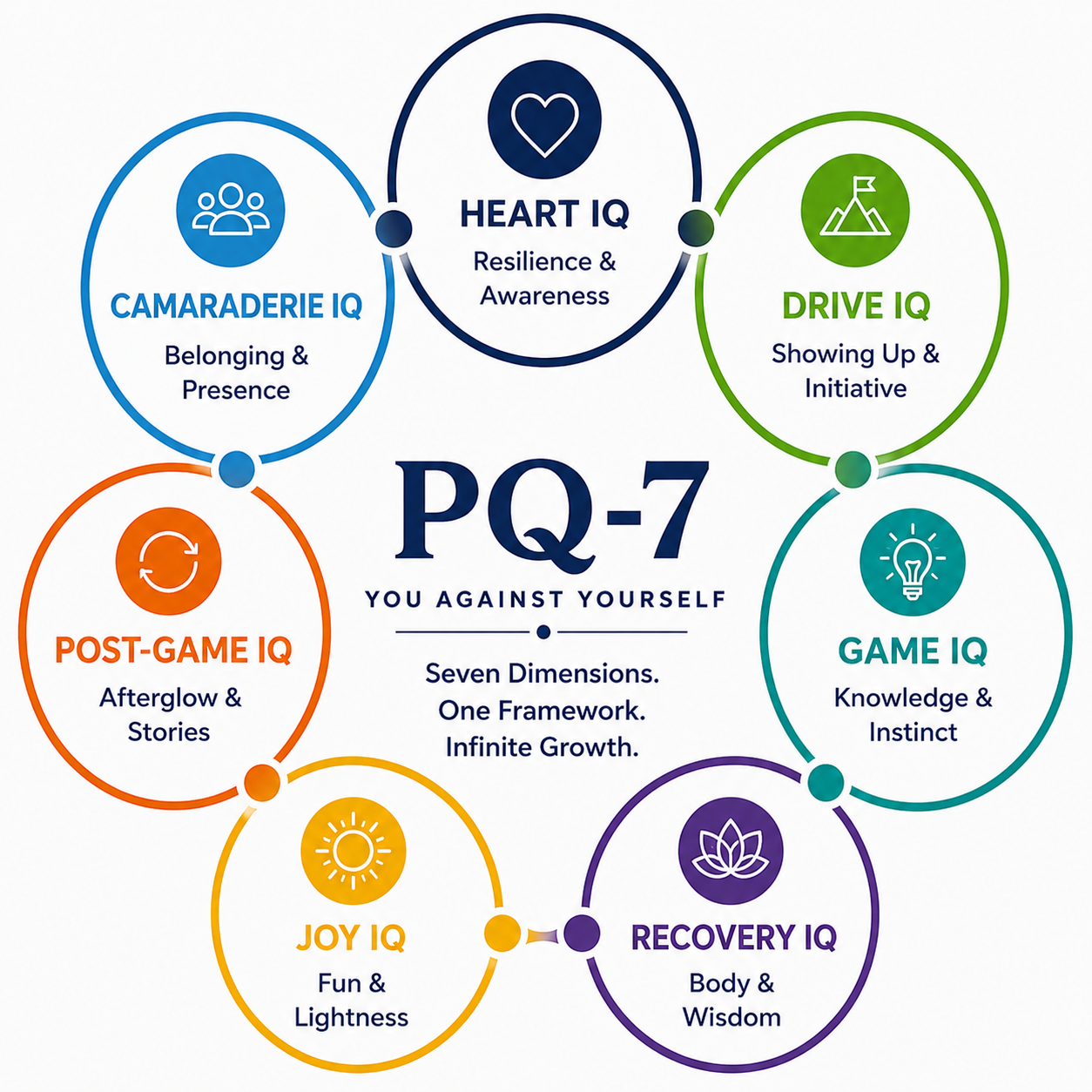
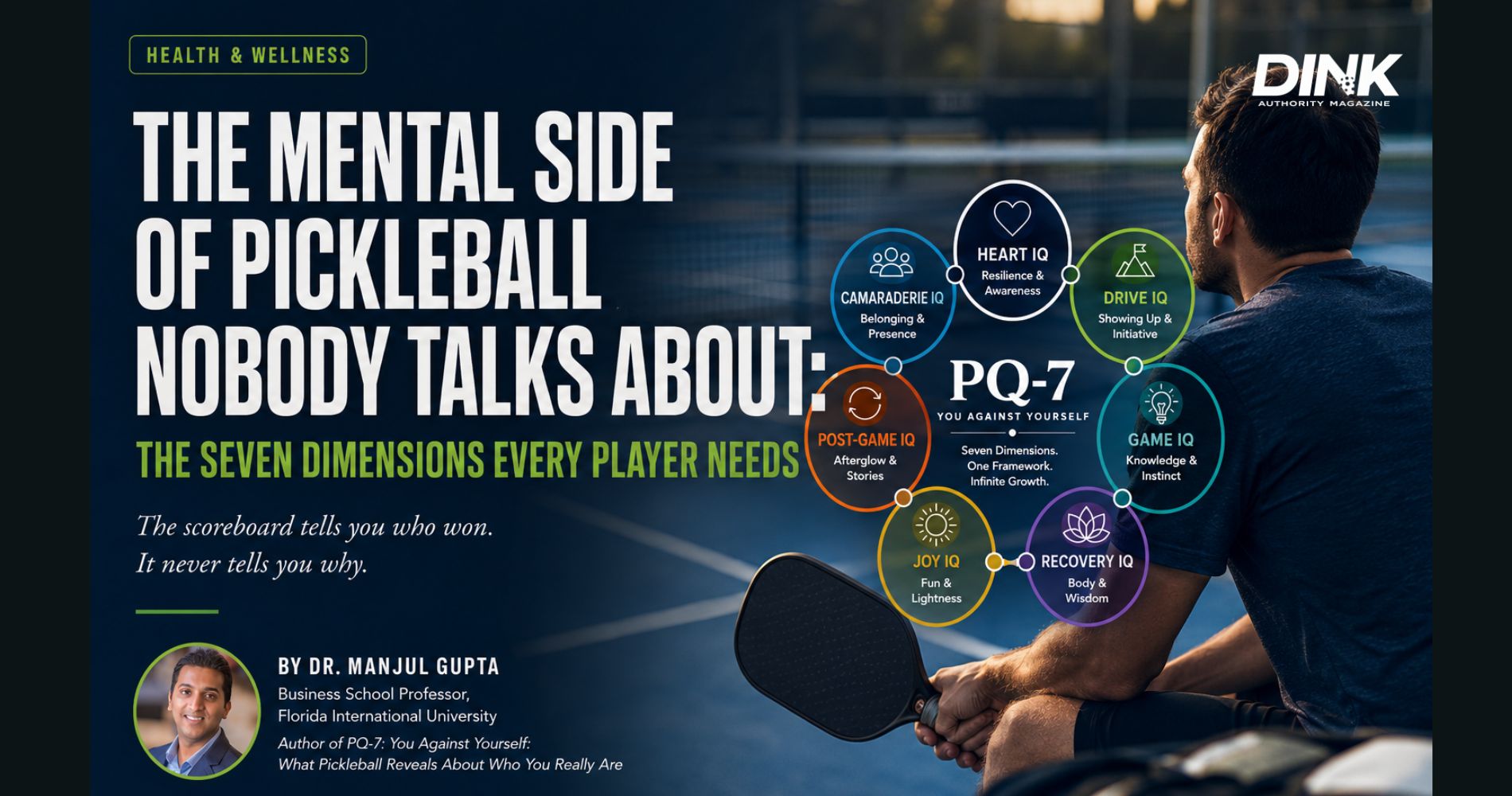
There is a side of pickleball that rarely appears on a scorecard. It includes emotional resilience, motivation, self-awareness, relationships, physical judgment, and the ability to hold on to the enjoyment that brought most of us to the court in the first place. Together, these dimensions form the basis of PQ-7, or Pickleball Quotient, a framework for understanding the parts of the game that technical skill alone cannot explain.
LOVE PICKLEBALL?
Get Dink Authority Magazine updates, new editions, pro stories and event alerts.
We respect your privacy. Unsubscribe anytime.
Consider what happens after a costly mistake. One player takes a breath and prepares for the next rally. Another spends the next several points replaying the moment and tightening up. The mistake may have been the same, but the response changes everything. Heart IQ speaks to that difference. It involves resilience under pressure, awareness of your emotional state, and the ability to notice what your partner might be experiencing beside you. A player who can reset emotionally often changes the direction of a game without changing a single stroke.
Then there is the quieter question of why we show up. Some days, getting to the court requires little effort. Other days, work has been exhausting, life feels complicated, or confidence is running low. Drive IQ is reflected in consistency, initiative, and the willingness to keep participating even when conditions are not ideal. It is not about treating recreational pickleball like a professional obligation. It is about recognizing that progress often begins before the first serve, in the simple decision to be present.
Game IQ is the dimension most closely connected to what players already discuss, but even here, the mental side runs deeper than strategy. Knowing where to stand is different from remembering where to stand when the score is close. Understanding an opponent's tendencies is different from adjusting in the middle of a frustrating rally. Good decisions depend not only on knowledge but also on patience, anticipation, and the ability to access what you know when pressure makes everything feel faster. A player can understand the right shot perfectly and still abandon it the moment nerves take over.
Recovery IQ asks players to consider something many would rather ignore: whether they are listening to their bodies. Pickleball has a way of making one more game feel harmless until the ankle, wrist, shoulder, or lower back disagrees. The challenge is not simply enduring discomfort. Sometimes it is recognizing when to stop, modify your movement, or take a day off. That kind of judgment rarely earns applause, but it can determine whether someone stays in the sport for years or spends the next several weeks watching from the sidelines.
Joy IQ may be the easiest dimension to dismiss and the hardest to replace once it disappears. Most of us did not begin playing pickleball because we wanted another source of pressure. We started because the game was accessible, social, competitive, and fun. Somewhere along the way, it becomes possible to lose sight of that. A missed shot feels like a personal failure. A loss ruins the afternoon. A rating starts to matter more than the people standing across the net. Taking the game seriously does not require taking every moment so seriously that enjoyment becomes impossible.
The experience does not end when the playing session is over. A ridiculous rally, an impossible lob, a questionable kitchen call, a missed opportunity, or a conversation with a new partner can become part of a group chat or a dinner table story shared with someone who was not even there. Post-Game IQ is about how we process, remember, and carry those moments forward. The game may be over, but its afterglow can stay with us much longer.
Camaraderie IQ brings the wider picture into focus. Pickleball may involve individual skill, but its culture is built through shared experience. Players remember who welcomed them when they were new, who encouraged them after a rough game, and who made room for them in a regular group. They also notice when someone consistently blames a partner or treats less experienced players as inconveniences. Belonging does not happen automatically. It grows when people choose to be present for one another and recognize that the quality of a game includes the people playing it.
These seven dimensions do not replace technique, competition, or the desire to improve. They add context. They explain why a technically strong player can unravel under pressure, why another becomes the partner everyone wants, and why some people leave the court energized even after a difficult loss. They also offer a broader understanding of growth, one that includes judgment, resilience, connection, and enjoyment alongside performance.
The next time you find yourself wondering why you lost to someone you thought you could beat, the answer may have less to do with your paddle or your backhand than you expect. It may be hidden in the point you could not let go of, the signal your body tried to send, the partner you stopped noticing, or the fun you forgot to have.
Pickleball will always have scores, ratings, and winners. But if those are the only things we pay attention to, we risk missing what makes the game worth returning to. The most important contest on the court is not always between you and the person across the net. Sometimes, it is between the player you are in that moment and the player you are learning to become.
Dr. Manjul Gupta is a business school professor at Florida International University and the author of PQ-7: You Against Yourself: What Pickleball Reveals About Who You Really Are.
The Mental Side of Pickleball Nobody Talks About: The Seven Dimensions Every Player Needs
The scoreboard tells you who won. It never tells you why.
Have you ever lost to a pickleball player you knew you could beat? Someone you had beaten before. Someone whose shots you could read and whose weaknesses you understood. And yet, somehow, you lost.
Maybe it started with a questionable line call. Maybe you rushed a shot you normally make. Maybe your partner seemed frustrated, and suddenly you were thinking more about their reaction than the ball coming toward you. The final score showed who won, but not why.
Current Issue

Domenika Turkovic: Fighting Her Own Demons
Read Now →
Unfortunately, pickleball has become increasingly focused on the measurable. We compare ratings, track scores, study court positioning, analyze shot selection, debate paddle technology, and spend hours drilling serves, drops, and resets. Technique matters, and competition is part of what makes pickleball compelling. But when we only chase ratings, we miss everything else that matters.
There is a side of pickleball that rarely appears on a scorecard. It includes emotional resilience, motivation, self-awareness, relationships, physical judgment, and the ability to hold on to the enjoyment that brought most of us to the court in the first place. Together, these dimensions form the basis of PQ-7, or Pickleball Quotient, a framework for understanding the parts of the game that technical skill alone cannot explain.
LOVE PICKLEBALL?
Get Dink Authority Magazine updates, new editions, pro stories and event alerts.
We respect your privacy. Unsubscribe anytime.
Consider what happens after a costly mistake. One player takes a breath and prepares for the next rally. Another spends the next several points replaying the moment and tightening up. The mistake may have been the same, but the response changes everything. Heart IQ speaks to that difference. It involves resilience under pressure, awareness of your emotional state, and the ability to notice what your partner might be experiencing beside you. A player who can reset emotionally often changes the direction of a game without changing a single stroke.
Then there is the quieter question of why we show up. Some days, getting to the court requires little effort. Other days, work has been exhausting, life feels complicated, or confidence is running low. Drive IQ is reflected in consistency, initiative, and the willingness to keep participating even when conditions are not ideal. It is not about treating recreational pickleball like a professional obligation. It is about recognizing that progress often begins before the first serve, in the simple decision to be present.

Game IQ is the dimension most closely connected to what players already discuss, but even here, the mental side runs deeper than strategy. Knowing where to stand is different from remembering where to stand when the score is close. Understanding an opponent's tendencies is different from adjusting in the middle of a frustrating rally. Good decisions depend not only on knowledge but also on patience, anticipation, and the ability to access what you know when pressure makes everything feel faster. A player can understand the right shot perfectly and still abandon it the moment nerves take over.
Recovery IQ asks players to consider something many would rather ignore: whether they are listening to their bodies. Pickleball has a way of making one more game feel harmless until the ankle, wrist, shoulder, or lower back disagrees. The challenge is not simply enduring discomfort. Sometimes it is recognizing when to stop, modify your movement, or take a day off. That kind of judgment rarely earns applause, but it can determine whether someone stays in the sport for years or spends the next several weeks watching from the sidelines.
Joy IQ may be the easiest dimension to dismiss and the hardest to replace once it disappears. Most of us did not begin playing pickleball because we wanted another source of pressure. We started because the game was accessible, social, competitive, and fun. Somewhere along the way, it becomes possible to lose sight of that. A missed shot feels like a personal failure. A loss ruins the afternoon. A rating starts to matter more than the people standing across the net. Taking the game seriously does not require taking every moment so seriously that enjoyment becomes impossible.
The experience does not end when the playing session is over. A ridiculous rally, an impossible lob, a questionable kitchen call, a missed opportunity, or a conversation with a new partner can become part of a group chat or a dinner table story shared with someone who was not even there. Post-Game IQ is about how we process, remember, and carry those moments forward. The game may be over, but its afterglow can stay with us much longer.

Camaraderie IQ brings the wider picture into focus. Pickleball may involve individual skill, but its culture is built through shared experience. Players remember who welcomed them when they were new, who encouraged them after a rough game, and who made room for them in a regular group. They also notice when someone consistently blames a partner or treats less experienced players as inconveniences. Belonging does not happen automatically. It grows when people choose to be present for one another and recognize that the quality of a game includes the people playing it.
These seven dimensions do not replace technique, competition, or the desire to improve. They add context. They explain why a technically strong player can unravel under pressure, why another becomes the partner everyone wants, and why some people leave the court energized even after a difficult loss. They also offer a broader understanding of growth, one that includes judgment, resilience, connection, and enjoyment alongside performance.
The next time you find yourself wondering why you lost to someone you thought you could beat, the answer may have less to do with your paddle or your backhand than you expect. It may be hidden in the point you could not let go of, the signal your body tried to send, the partner you stopped noticing, or the fun you forgot to have.
Pickleball will always have scores, ratings, and winners. But if those are the only things we pay attention to, we risk missing what makes the game worth returning to. The most important contest on the court is not always between you and the person across the net. Sometimes, it is between the player you are in that moment and the player you are learning to become.
Dr. Manjul Gupta is a business school professor at Florida International University and the author of PQ-7: You Against Yourself: What Pickleball Reveals About Who You Really Are.
Gallery