
What If Your Pickleball Life Had a Score? | PQ-7
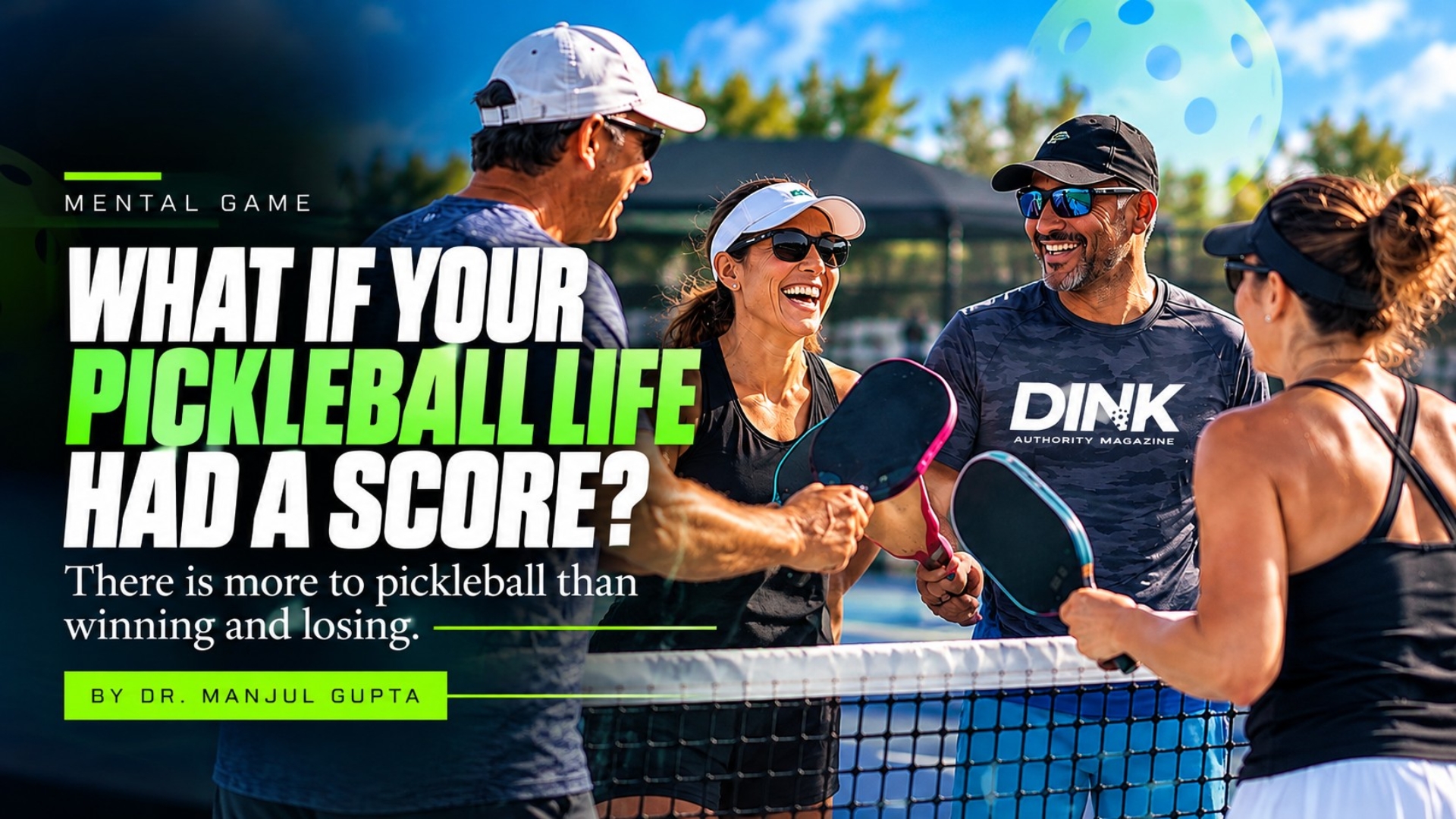
What If Your Pickleball Life Had a Score?
There is more to pickleball than winning and losing.
By Dr. Manjul Gupta
Most people start playing pickleball because somebody invites them. A friend says, "Come play with us over a weekend." Someone buys a paddle, learns a few basic rules, and figures it might be a fun way to get some cardio for a couple of hours. At that point, it is simply another recreational activity.
But something interesting often happens after a few weeks. Pickleball starts taking up a little more shelf space in your life.
You have your family. You have your workplace. You have friends you have known for years. And then, almost without realizing it, you develop another circle: your picklers (your pickleball people). There is a group chat. Someone is figuring out who can play Saturday. Someone is checking the weather. Someone is looking for another player because only three people have confirmed. Somebody has found a new court. Somebody wants to start at 7:00 a.m. instead of 7:30 because it is getting too hot. Soon, these are not just people you happen to play a sport with. They become part of your week.
Recreational pickleball creates relationships very quickly. At public courts, you may regularly play with people whose last names you do not know. You may know very little about what they do outside the court. Still, you quickly learn who they are when they play. You know who keeps everyone laughing. You know who takes every line call seriously. You know who seems to know every rule and every new paddle. And you know who keeps promising to bring the drinks next time, and that "next time" never arrives.
These things sound small, but they become part of a player's recreational experience. You remember them. You talk about them later in the evening with your family and non-pickleball friends. They become running jokes and stories that belong to the group.
LOVE PICKLEBALL?
Get Dink Authority Magazine updates, new editions, pro stories and event alerts.
We respect your privacy. Unsubscribe anytime.
That is why I have started thinking about something I would call a person's "pickleball life."
Your pickleball life is bigger than the games you play. It includes the anticipation before you play, how you prepare yourself before the game, the people you see, the conversations afterward, the group messages, the frustration, the improvement, the injuries, the laughter, and the stories that continue long after everyone has left the court.
Sometimes you see how important that life has become when somebody cannot play. I have known players dealing with health issues who still wanted to know what was happening with the group. I have seen people recovering from injuries asking when they could get back on the court. It is not always because they are desperate to compete. Sometimes they simply miss being there. They miss the people. They miss the routine. They miss the part of their week that pickleball had quietly become. They miss their pickleball life.
That tells us something important about pickleball as a recreational sport.
We usually measure sport through things that are easy to count. Did you win? How many goals did you score? What is your golf handicap? What is your ranking? Those measures are useful, and competition is part of what makes sport fun. But they do not completely explain the experience people are having or why they keep coming back.
A player can lose almost every game on a Saturday morning and still drive home feeling great. Another player can win and somehow leave irritated. Someone may play poorly but meet a person who eventually becomes part of their regular group. Someone else may finally realize that the wrist or knee they have been ignoring needs a few days off. And sometimes one ridiculous rally becomes the only thing anyone talks about that evening.
That broader experience is what interests me.
Over the last few years, I have started thinking about whether there is a way to make some of the invisible parts of a person's pickleball life more visible. The friendships, the routines, the emotions, the stories, the way you respond to setbacks, the way you take care of your body, and the reasons you keep coming back. That led me to a simple question: What if your pickleball life had a score? I started wondering whether we could measure that experience as it happens. I call that the Pickleball Quotient (or PQ-7). Think of it as an evolving number that grows with your pickleball journey and reflects the recreational experiences you build over time every time you play, regardless of whether you win or lose.
Because one Saturday does not define you. You can have a terrible morning and learn something important from it. You can have a great morning and barely remember the score a week later. What becomes interesting is what happens over time.
Are you getting better at letting go? Are you taking better care of yourself? Are you still excited to play? Are you learning more about the game? Are you building relationships that make you want to come back? Are you becoming the kind of person other people enjoy seeing at the court?
Those are very different questions from "Did I win?"
And maybe that is part of why pickleball has such a strong hold on recreational players. We think we are returning because we want another game. But we return because people are expecting us. Because somebody has already started the group chat. Because we want another chance at the shot we missed last week. Because someone still owes the group drinks. Because for a couple of hours we compete, laugh, argue, move, learn, and step away from everything else happening in our lives.
At some point, pickleball stops being something you occasionally do. You have built a pickleball life. And maybe that life is worth paying attention to.
Dr. Manjul Gupta is a business school professor at Florida International University and the creator of the Pickleball Quotient (PQ-7). He is also the author of PQ-7: You Against Yourself: What Pickleball Reveals About Who You Really Are.
What If Your Pickleball Life Had a Score?
There is more to pickleball than winning and losing.
By Dr. Manjul Gupta
Most people start playing pickleball because somebody invites them. A friend says, "Come play with us over a weekend." Someone buys a paddle, learns a few basic rules, and figures it might be a fun way to get some cardio for a couple of hours. At that point, it is simply another recreational activity.
But something interesting often happens after a few weeks. Pickleball starts taking up a little more shelf space in your life.
Current Issue

Domenika Turkovic: Fighting Her Own Demons
Read Now →
You have your family. You have your workplace. You have friends you have known for years. And then, almost without realizing it, you develop another circle: your picklers (your pickleball people). There is a group chat. Someone is figuring out who can play Saturday. Someone is checking the weather. Someone is looking for another player because only three people have confirmed. Somebody has found a new court. Somebody wants to start at 7:00 a.m. instead of 7:30 because it is getting too hot. Soon, these are not just people you happen to play a sport with. They become part of your week.
Recreational pickleball creates relationships very quickly. At public courts, you may regularly play with people whose last names you do not know. You may know very little about what they do outside the court. Still, you quickly learn who they are when they play. You know who keeps everyone laughing. You know who takes every line call seriously. You know who seems to know every rule and every new paddle. And you know who keeps promising to bring the drinks next time, and that "next time" never arrives.
These things sound small, but they become part of a player's recreational experience. You remember them. You talk about them later in the evening with your family and non-pickleball friends. They become running jokes and stories that belong to the group.
LOVE PICKLEBALL?
Get Dink Authority Magazine updates, new editions, pro stories and event alerts.
We respect your privacy. Unsubscribe anytime.
That is why I have started thinking about something I would call a person's "pickleball life."
Your pickleball life is bigger than the games you play. It includes the anticipation before you play, how you prepare yourself before the game, the people you see, the conversations afterward, the group messages, the frustration, the improvement, the injuries, the laughter, and the stories that continue long after everyone has left the court.
Sometimes you see how important that life has become when somebody cannot play. I have known players dealing with health issues who still wanted to know what was happening with the group. I have seen people recovering from injuries asking when they could get back on the court. It is not always because they are desperate to compete. Sometimes they simply miss being there. They miss the people. They miss the routine. They miss the part of their week that pickleball had quietly become. They miss their pickleball life.

That tells us something important about pickleball as a recreational sport.
We usually measure sport through things that are easy to count. Did you win? How many goals did you score? What is your golf handicap? What is your ranking? Those measures are useful, and competition is part of what makes sport fun. But they do not completely explain the experience people are having or why they keep coming back.
A player can lose almost every game on a Saturday morning and still drive home feeling great. Another player can win and somehow leave irritated. Someone may play poorly but meet a person who eventually becomes part of their regular group. Someone else may finally realize that the wrist or knee they have been ignoring needs a few days off. And sometimes one ridiculous rally becomes the only thing anyone talks about that evening.
That broader experience is what interests me.
Over the last few years, I have started thinking about whether there is a way to make some of the invisible parts of a person's pickleball life more visible. The friendships, the routines, the emotions, the stories, the way you respond to setbacks, the way you take care of your body, and the reasons you keep coming back. That led me to a simple question: What if your pickleball life had a score? I started wondering whether we could measure that experience as it happens. I call that the Pickleball Quotient (or PQ-7). Think of it as an evolving number that grows with your pickleball journey and reflects the recreational experiences you build over time every time you play, regardless of whether you win or lose.

Because one Saturday does not define you. You can have a terrible morning and learn something important from it. You can have a great morning and barely remember the score a week later. What becomes interesting is what happens over time.
Are you getting better at letting go? Are you taking better care of yourself? Are you still excited to play? Are you learning more about the game? Are you building relationships that make you want to come back? Are you becoming the kind of person other people enjoy seeing at the court?
Those are very different questions from "Did I win?"
And maybe that is part of why pickleball has such a strong hold on recreational players. We think we are returning because we want another game. But we return because people are expecting us. Because somebody has already started the group chat. Because we want another chance at the shot we missed last week. Because someone still owes the group drinks. Because for a couple of hours we compete, laugh, argue, move, learn, and step away from everything else happening in our lives.
At some point, pickleball stops being something you occasionally do. You have built a pickleball life. And maybe that life is worth paying attention to.
Dr. Manjul Gupta is a business school professor at Florida International University and the creator of the Pickleball Quotient (PQ-7). He is also the author of PQ-7: You Against Yourself: What Pickleball Reveals About Who You Really Are.