Pickleball No Longer Fits in Just One Language
A few weeks ago I discovered something that had me thinking for days: when someone in Colombia, Mexico, or any Spanish-speaking country searches Google for "what is pickleball," results do show up — there's no shortage of those. What's missing is currency. There's no editorial voice. No continuity. No one telling you what happened yesterday, what's being played today, who won this weekend. There are definitions, but there's no journalism.
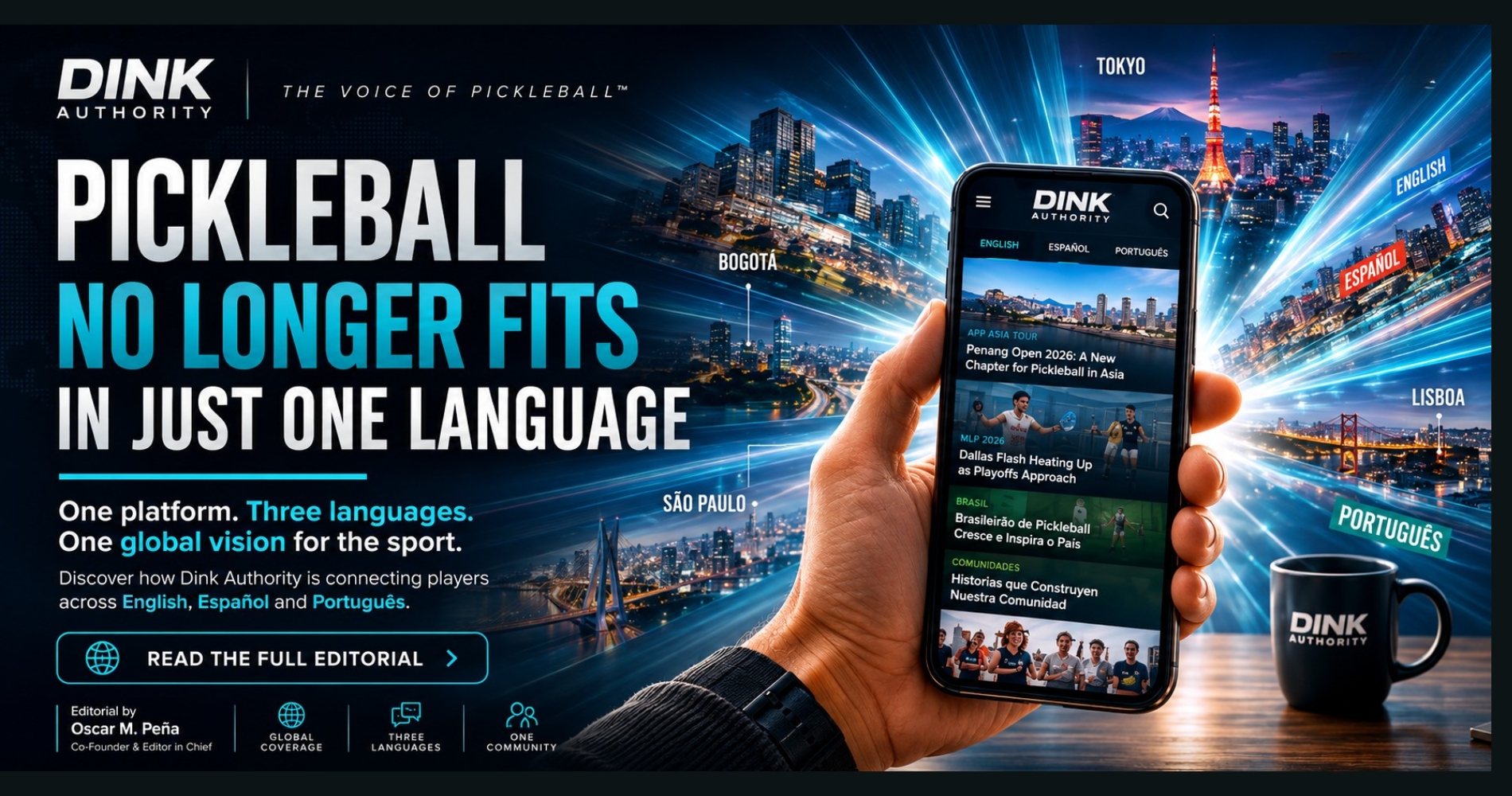
That discovery confirmed something we'd been suspecting at DINK Authority for a while: pickleball grew up in English, but it isn't going to stay in English. This month we closed out — after months of technical work, mistakes, corrections, and long discussions with our development team — the migration to a sports platform specialized, of course, in pickleball: with real news, life stories, tips, and an app you can now download for free to see all our content in three languages.
It hasn't been an easy transition. Publishing a monthly magazine — which is already a massive amount of work on its own — is not the same as reporting daily. We're still rooted in what defines us: the monthly magazine, available digitally on the app and on the web platform, and printed on demand for the United States. But we no longer limit ourselves to that. The countless messages and emails that kept coming in gave us a second wind to start building, months ago, the development that's now just a click away for you.
LOVE PICKLEBALL?
Get Dink Authority Magazine updates, new editions, pro stories and event alerts.
We respect your privacy. Unsubscribe anytime.
This month has also brought major collaboration agreements: with global tours like the APP Tour, with several PR agencies that have reached out to us, with athletes, and with major brands we're building relationships with. It excites us to see the reach we're getting, and it's a real source of motivation for the whole team that has invested time and ideas into pushing this project forward.
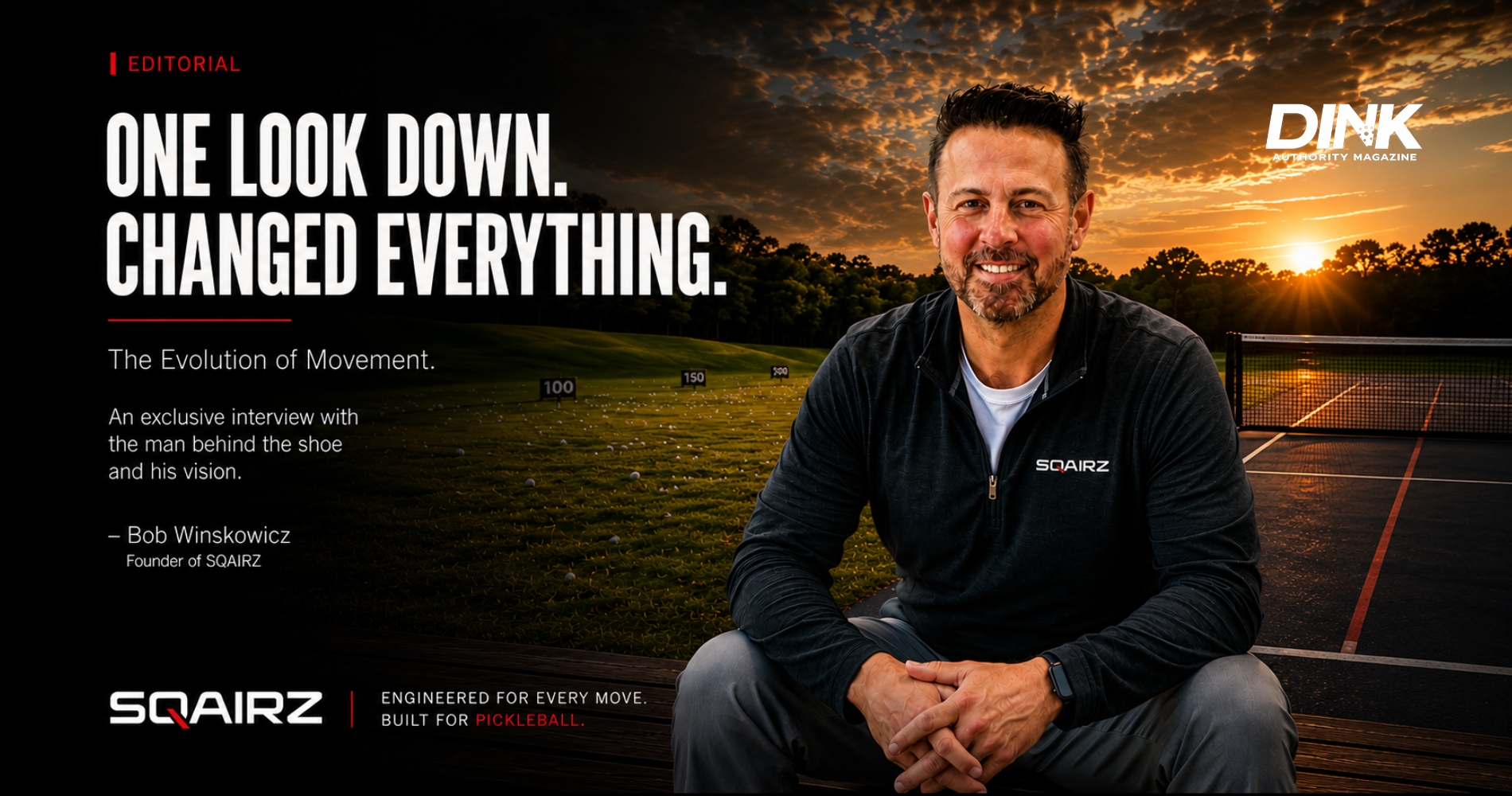
And here I want to be clear about something that matters deeply to me: pickleball isn't just the pros. The pros are the reference points, sure — but real pickleball is the one played every day in parks, in clubs, in those covered courts that are so trendy and so much on the rise right now. The people who actually give life to this sport are us, the enthusiasts: the ones buying the paddles, the balls, the tumblers, the shirts, the shoes. That's the foundation of the entire ecosystem — and that foundation doesn't speak only English. It speaks Spanish, Portuguese, and a thousand other languages. That's our daily audience, our guests in sections like Enthusiasts, the players with stories worth telling. And yes, of course, also the reference points — a well-told story, like this month's with Danni-Elle Townsend, now reachable across multiple languages.
We like to communicate. We like to contribute. And that's part of the commitment of our whole team, and of every single person who has accepted our invitation to be part of an edition over these nearly two years of steady work.
This month we covered the KINTO APP Asia Qualifier in Utsunomiya, Japan, the same day it wrapped — ahead of the league's own official channel. We covered the Leapmotor APP Asia Penang Open as Malaysia became APP's new Asia headquarters. We tracked every MLP move closely, from San Diego to Chicago, with the same speed and the same rigor we bring to any tournament in the United States. And now, for the first time, most of that work also exists in Spanish — not as an afterthought, but as a core part of how we understand our job.
Pickleball is already being played on courts in Tokyo, in Penang, in Bogotá, in São Paulo. It's time for the sport's journalism to stop thinking only in English, as if the rest of the world were a footnote. At DINK Authority, we decided we weren't going to wait for someone else to do it first.
We have big plans for our Spanish-speaking fans, and we're already working on them. So we'll see you — or you'll be reading us — in the September edition.
A few weeks ago I discovered something that had me thinking for days: when someone in Colombia, Mexico, or any Spanish-speaking country searches Google for "what is pickleball," results do show up — there's no shortage of those. What's missing is currency. There's no editorial voice. No continuity. No one telling you what happened yesterday, what's being played today, who won this weekend. There are definitions, but there's no journalism.
That discovery confirmed something we'd been suspecting at DINK Authority for a while: pickleball grew up in English, but it isn't going to stay in English. This month we closed out — after months of technical work, mistakes, corrections, and long discussions with our development team — the migration to a sports platform specialized, of course, in pickleball: with real news, life stories, tips, and an app you can now download for free to see all our content in three languages.
Current Issue
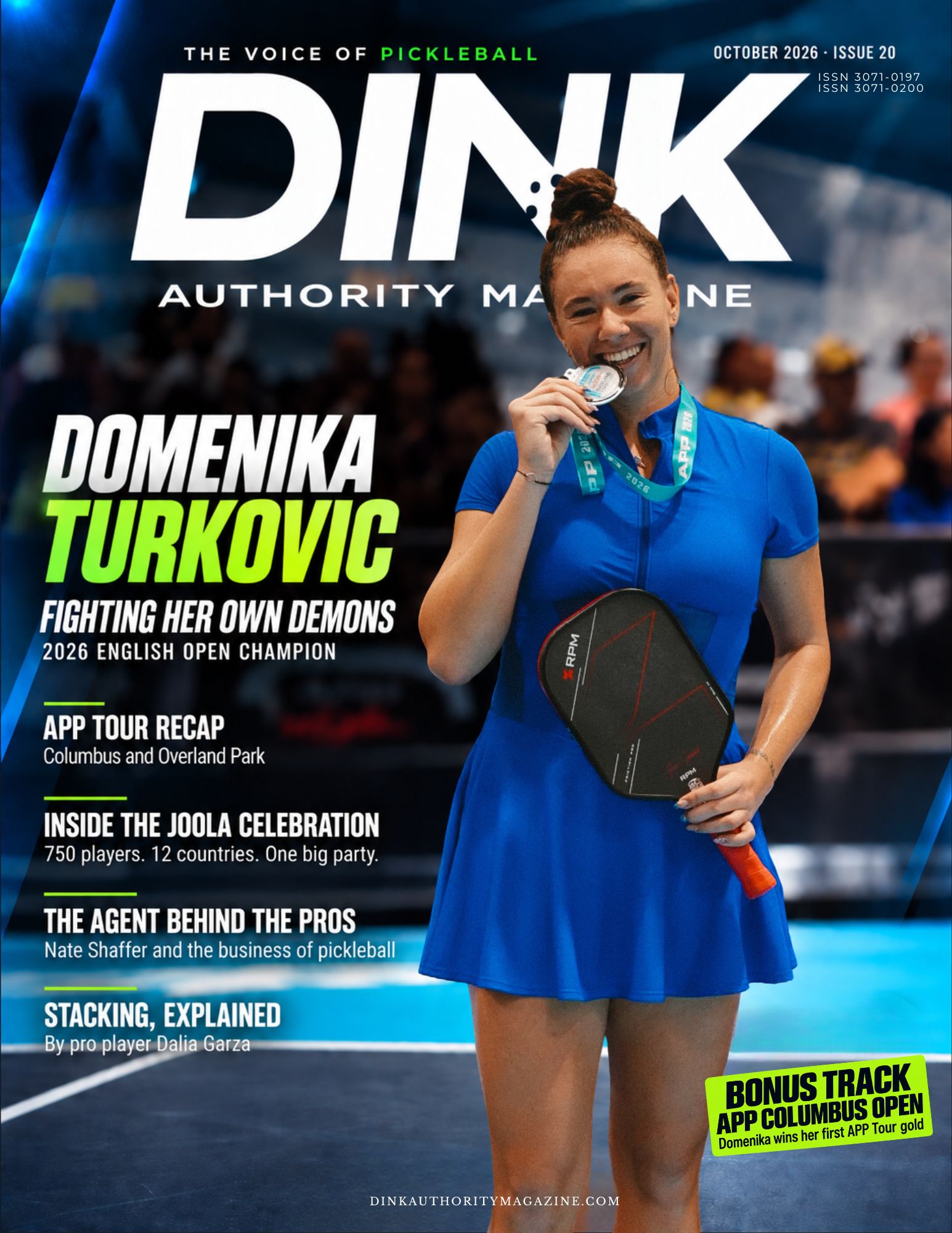
Domenika Turkovic: Fighting Her Own Demons
Read Now →
It hasn't been an easy transition. Publishing a monthly magazine — which is already a massive amount of work on its own — is not the same as reporting daily. We're still rooted in what defines us: the monthly magazine, available digitally on the app and on the web platform, and printed on demand for the United States. But we no longer limit ourselves to that. The countless messages and emails that kept coming in gave us a second wind to start building, months ago, the development that's now just a click away for you.
LOVE PICKLEBALL?
Get Dink Authority Magazine updates, new editions, pro stories and event alerts.
We respect your privacy. Unsubscribe anytime.
This month has also brought major collaboration agreements: with global tours like the APP Tour, with several PR agencies that have reached out to us, with athletes, and with major brands we're building relationships with. It excites us to see the reach we're getting, and it's a real source of motivation for the whole team that has invested time and ideas into pushing this project forward.

And here I want to be clear about something that matters deeply to me: pickleball isn't just the pros. The pros are the reference points, sure — but real pickleball is the one played every day in parks, in clubs, in those covered courts that are so trendy and so much on the rise right now. The people who actually give life to this sport are us, the enthusiasts: the ones buying the paddles, the balls, the tumblers, the shirts, the shoes. That's the foundation of the entire ecosystem — and that foundation doesn't speak only English. It speaks Spanish, Portuguese, and a thousand other languages. That's our daily audience, our guests in sections like Enthusiasts, the players with stories worth telling. And yes, of course, also the reference points — a well-told story, like this month's with Danni-Elle Townsend, now reachable across multiple languages.
We like to communicate. We like to contribute. And that's part of the commitment of our whole team, and of every single person who has accepted our invitation to be part of an edition over these nearly two years of steady work.

This month we covered the KINTO APP Asia Qualifier in Utsunomiya, Japan, the same day it wrapped — ahead of the league's own official channel. We covered the Leapmotor APP Asia Penang Open as Malaysia became APP's new Asia headquarters. We tracked every MLP move closely, from San Diego to Chicago, with the same speed and the same rigor we bring to any tournament in the United States. And now, for the first time, most of that work also exists in Spanish — not as an afterthought, but as a core part of how we understand our job.
Pickleball is already being played on courts in Tokyo, in Penang, in Bogotá, in São Paulo. It's time for the sport's journalism to stop thinking only in English, as if the rest of the world were a footnote. At DINK Authority, we decided we weren't going to wait for someone else to do it first.
We have big plans for our Spanish-speaking fans, and we're already working on them. So we'll see you — or you'll be reading us — in the September edition.