The Generation Inheriting Pickleball
The Generation Inheriting Pickleball
Editorial Letter — October 2026
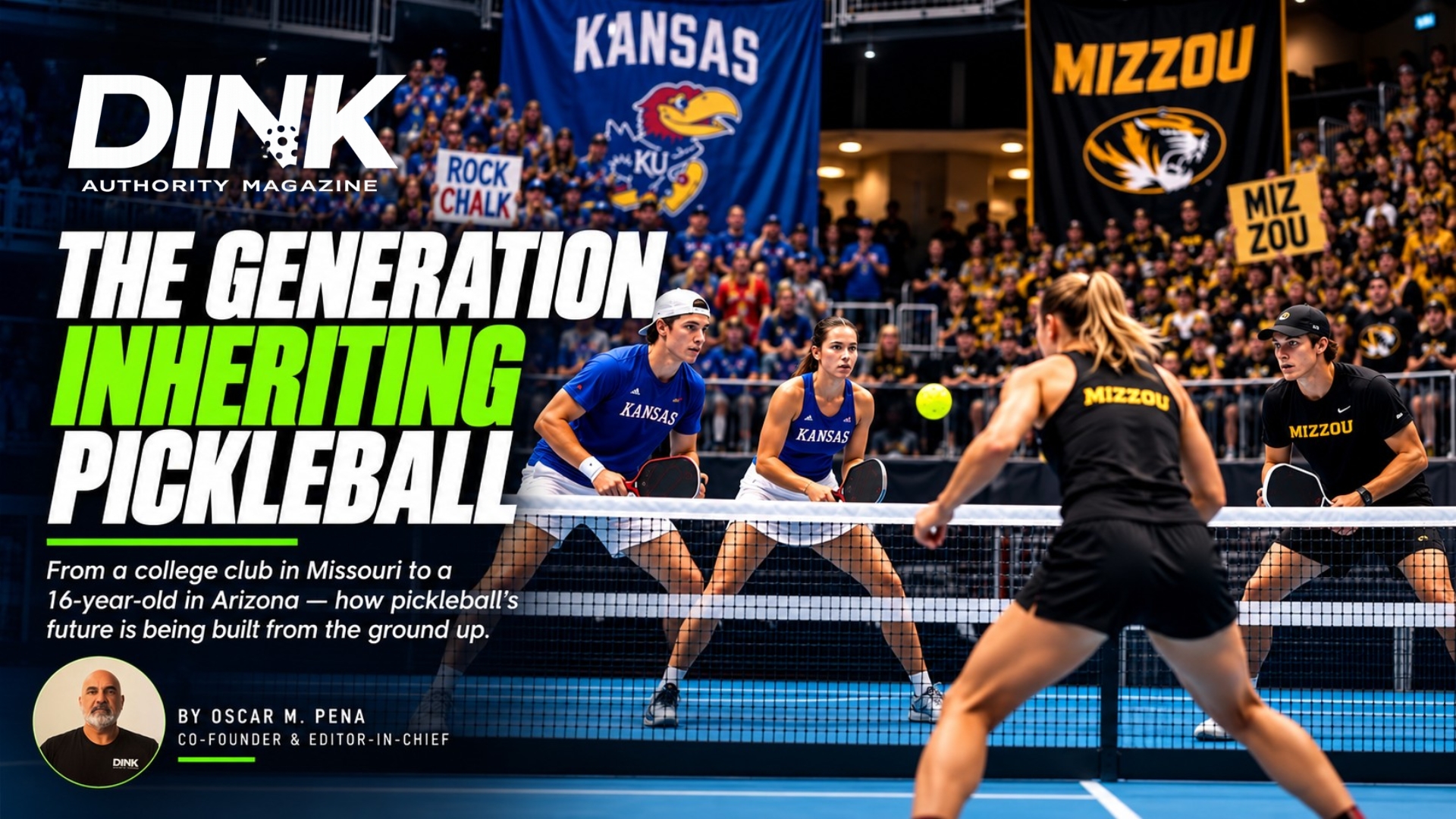
This month we saw something that, just two or three years ago, would have been almost unimaginable: two universities facing off in pickleball as part of their historic athletic rivalry, streamed live on ESPN+.
Kansas versus Missouri. The Border War, a rivalry dating back to 1891, that has seen these two programs compete against each other in more than twenty different sports over the course of more than a century. This year, for the first time, pickleball joined that list.
It wasn't an official NCAA match. It wasn't varsity athletics. These were student clubs — ordinary students, organizing their own team, training on their own, carving out space within a sport that, ten years ago, wasn't even on the radar of most U.S. college campuses.
And yet, there they were. On court. With cameras. With a crowd. With the same intensity as any other chapter of that century-old rivalry.
Behind every big move, there's a small story
LOVE PICKLEBALL?
Get Dink Authority Magazine updates, new editions, pro stories and event alerts.
We respect your privacy. Unsubscribe anytime.
What stuck with me most from that piece wasn't the scoreline, or even the broadcast — it was learning that Missouri's club exists because of one student's persistence. Dylan Frazier, now ranked No. 7 in the world, arrived at Mizzou as a freshman with an idea that probably sounded minor at the time: start a club for a sport almost no one at his university took seriously.
That seed, planted by one convinced person, is now an official chapter of the Border War.
That, to me, is the real story of this sport right now. It isn't being built only from the top — from the big sponsorships, the multi-million-dollar investments, the tournaments with full broadcast production. It's being built, at the same time, from the ground up: a student who decides to start a club, a teenager who turns a garage afternoon into a career, parents who stumble onto the sport by accident and end up building an entire family dynasty.
Jaden Lam, or how it all begins
A few weeks ago we published the story of Jaden Lam, a player just 16 years old, born in Surprise, Arizona, the son of a Vietnamese immigrant who discovered pickleball almost by accident when a friend invited him to a local tournament. He came home that same week with his own paddle — and never stopped.
Today, Jaden is known among his peers as "The Erie King," holds 25 gold medals in his competitive record, a family Triple Crown won alongside his siblings, and real sponsorships from brands in the sport. All of that, before turning 17.
His story and Dylan Frazier's aren't isolated coincidences. They're evidence of a pattern that keeps repeating more and more often: pickleball is finding its next generation not through a formal, centralized system, but in the most organic way possible — a garage, a student club, a curious afternoon on a local court.
Why this should matter to us more than the big headlines
It's easy, and understandable, for media attention — including our own, here at DINK Authority — to focus on the big names, the tournaments with the biggest prize money, the investments flowing into the sport. Those stories matter, and we'll keep covering them with the same rigor.
But the real future of this sport isn't being decided only on those stages. It's being decided on college courts with no broadcast, in garages turned into practice courts, in clubs that start with five students and one professor convinced it's worth a shot.
When that freshman at Missouri decided to start a club, he had no way of knowing he'd end up ranked No. 7 in the world, or that his university would eventually face Kansas in pickleball on ESPN+. When Jaden Lam came home with his first paddle, he didn't know either that in a few years he'd have professional sponsorships.
That's exactly what makes this generation worth paying attention to: we still don't know which of all the people starting out today — in a college club, in a garage, on some ordinary community court — will be the sport's next great story.
At DINK Authority, we're going to keep looking for those stories — not just the ones that have already reached the top, but the ones that are just starting to be written. Because that's where the real future of this sport comes from.
— Oscar M. Pena, Co-Founder and Editor-in-Chief
The Generation Inheriting Pickleball
Editorial Letter — October 2026
This month we saw something that, just two or three years ago, would have been almost unimaginable: two universities facing off in pickleball as part of their historic athletic rivalry, streamed live on ESPN+.
Kansas versus Missouri. The Border War, a rivalry dating back to 1891, that has seen these two programs compete against each other in more than twenty different sports over the course of more than a century. This year, for the first time, pickleball joined that list.
It wasn't an official NCAA match. It wasn't varsity athletics. These were student clubs — ordinary students, organizing their own team, training on their own, carving out space within a sport that, ten years ago, wasn't even on the radar of most U.S. college campuses.
Current Issue
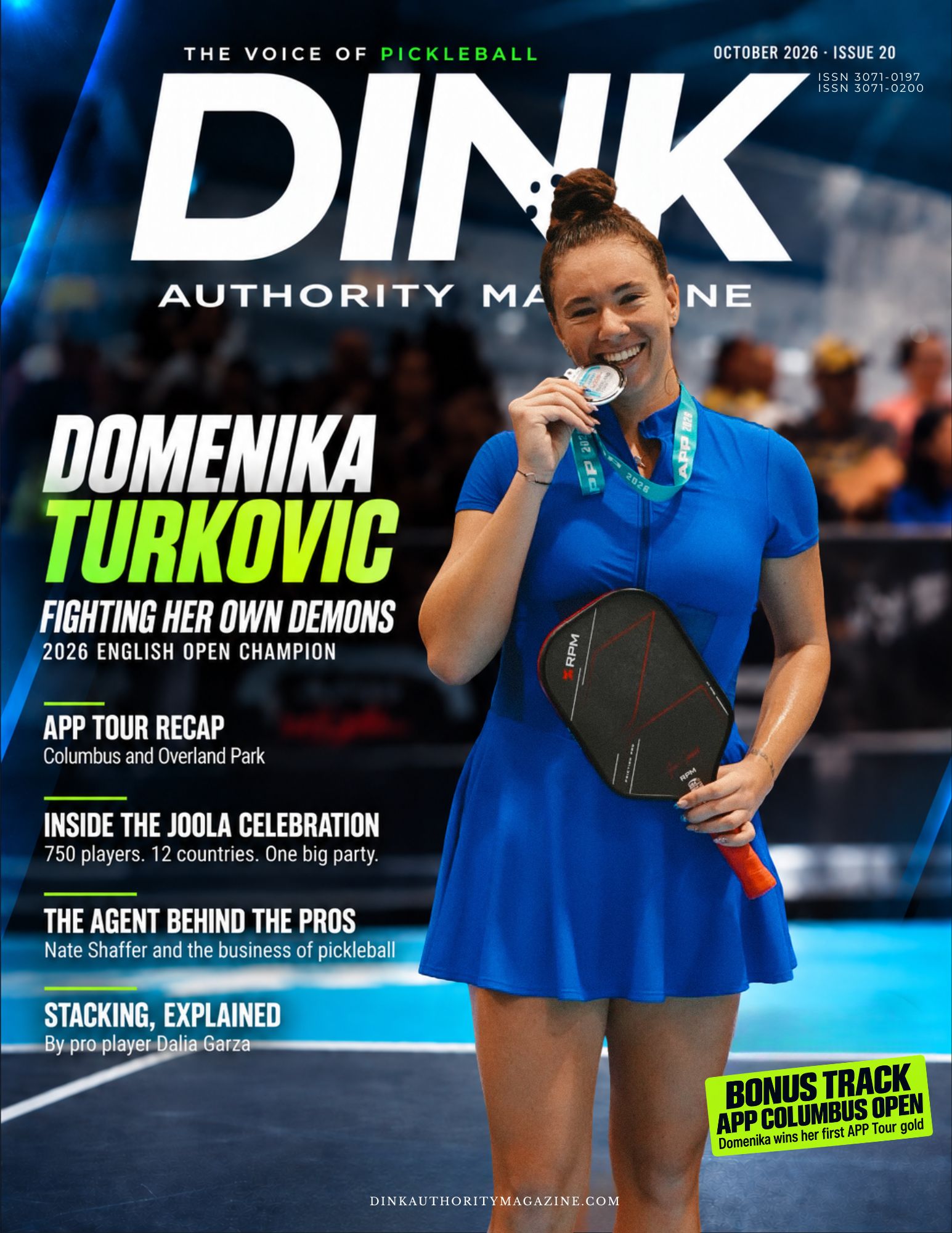
Domenika Turkovic: Fighting Her Own Demons
Read Now →
And yet, there they were. On court. With cameras. With a crowd. With the same intensity as any other chapter of that century-old rivalry.
Behind every big move, there's a small story
LOVE PICKLEBALL?
Get Dink Authority Magazine updates, new editions, pro stories and event alerts.
We respect your privacy. Unsubscribe anytime.
What stuck with me most from that piece wasn't the scoreline, or even the broadcast — it was learning that Missouri's club exists because of one student's persistence. Dylan Frazier, now ranked No. 7 in the world, arrived at Mizzou as a freshman with an idea that probably sounded minor at the time: start a club for a sport almost no one at his university took seriously.
That seed, planted by one convinced person, is now an official chapter of the Border War.
That, to me, is the real story of this sport right now. It isn't being built only from the top — from the big sponsorships, the multi-million-dollar investments, the tournaments with full broadcast production. It's being built, at the same time, from the ground up: a student who decides to start a club, a teenager who turns a garage afternoon into a career, parents who stumble onto the sport by accident and end up building an entire family dynasty.

Jaden Lam, or how it all begins
A few weeks ago we published the story of Jaden Lam, a player just 16 years old, born in Surprise, Arizona, the son of a Vietnamese immigrant who discovered pickleball almost by accident when a friend invited him to a local tournament. He came home that same week with his own paddle — and never stopped.
Today, Jaden is known among his peers as "The Erie King," holds 25 gold medals in his competitive record, a family Triple Crown won alongside his siblings, and real sponsorships from brands in the sport. All of that, before turning 17.
His story and Dylan Frazier's aren't isolated coincidences. They're evidence of a pattern that keeps repeating more and more often: pickleball is finding its next generation not through a formal, centralized system, but in the most organic way possible — a garage, a student club, a curious afternoon on a local court.
Why this should matter to us more than the big headlines

It's easy, and understandable, for media attention — including our own, here at DINK Authority — to focus on the big names, the tournaments with the biggest prize money, the investments flowing into the sport. Those stories matter, and we'll keep covering them with the same rigor.
But the real future of this sport isn't being decided only on those stages. It's being decided on college courts with no broadcast, in garages turned into practice courts, in clubs that start with five students and one professor convinced it's worth a shot.
When that freshman at Missouri decided to start a club, he had no way of knowing he'd end up ranked No. 7 in the world, or that his university would eventually face Kansas in pickleball on ESPN+. When Jaden Lam came home with his first paddle, he didn't know either that in a few years he'd have professional sponsorships.
That's exactly what makes this generation worth paying attention to: we still don't know which of all the people starting out today — in a college club, in a garage, on some ordinary community court — will be the sport's next great story.
At DINK Authority, we're going to keep looking for those stories — not just the ones that have already reached the top, but the ones that are just starting to be written. Because that's where the real future of this sport comes from.
— Oscar M. Pena, Co-Founder and Editor-in-Chief