3 Keys to Prevent Tendinitis in Pickleball
Pickleball is addictive. Once you start, you want to play every single day — and that's exactly where the problem begins.
Repetitive movements in pickleball can place enormous stress on your muscles and tendons, especially in the elbows, shoulders, and wrists. The most common injury among pickleball players has a name you've probably heard before: tendinitis — and more specifically, lateral epicondylitis, better known as tennis elbow.
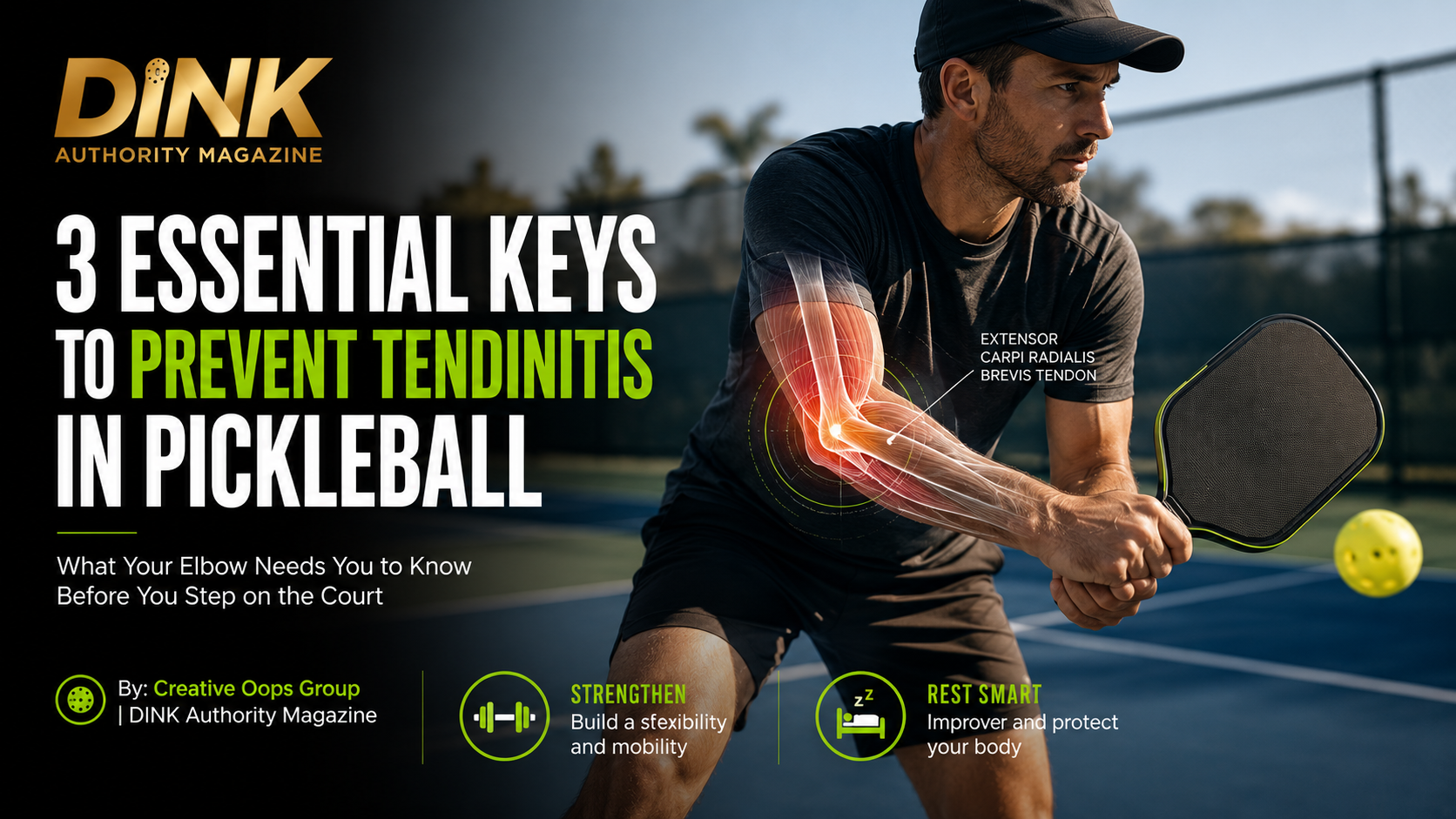
This condition affects the extensor carpi radialis brevis tendon, a forearm muscle responsible for lifting and extending the wrist. Overuse causes microscopic tears and inflammation in the tendons — and by the time the pain shows up, prevention is already off the table. That's why today we're talking about what you need to do before it happens.
Here are the 3 essential keys every pickleball player needs to know:
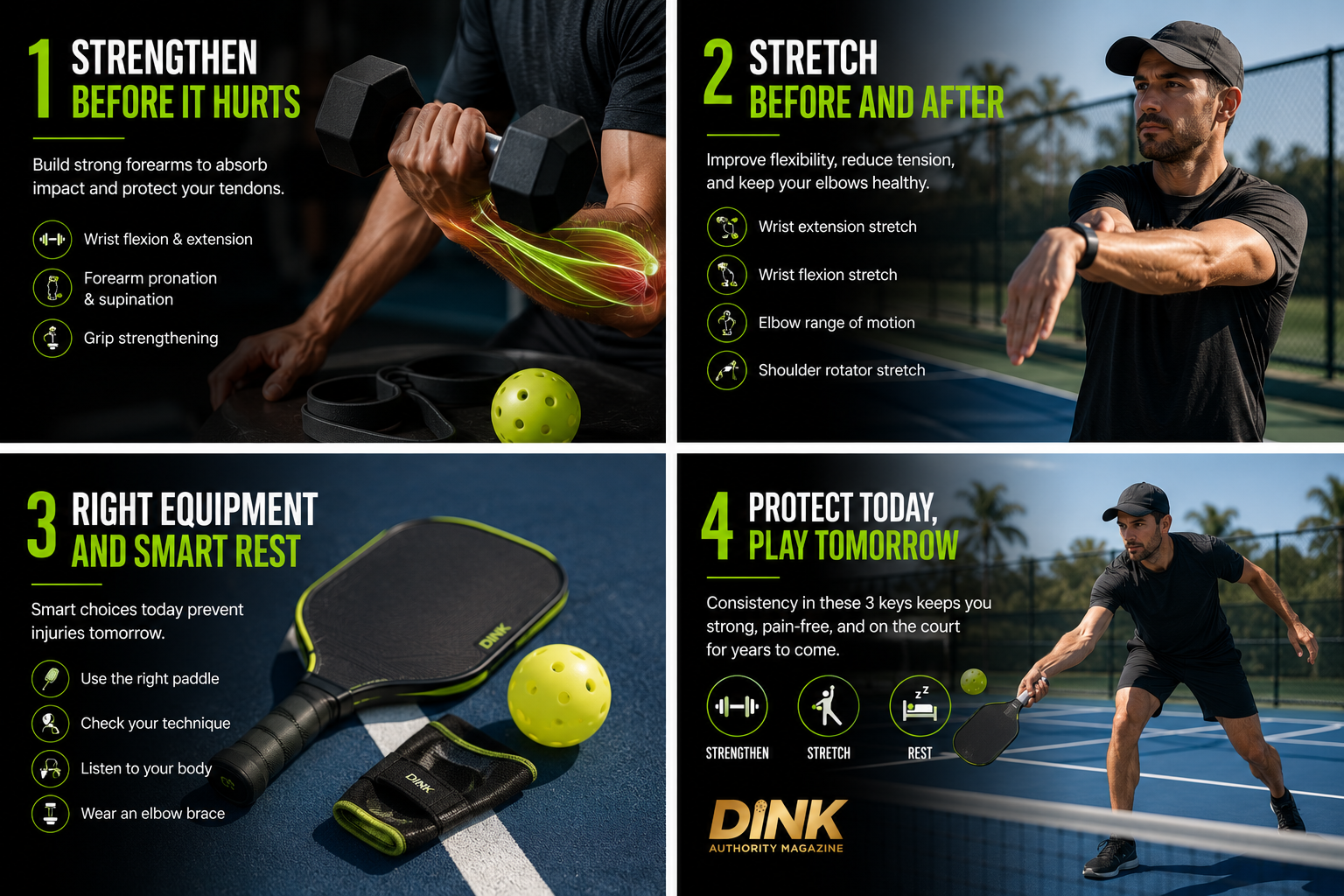
Key 1: Strengthen Before It Hurts
Most players only think about strengthening after an injury has already occurred. Big mistake.
Strengthening your forearm muscles to build resistance is one of the most consistently recommended prevention strategies among sports medicine experts. A strong forearm absorbs the impact of each shot far more effectively, protecting the tendon from the cumulative overload that builds up match after match.
How to do it:
Use resistance bands or light dumbbells to work the wrist extensors and flexors. Simple exercises like wrist flexion, wrist extension, and forearm pronation and supination — performed with control and without excessive weight — make an enormous difference over time.
Before any activity involving the upper limbs, performing specific warm-up exercises is essential. Don't jump straight onto the court with cold tendons.
Recommended routine:
Wrist flexion curls: 3 sets of 15 reps
Wrist extension curls: 3 sets of 15 reps
Forearm pronation/supination with light resistance: 3 sets of 12 reps
Grip strengthening: squeeze a soft ball for 5-7 seconds, release, repeat 10 times
LOVE PICKLEBALL?
Get Dink Authority Magazine updates, new editions, pro stories and event alerts.
We respect your privacy. Unsubscribe anytime.
Key 2: Stretch Before AND After — No Exceptions
Stretching is the part of training most players skip — and the one they pay for the most dearly.
Warming up and stretching before any physical activity, and alternating play with rest periods to avoid muscle fatigue, are essential practices for preventing lateral epicondylitis. This isn't optional advice. It's the foundation.
The most effective stretches to protect your elbow in pickleball:
Wrist extension stretch: Extend your arm in front of you, palm facing down. With your other hand, gently bend the wrist downward until you feel tension along the forearm. Hold 20-30 seconds. Repeat 3 times per arm.
Wrist flexion stretch: Same position, but this time bend the wrist upward. Feel the stretch along the top of the forearm. Hold 20-30 seconds.
Elbow range of motion: Slow, controlled elbow circles before and after playing to warm up the joint and promote circulation.
Shoulder rotator stretch: Don't forget the shoulders — they work alongside the elbow on every single shot.
Do this religiously, before and after every session. Your elbow will thank you every time you walk onto the court.
Key 3: Right Equipment and Smart Rest
Every poorly executed shot — or one struck with the wrong paddle — impacts your tendon directly. The extensor carpi radialis brevis is the structure most commonly involved in tennis elbow, connecting the forearm muscle to the lateral epicondyle of the elbow. It doesn't take a dramatic injury to damage it. It takes repetition.
What you need to review:
Your paddle: Make sure the weight, grip size, and stiffness are appropriate for your level and your physical condition. A paddle that's too heavy or has a grip that's too thin significantly increases tendon stress with every stroke.
Your technique: Proper technical preparation and equipment matched to your physical condition are key to prevention. If you have doubts about your technique, a single session with a certified coach could save you months of recovery.
Your rest: Returning to sport too soon, before the tendon has fully healed, dramatically increases the risk of relapse. This is one of the most common origins of recurring injuries. Listen to your body. If you feel discomfort, that's the moment to stop — not to play one more game.
Your elbow brace: A properly fitted elbow brace helps prevent the tendon from absorbing the full force of muscle contractions, while also providing compression and warmth to the area — both of which support faster recovery and reduce pain during play.
One Final Word
Pickleball is a wonderful sport — but like any repetitive impact activity, it demands respect. Strengthening, stretching, and resting are not optional extras. They are the difference between playing for decades and spending weeks on the sideline watching others play the game you love.
Take care of your body with the same dedication you bring to your game. The court will always be there. Make sure you will be too.
See you on the courts.
Pickleball is addictive. Once you start, you want to play every single day — and that's exactly where the problem begins.
Repetitive movements in pickleball can place enormous stress on your muscles and tendons, especially in the elbows, shoulders, and wrists. The most common injury among pickleball players has a name you've probably heard before: tendinitis — and more specifically, lateral epicondylitis, better known as tennis elbow.
This condition affects the extensor carpi radialis brevis tendon, a forearm muscle responsible for lifting and extending the wrist. Overuse causes microscopic tears and inflammation in the tendons — and by the time the pain shows up, prevention is already off the table. That's why today we're talking about what you need to do before it happens.
Here are the 3 essential keys every pickleball player needs to know:
Key 1: Strengthen Before It Hurts
Most players only think about strengthening after an injury has already occurred. Big mistake.
Strengthening your forearm muscles to build resistance is one of the most consistently recommended prevention strategies among sports medicine experts. A strong forearm absorbs the impact of each shot far more effectively, protecting the tendon from the cumulative overload that builds up match after match.
How to do it:

Use resistance bands or light dumbbells to work the wrist extensors and flexors. Simple exercises like wrist flexion, wrist extension, and forearm pronation and supination — performed with control and without excessive weight — make an enormous difference over time.
Before any activity involving the upper limbs, performing specific warm-up exercises is essential. Don't jump straight onto the court with cold tendons.
Recommended routine:
Wrist flexion curls: 3 sets of 15 reps
Wrist extension curls: 3 sets of 15 reps
Forearm pronation/supination with light resistance: 3 sets of 12 reps
Grip strengthening: squeeze a soft ball for 5-7 seconds, release, repeat 10 times
LOVE PICKLEBALL?
Get Dink Authority Magazine updates, new editions, pro stories and event alerts.
We respect your privacy. Unsubscribe anytime.
Key 2: Stretch Before AND After — No Exceptions
Stretching is the part of training most players skip — and the one they pay for the most dearly.
Warming up and stretching before any physical activity, and alternating play with rest periods to avoid muscle fatigue, are essential practices for preventing lateral epicondylitis. This isn't optional advice. It's the foundation.
The most effective stretches to protect your elbow in pickleball:

Wrist extension stretch: Extend your arm in front of you, palm facing down. With your other hand, gently bend the wrist downward until you feel tension along the forearm. Hold 20-30 seconds. Repeat 3 times per arm.
Wrist flexion stretch: Same position, but this time bend the wrist upward. Feel the stretch along the top of the forearm. Hold 20-30 seconds.
Elbow range of motion: Slow, controlled elbow circles before and after playing to warm up the joint and promote circulation.
Shoulder rotator stretch: Don't forget the shoulders — they work alongside the elbow on every single shot.
Do this religiously, before and after every session. Your elbow will thank you every time you walk onto the court.
Key 3: Right Equipment and Smart Rest
Every poorly executed shot — or one struck with the wrong paddle — impacts your tendon directly. The extensor carpi radialis brevis is the structure most commonly involved in tennis elbow, connecting the forearm muscle to the lateral epicondyle of the elbow. It doesn't take a dramatic injury to damage it. It takes repetition.
What you need to review:

Your paddle: Make sure the weight, grip size, and stiffness are appropriate for your level and your physical condition. A paddle that's too heavy or has a grip that's too thin significantly increases tendon stress with every stroke.
Your technique: Proper technical preparation and equipment matched to your physical condition are key to prevention. If you have doubts about your technique, a single session with a certified coach could save you months of recovery.
Your rest: Returning to sport too soon, before the tendon has fully healed, dramatically increases the risk of relapse. This is one of the most common origins of recurring injuries. Listen to your body. If you feel discomfort, that's the moment to stop — not to play one more game.
Your elbow brace: A properly fitted elbow brace helps prevent the tendon from absorbing the full force of muscle contractions, while also providing compression and warmth to the area — both of which support faster recovery and reduce pain during play.
One Final Word
Pickleball is a wonderful sport — but like any repetitive impact activity, it demands respect. Strengthening, stretching, and resting are not optional extras. They are the difference between playing for decades and spending weeks on the sideline watching others play the game you love.
Take care of your body with the same dedication you bring to your game. The court will always be there. Make sure you will be too.
See you on the courts.
Gallery