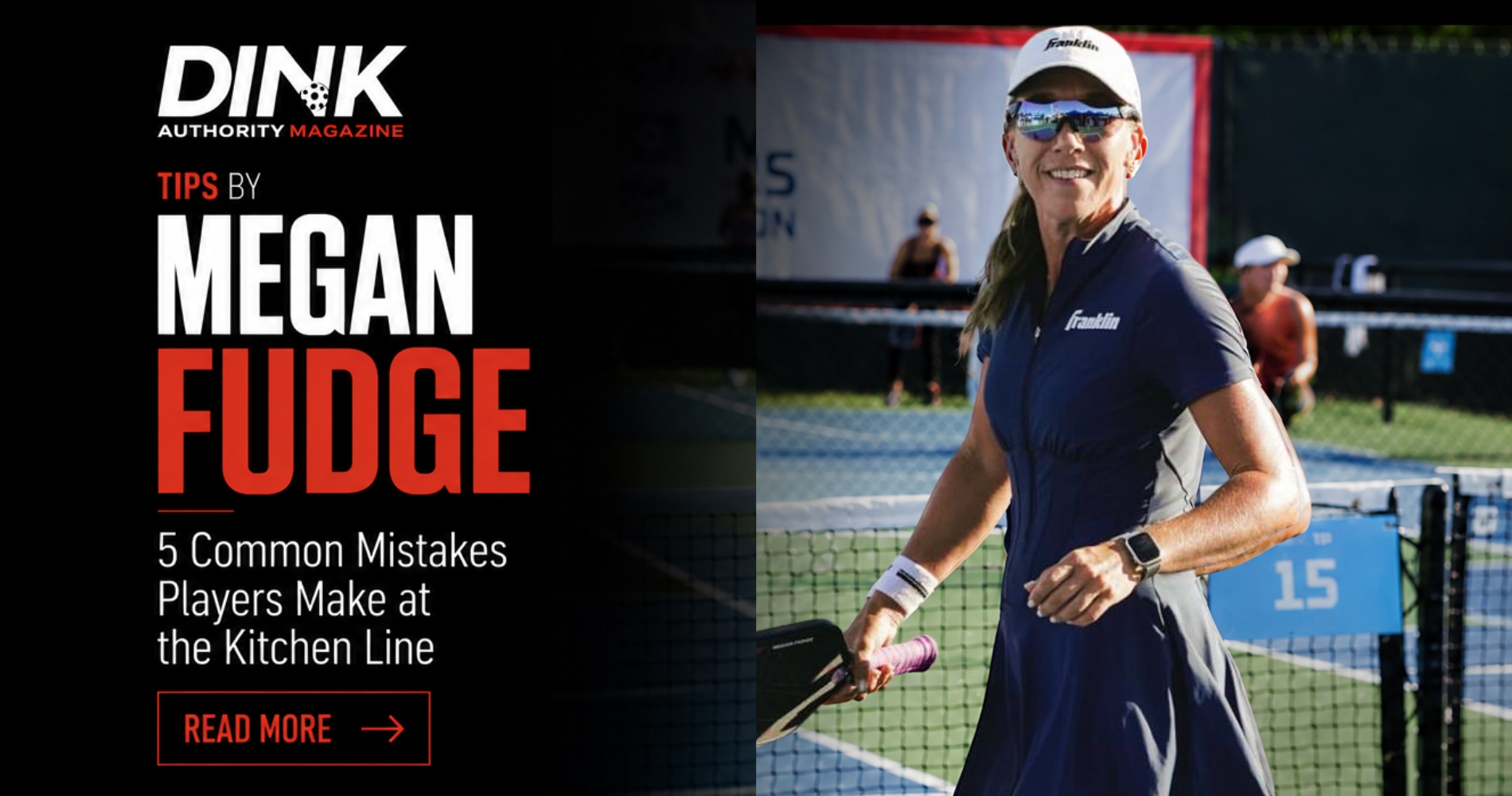
5 Common Mistakes Players Make at the Kitchen Line
Dink Authority Magazine | Tips
5 Common Mistakes Players Make at the Kitchen Line
By Megan Fudge x Dink Authority Magazine
The kitchen line is one of the most important areas in pickleball. Many matches are won or lost there, and the higher your level of play, the more important kitchen play becomes. Yet even experienced players continue making small mistakes that cost them valuable points.
Here are five of the most common mistakes I constantly see — and how you can start correcting them.
Hitting Too Hard Instead Of Controlling The Point
LOVE PICKLEBALL?
Get Dink Authority Magazine updates, new editions, pro stories and event alerts.
We respect your privacy. Unsubscribe anytime.
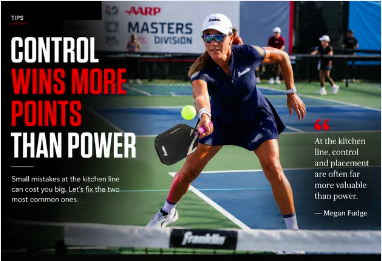
One of the biggest mistakes players make is believing every ball needs speed or power. At the kitchen line, control and placement are often far more valuable than power.
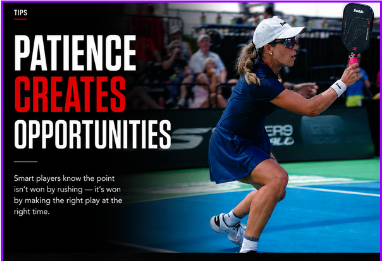
The best players understand when to speed up the ball and when to simply keep the rally alive. Patience is a competitive advantage.
PRO TIP: Before speeding up a ball, ask yourself if you truly have an attacking opportunity — or if you're simply forcing the point.
Poor Footwork & Balance
Many players successfully reach the kitchen line but stay too upright, cross their feet, or lose balance after every shot.
Footwork and positioning are critical for reacting quickly and staying stable during fast exchanges.
PRO TIP: Keep your knees slightly bent, your weight forward, and move with short, controlled steps instead of large movements.
Speeding Up Every Ball
Not every ball should be attacked.
Players often become impatient and try to finish points too quickly, speeding up balls from uncomfortable positions or low contact points.
A large percentage of unforced kitchen errors happen because players attack the wrong ball.
PRO TIP: Wait for a ball that truly sits up before attacking. Patience often creates better opportunities than forcing speed.
Losing Patience During Rallies
Modern pickleball is getting faster, but that doesn't mean every point needs to end in three shots.
Long rallies are part of smart pickleball. Many players lose focus or begin forcing low-percentage shots during extended exchanges.
PRO TIP: Focus on building the point and forcing your opponent to take the bigger risk first.
Playing Too Stiff At The Kitchen Line
Tension slows down reaction time.
When players get stiff, they react slower, block less effectively, and lose touch on soft dinks and resets.
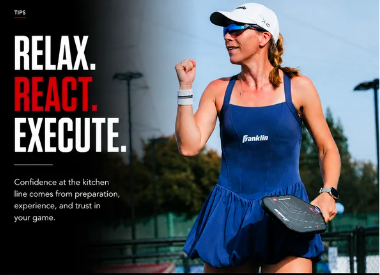
The best players often look relaxed even during the fastest hands battles.
PRO TIP: Relax your shoulders, breathe, and keep your hands active in front of your body. The more relaxed and fluid you are, the faster your reactions become.
FINAL THOUGHTS
The kitchen line is not only about reflexes or power. It's about patience, control, positioning, and smart decision-making.
Small adjustments can completely change your level of play.
The next time you practice or compete, focus on correcting just one of these mistakes. Sometimes a single adjustment can create a huge difference on the court.
— Megan Fudge x Dink Authority Magazine
THE VOICE OF PICKLEBALL™
Dink Authority Magazine | Tips
5 Common Mistakes Players Make at the Kitchen Line
By Megan Fudge x Dink Authority Magazine
The kitchen line is one of the most important areas in pickleball. Many matches are won or lost there, and the higher your level of play, the more important kitchen play becomes. Yet even experienced players continue making small mistakes that cost them valuable points.
Here are five of the most common mistakes I constantly see — and how you can start correcting them.
Current Issue
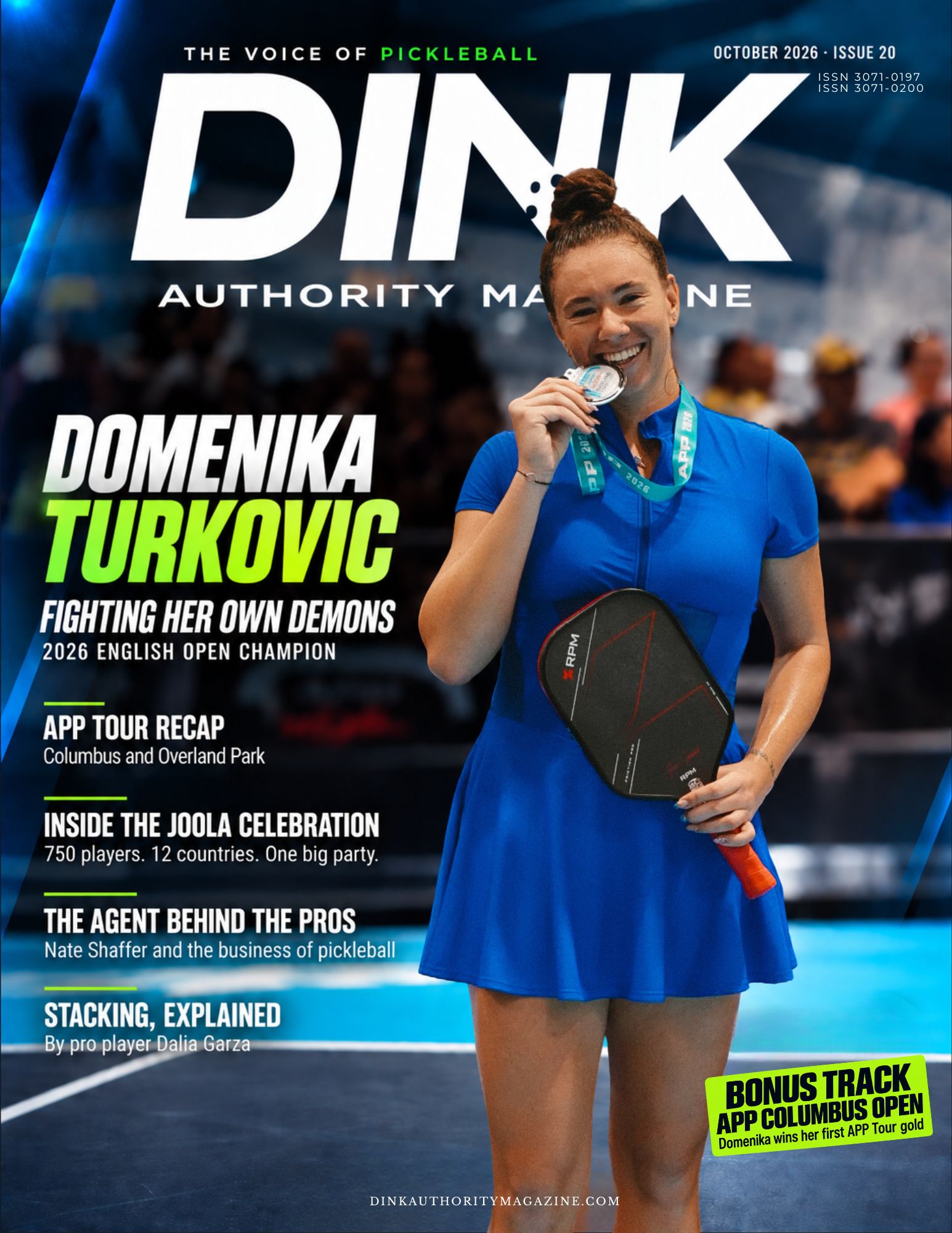
Domenika Turkovic: Fighting Her Own Demons
Read Now →
Hitting Too Hard Instead Of Controlling The Point
LOVE PICKLEBALL?
Get Dink Authority Magazine updates, new editions, pro stories and event alerts.
We respect your privacy. Unsubscribe anytime.
One of the biggest mistakes players make is believing every ball needs speed or power. At the kitchen line, control and placement are often far more valuable than power.
The best players understand when to speed up the ball and when to simply keep the rally alive. Patience is a competitive advantage.
PRO TIP: Before speeding up a ball, ask yourself if you truly have an attacking opportunity — or if you're simply forcing the point.
Poor Footwork & Balance

Many players successfully reach the kitchen line but stay too upright, cross their feet, or lose balance after every shot.
Footwork and positioning are critical for reacting quickly and staying stable during fast exchanges.
PRO TIP: Keep your knees slightly bent, your weight forward, and move with short, controlled steps instead of large movements.
Speeding Up Every Ball
Not every ball should be attacked.
Players often become impatient and try to finish points too quickly, speeding up balls from uncomfortable positions or low contact points.
A large percentage of unforced kitchen errors happen because players attack the wrong ball.
PRO TIP: Wait for a ball that truly sits up before attacking. Patience often creates better opportunities than forcing speed.

Losing Patience During Rallies
Modern pickleball is getting faster, but that doesn't mean every point needs to end in three shots.
Long rallies are part of smart pickleball. Many players lose focus or begin forcing low-percentage shots during extended exchanges.
PRO TIP: Focus on building the point and forcing your opponent to take the bigger risk first.
Playing Too Stiff At The Kitchen Line
Tension slows down reaction time.
When players get stiff, they react slower, block less effectively, and lose touch on soft dinks and resets.
The best players often look relaxed even during the fastest hands battles.
PRO TIP: Relax your shoulders, breathe, and keep your hands active in front of your body. The more relaxed and fluid you are, the faster your reactions become.
FINAL THOUGHTS
The kitchen line is not only about reflexes or power. It's about patience, control, positioning, and smart decision-making.
Small adjustments can completely change your level of play.
The next time you practice or compete, focus on correcting just one of these mistakes. Sometimes a single adjustment can create a huge difference on the court.
— Megan Fudge x Dink Authority Magazine
THE VOICE OF PICKLEBALL™
Gallery