KITCHEN CONTROL: THE MOST IMPORTANT REAL ESTATE IN PICKLEBALL
KITCHEN CONTROL: THE MOST IMPORTANT REAL ESTATE IN PICKLEBALL
In pickleball, there is one area of the court that dictates everything — strategy, momentum, and ultimately the outcome of the point.
It's not the baseline. It's not the sidelines.
It's the kitchen.
Also known as the non-volley zone, the kitchen has become the most important piece of real estate in modern pickleball. The players who learn to control it are the ones who consistently win. Not occasionally. Consistently.
WHY THE KITCHEN MATTERS
At higher levels of play, points are rarely decided from the back of the court. They are built — and finished — at the kitchen line.
When you control the kitchen, you control the rally. You neutralize power. You create offense. You force your opponent to play on your terms.
If you stay at the baseline, you are reacting.
LOVE PICKLEBALL?
Get Dink Authority Magazine updates, new editions, pro stories and event alerts.
We respect your privacy. Unsubscribe anytime.
If you control the kitchen, you are dictating.
That distinction alone explains most of the gap between recreational and competitive pickleball.
POSITIONING IS EVERYTHING
Getting to the kitchen is only the first step. Knowing how to position yourself once you are there is what separates good players from great ones.
The fundamentals are simple — but they require constant discipline:
— Paddle always up and ready
— Knees slightly bent
— Weight forward on the balls of your feet
— Stay balanced, never lunging
Your goal is not to react to the ball. Your goal is to be ready before it crosses the net. That half-second of preparation changes everything.
THE ART OF THE DINK
Many players misunderstand the dink. They think it is simply a soft shot designed to keep the ball in play. At higher levels, that understanding is incomplete.
The dink is not a defensive shot. It is a weapon.
Used correctly, the dink controls the pace of the rally, moves your opponent laterally, and creates the offensive opportunity you are patiently building toward. The purpose of a well-placed dink is not to keep the ball low — it is to make your opponent reach, adjust their balance, and eventually give you exactly the ball you have been waiting for.
Great players rarely rush the attack. They construct it.
They use dinks to stretch the court, change direction, and apply quiet pressure until the right moment to accelerate arrives. Because in pickleball, the most dangerous attack often begins with patience.
THE TRANSITION ZONE
One of the most overlooked concepts in pickleball is the transition zone — the space between the baseline and the kitchen line.
This is where most rallies are lost.
Players often get caught here after returning a serve or advancing toward the net. In this position, you are caught between two worlds. Too close to the net to defend comfortably. Too far from the kitchen to control the rally.
Experienced players move through the transition zone with intention. They do not rush forward blindly. They advance step by step, reset the ball when necessary, and wait for the right moment to arrive at the kitchen line in balance and in control.
The transition zone is not somewhere you play from. It is somewhere you move through — as quickly and as cleanly as possible.
CONTROL VS POWER
Power can win points. But control wins matches.
At the kitchen line, the smartest players understand that every rally is a process — not a single moment. They stay patient. They move the ball. They apply pressure without rushing. They wait for the opening rather than forcing one that isn't there.
That requires a different mindset than most players arrive with.
It requires trusting the process. Trusting your positioning. Trusting that the right ball is coming — if you stay disciplined long enough to earn it.
Because in pickleball, the player who controls the rally almost always controls the outcome.
Power and speed can win points.
But control — and the patience to use it — wins matches.
KITCHEN CONTROL: THE MOST IMPORTANT REAL ESTATE IN PICKLEBALL
In pickleball, there is one area of the court that dictates everything — strategy, momentum, and ultimately the outcome of the point.
It's not the baseline. It's not the sidelines.
It's the kitchen.
Also known as the non-volley zone, the kitchen has become the most important piece of real estate in modern pickleball. The players who learn to control it are the ones who consistently win. Not occasionally. Consistently.
WHY THE KITCHEN MATTERS
At higher levels of play, points are rarely decided from the back of the court. They are built — and finished — at the kitchen line.
When you control the kitchen, you control the rally. You neutralize power. You create offense. You force your opponent to play on your terms.
If you stay at the baseline, you are reacting.
LOVE PICKLEBALL?
Get Dink Authority Magazine updates, new editions, pro stories and event alerts.
We respect your privacy. Unsubscribe anytime.
Current Issue
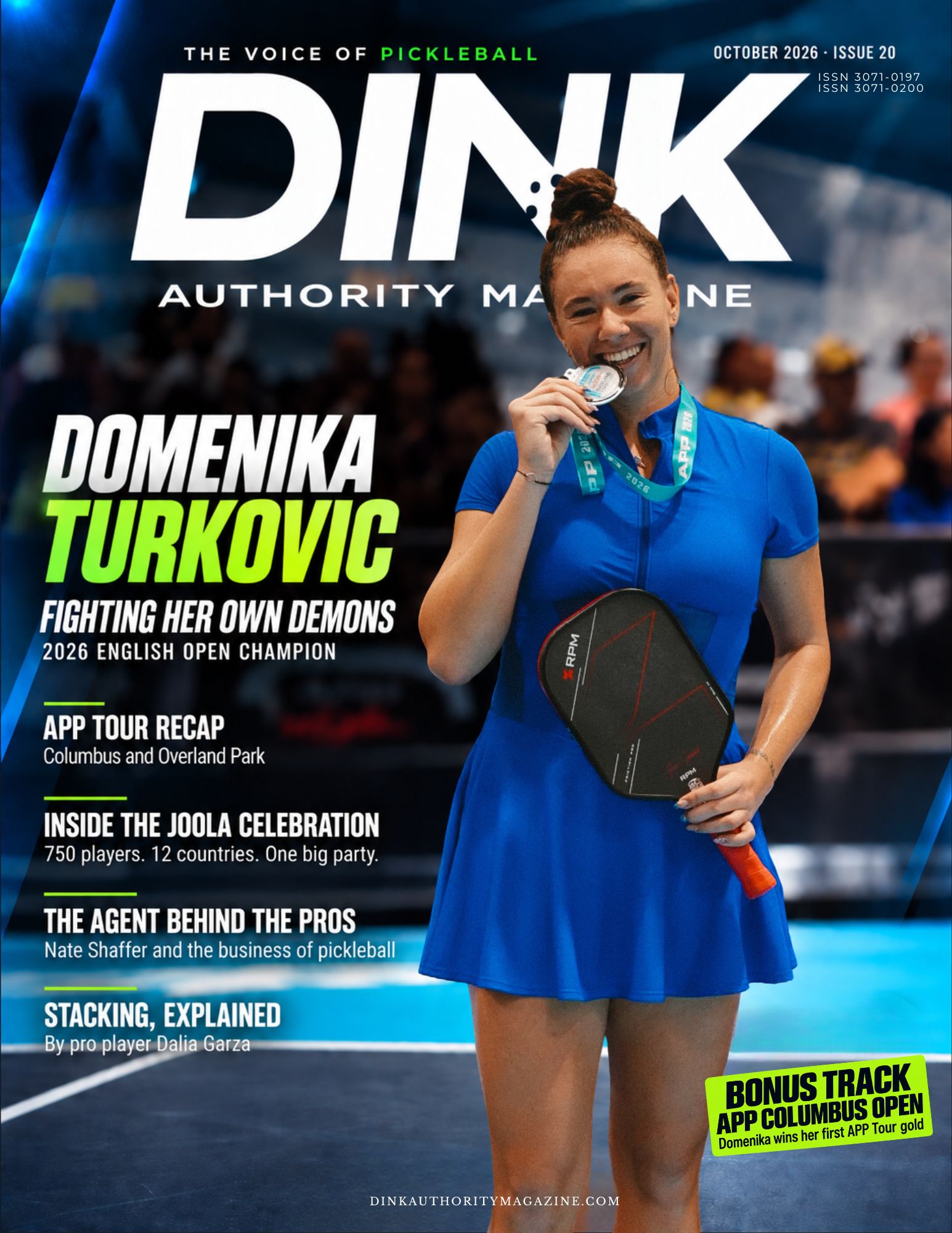
Domenika Turkovic: Fighting Her Own Demons
Read Now →
If you control the kitchen, you are dictating.
That distinction alone explains most of the gap between recreational and competitive pickleball.
POSITIONING IS EVERYTHING
Getting to the kitchen is only the first step. Knowing how to position yourself once you are there is what separates good players from great ones.
The fundamentals are simple — but they require constant discipline:
— Paddle always up and ready

— Knees slightly bent

— Weight forward on the balls of your feet
— Stay balanced, never lunging
Your goal is not to react to the ball. Your goal is to be ready before it crosses the net. That half-second of preparation changes everything.
THE ART OF THE DINK
Many players misunderstand the dink. They think it is simply a soft shot designed to keep the ball in play. At higher levels, that understanding is incomplete.
The dink is not a defensive shot. It is a weapon.
Used correctly, the dink controls the pace of the rally, moves your opponent laterally, and creates the offensive opportunity you are patiently building toward. The purpose of a well-placed dink is not to keep the ball low — it is to make your opponent reach, adjust their balance, and eventually give you exactly the ball you have been waiting for.
Great players rarely rush the attack. They construct it.
They use dinks to stretch the court, change direction, and apply quiet pressure until the right moment to accelerate arrives. Because in pickleball, the most dangerous attack often begins with patience.
THE TRANSITION ZONE
One of the most overlooked concepts in pickleball is the transition zone — the space between the baseline and the kitchen line.
This is where most rallies are lost.
Players often get caught here after returning a serve or advancing toward the net. In this position, you are caught between two worlds. Too close to the net to defend comfortably. Too far from the kitchen to control the rally.
Experienced players move through the transition zone with intention. They do not rush forward blindly. They advance step by step, reset the ball when necessary, and wait for the right moment to arrive at the kitchen line in balance and in control.
The transition zone is not somewhere you play from. It is somewhere you move through — as quickly and as cleanly as possible.
CONTROL VS POWER
Power can win points. But control wins matches.
At the kitchen line, the smartest players understand that every rally is a process — not a single moment. They stay patient. They move the ball. They apply pressure without rushing. They wait for the opening rather than forcing one that isn't there.
That requires a different mindset than most players arrive with.
It requires trusting the process. Trusting your positioning. Trusting that the right ball is coming — if you stay disciplined long enough to earn it.
Because in pickleball, the player who controls the rally almost always controls the outcome.
Power and speed can win points.
But control — and the patience to use it — wins matches.