The Silence That Spoke Louder: Ben Johns and the Crack We All Saw in St. Pete
Some players are defined by what they say. Others are defined, precisely, by what they never say. Ben Johns belongs to that second category. Across his years as the undisputed dominator of professional pickleball, we can't recall a single bad-intent play, a tantrum, an unjustified complaint to a referee, or an out-of-line comment. Johns has built his reputation on two pillars: a near-unprecedented technical superiority, and a composure that seemed immune to any scoreline.
That's exactly why what we saw at MLP St. Pete felt so different from everything before it.
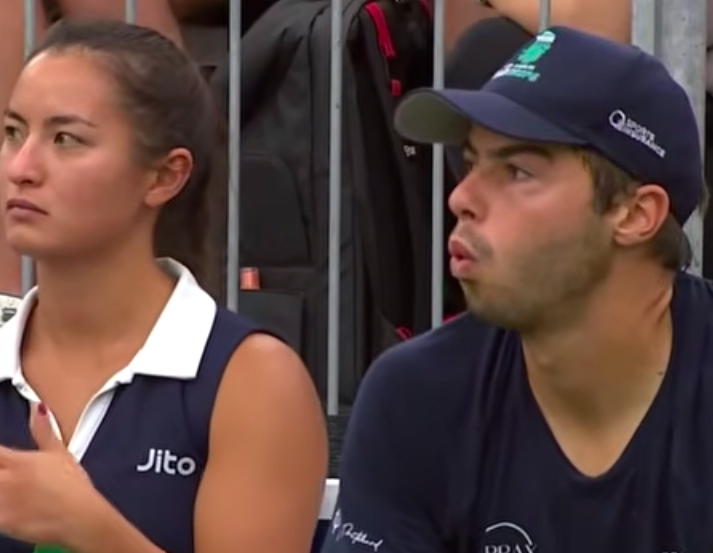
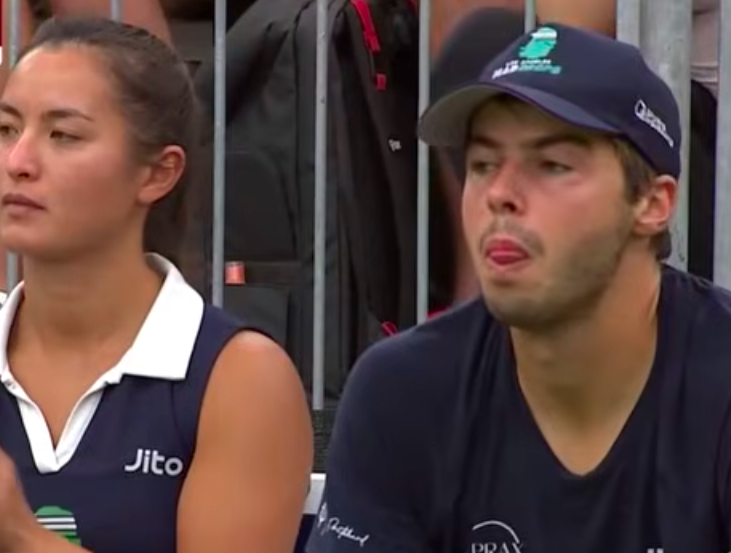
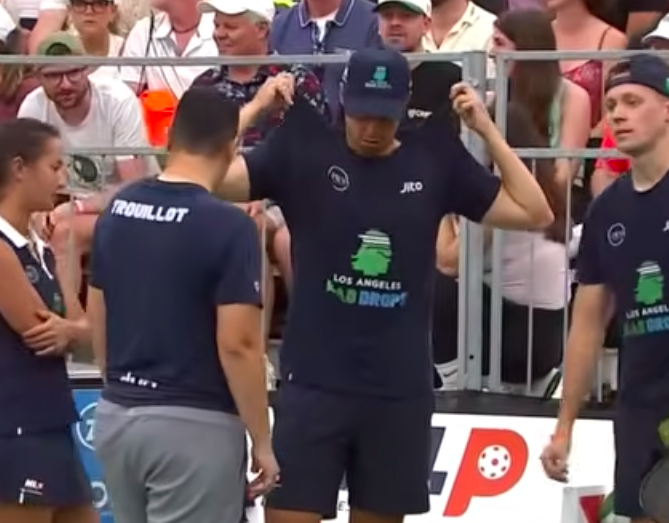
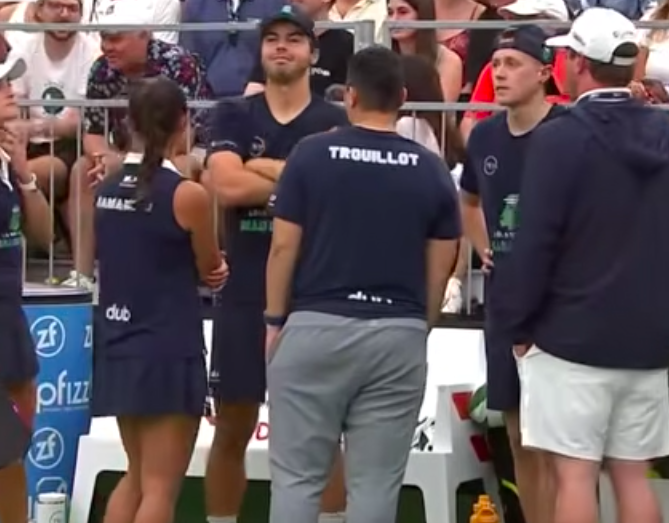
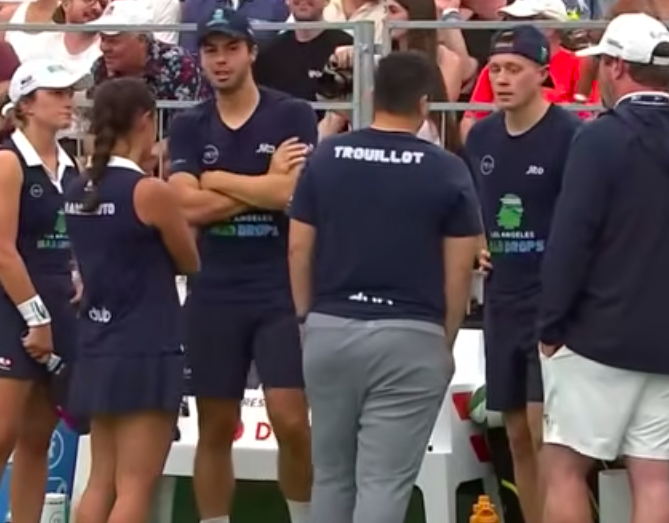
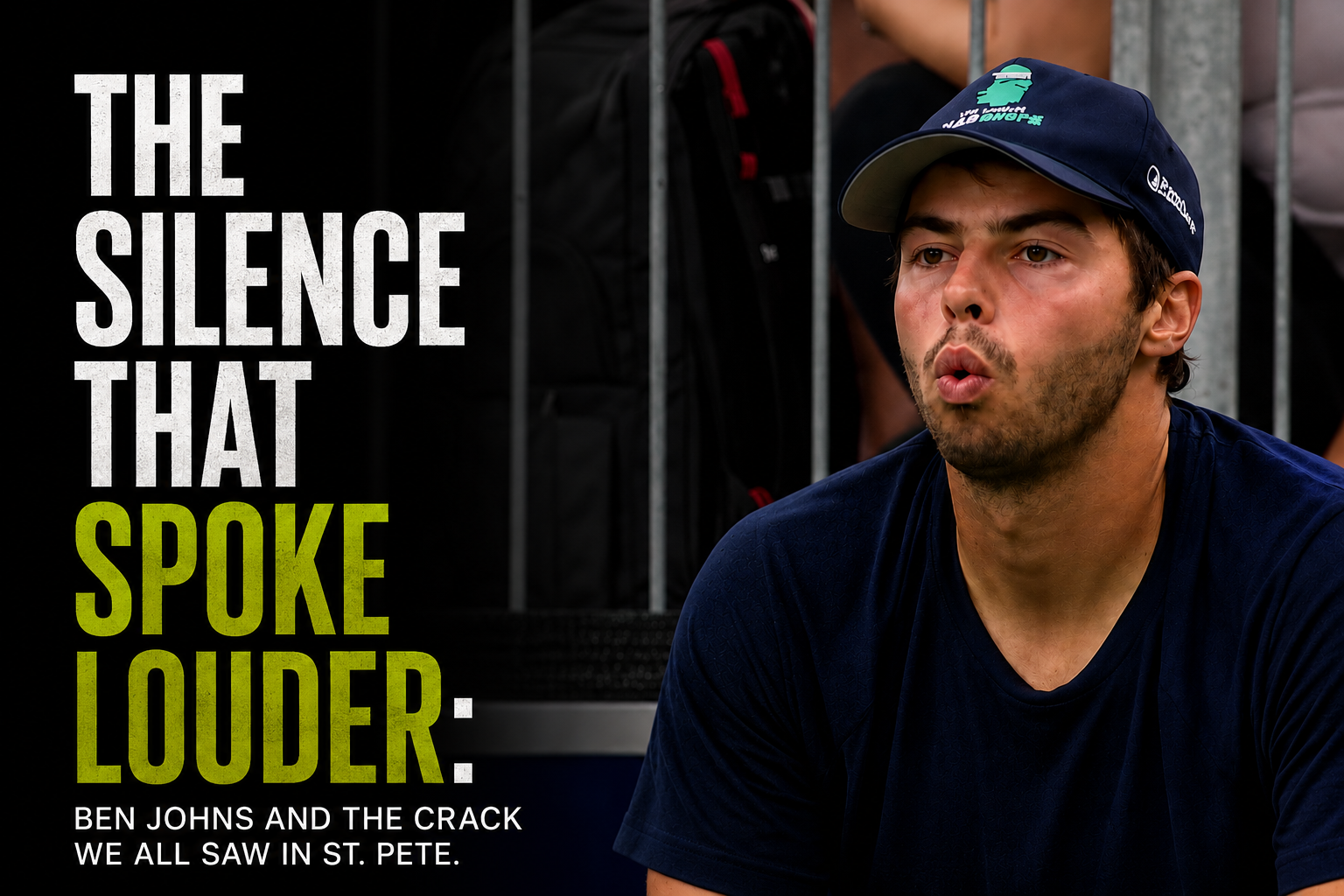
There were no shouts. No paddle thrown, no argument with a teammate. But there was something just as telling: a gaze lost in the distance, a tightened jaw, a body sinking into the chair while the rest of the team processed a painful loss. We all saw it. Many of us talked about it privately. Few dared to say it publicly. At DINK Authority, where we've spent time closely analyzing matches and performances, we believe it's worth naming — not to call Johns out, but to understand something bigger: what happens to a team when its most stable leader starts showing cracks.
To be fair, the context explains almost everything: the LA Mad Drops walked into that St. Pete matchup facing a St. Louis Shock squad that is simply playing pickleball on another level. Hayden Patriquin, Anna Bright, Kate Fahey, and Gabe Tardio aren't just individually dominant — they're a finely tuned machine, the kind rarely seen in this sport, where every piece fits the next without a single crack. Against a team like that, on a roll and synced down to the millimeter, even the best player in the world can run out of answers. And that, more than any personal failure on Johns' part, is what ultimately unraveled his team that day.
What the Body Says When the Mouth Stays Silent
Body language doesn't lie, even when a person works hard to hold composure. The gaze that drifts off, the shoulders that drop, the jaw that tightens while the face stays still — all of it is the nervous system processing something the mind hasn't fully accepted yet. And in Johns' case, what we saw wasn't anger directed at anyone. It was something more internal: the feeling of having no control over what was happening on the court.
LOVE PICKLEBALL?
Get Dink Authority Magazine updates, new editions, pro stories and event alerts.
We respect your privacy. Unsubscribe anytime.
And here's what matters: there's nothing extraordinary about that. It can happen to anyone, in any sport. It simply wasn't his team's day.
This is something anyone who has competed in a team sport recognizes instantly. You can have the best player in the world on the court — the most technically complete, the most mentally disciplined — but if one or two teammates lose their focus, the collective rhythm breaks. And when the rhythm breaks, insecurity creeps in. Not the insecurity of one individual player, but that of the team as an organism: passes hesitate, decisions become either too conservative or too desperate, and every mistake starts to weigh more than the last.
For someone like Johns, used to his level of play being an almost mathematical constant, that kind of match represents something different from simply losing: it represents being unable to do anything about it. And that's where the silent frustration we saw in St. Pete comes from — not the anger of someone losing control, but the helplessness of someone who knows exactly what's needed and can't get the whole machine to work.
When the Leader Cracks, the Team Feels It
In any team sport there's an unspoken rule: a leader's emotional state is contagious. It doesn't need to be said out loud. Teammates read it in posture, in a glance, in the silence that settles on the bench between points. And when that leader also happens to be the best player in the world at his discipline, the weight of that reading is even greater.
This doesn't mean the rest of the team automatically collapses. It means an extra variable comes into play, one that has nothing to do with technique: collective emotional management. Some teammates respond to that silence with sharper focus, trying to compensate for the dip. Others absorb the tension and start playing with more fear of making mistakes — the exact opposite of what a team needs when it's down on the scoreboard.
What sets great teams apart isn't that they never go through these moments. It's what they do with them. And this is where Johns' track record works in his favor again: unlike leaders who channel frustration outward — blaming a teammate, arguing with the referee, losing control of the situation — what we saw in St. Pete was contained frustration, turned inward. Uncomfortable to watch, yes. But not toxic.
The Praise That's Earned in Silence
In the end, what the images from St. Pete capture isn't a crisis or a crack in Ben Johns' character. It's proof that even pickleball's most dominant competitor is still human — that behind the almost robotic consistency that made him the world's number one, there's a player who also feels the frustration of a collective bad day, and processes it by carrying, on his own, the weight of wanting to win and not being able to.
And that's where the real praise lies: Ben Johns is great, and if anything confirms it, it's not just his level of play, but the way he carries leadership even in his worst moments. That's real leadership — the kind built in silence, not in speeches. The LA Mad Drops are among the teams considered title contenders in MLP this season, and with a leader of that character at the front, all signs point to plenty more Ben Johns to come.
The next time all 20 league teams reunite will be the Mid-Season Tournament, July 8-12, in Grand Rapids, Michigan, alongside the Beer City Open — the stop where all of MLP comes together under one roof. There, we'll see whether this uncomfortable version of Johns from St. Pete is left behind, or whether it becomes the fuel that finally lights up his team.
Some players are defined by what they say. Others are defined, precisely, by what they never say. Ben Johns belongs to that second category. Across his years as the undisputed dominator of professional pickleball, we can't recall a single bad-intent play, a tantrum, an unjustified complaint to a referee, or an out-of-line comment. Johns has built his reputation on two pillars: a near-unprecedented technical superiority, and a composure that seemed immune to any scoreline.
That's exactly why what we saw at MLP St. Pete felt so different from everything before it.
There were no shouts. No paddle thrown, no argument with a teammate. But there was something just as telling: a gaze lost in the distance, a tightened jaw, a body sinking into the chair while the rest of the team processed a painful loss. We all saw it. Many of us talked about it privately. Few dared to say it publicly. At DINK Authority, where we've spent time closely analyzing matches and performances, we believe it's worth naming — not to call Johns out, but to understand something bigger: what happens to a team when its most stable leader starts showing cracks.
To be fair, the context explains almost everything: the LA Mad Drops walked into that St. Pete matchup facing a St. Louis Shock squad that is simply playing pickleball on another level. Hayden Patriquin, Anna Bright, Kate Fahey, and Gabe Tardio aren't just individually dominant — they're a finely tuned machine, the kind rarely seen in this sport, where every piece fits the next without a single crack. Against a team like that, on a roll and synced down to the millimeter, even the best player in the world can run out of answers. And that, more than any personal failure on Johns' part, is what ultimately unraveled his team that day.
Current Issue
Domenika Turkovic: Fighting Her Own Demons
Read Now →
What the Body Says When the Mouth Stays Silent
Body language doesn't lie, even when a person works hard to hold composure. The gaze that drifts off, the shoulders that drop, the jaw that tightens while the face stays still — all of it is the nervous system processing something the mind hasn't fully accepted yet. And in Johns' case, what we saw wasn't anger directed at anyone. It was something more internal: the feeling of having no control over what was happening on the court.
LOVE PICKLEBALL?
Get Dink Authority Magazine updates, new editions, pro stories and event alerts.
We respect your privacy. Unsubscribe anytime.
And here's what matters: there's nothing extraordinary about that. It can happen to anyone, in any sport. It simply wasn't his team's day.
This is something anyone who has competed in a team sport recognizes instantly. You can have the best player in the world on the court — the most technically complete, the most mentally disciplined — but if one or two teammates lose their focus, the collective rhythm breaks. And when the rhythm breaks, insecurity creeps in. Not the insecurity of one individual player, but that of the team as an organism: passes hesitate, decisions become either too conservative or too desperate, and every mistake starts to weigh more than the last.

For someone like Johns, used to his level of play being an almost mathematical constant, that kind of match represents something different from simply losing: it represents being unable to do anything about it. And that's where the silent frustration we saw in St. Pete comes from — not the anger of someone losing control, but the helplessness of someone who knows exactly what's needed and can't get the whole machine to work.
When the Leader Cracks, the Team Feels It
In any team sport there's an unspoken rule: a leader's emotional state is contagious. It doesn't need to be said out loud. Teammates read it in posture, in a glance, in the silence that settles on the bench between points. And when that leader also happens to be the best player in the world at his discipline, the weight of that reading is even greater.
This doesn't mean the rest of the team automatically collapses. It means an extra variable comes into play, one that has nothing to do with technique: collective emotional management. Some teammates respond to that silence with sharper focus, trying to compensate for the dip. Others absorb the tension and start playing with more fear of making mistakes — the exact opposite of what a team needs when it's down on the scoreboard.

What sets great teams apart isn't that they never go through these moments. It's what they do with them. And this is where Johns' track record works in his favor again: unlike leaders who channel frustration outward — blaming a teammate, arguing with the referee, losing control of the situation — what we saw in St. Pete was contained frustration, turned inward. Uncomfortable to watch, yes. But not toxic.
The Praise That's Earned in Silence
In the end, what the images from St. Pete capture isn't a crisis or a crack in Ben Johns' character. It's proof that even pickleball's most dominant competitor is still human — that behind the almost robotic consistency that made him the world's number one, there's a player who also feels the frustration of a collective bad day, and processes it by carrying, on his own, the weight of wanting to win and not being able to.
And that's where the real praise lies: Ben Johns is great, and if anything confirms it, it's not just his level of play, but the way he carries leadership even in his worst moments. That's real leadership — the kind built in silence, not in speeches. The LA Mad Drops are among the teams considered title contenders in MLP this season, and with a leader of that character at the front, all signs point to plenty more Ben Johns to come.
The next time all 20 league teams reunite will be the Mid-Season Tournament, July 8-12, in Grand Rapids, Michigan, alongside the Beer City Open — the stop where all of MLP comes together under one roof. There, we'll see whether this uncomfortable version of Johns from St. Pete is left behind, or whether it becomes the fuel that finally lights up his team.
Gallery