What If the World Said Yes? The Pickleball World Cup We Deserve
What If the World Said Yes?
A Dink Authority Editorial | June 2026 | Opinion · Vision
There are moments in a sport's history when everyone knows something great is about to happen — but no one dares to take the first step. Pickleball is living that moment right now. Audiences are growing, sponsors are arriving, athletes are evolving. And yet, the most obvious question remains unanswered: When will we see the best players in the world compete together — without restrictions — for a single title?
This is not an article about what exists. It's about what should exist. It's a hypothetical, yes — but one built on a real architecture of interests, tensions, and possibilities. Because sometimes the most honest journalism doesn't describe the present: it imagines the future the sport deserves.
The Current Landscape: Fragmentation as the Norm
To understand the dream, you first have to understand the problem. Professional pickleball in 2026 is divided between parallel ecosystems: the PPA Tour, MLP, the APP Tour, and a constellation of international events operating under different rules, different contracts, and different loyalties. The best players in the world are scattered across exclusivity agreements that prevent them from competing freely.
What blocks the Cup vs. What would make it possible:
What Blocks the CupWhat Would Make It PossibleExclusivity clauses — Players tied to a single league, unable to appear in rival events.An international window, FIFA-style — An agreed period where all leagues release their players for the world event.Territory wars — League owners who see any collaboration as a loss of control.Collective revenue sharing — A model where the Cup generates income that benefits all participating leagues.Different technical standards — Balls, courts, and rules that vary between organizations.A unified technical committee — A neutral ruleset agreed upon only for the event, without affecting local leagues.
"The greatest moments in sport don't come from contracts. They come when the entire world looks in the same direction at the same time." — Dink Authority Editorial Board
The Hypothetical: What If Everyone Said Yes?
LOVE PICKLEBALL?
Get Dink Authority Magazine updates, new editions, pro stories and event alerts.
We respect your privacy. Unsubscribe anytime.
Imagine it. It's October 2027. We're in a stadium with a capacity of 18,000 people — in a city that knows big events: Miami, Doha, Singapore, Madrid. Cameras from ESPN, DAZN, and a native pickleball streaming platform are broadcasting simultaneously to 40 countries. The best 64 players on the planet have just cleared their respective national qualification processes. No exceptions. No clauses. No excuses.
On center court, Ben Johns and Tyson McGuffin are preparing to face a Spanish duo formed in Mediterranean paddle academies turned pickleball powerhouses. In the women's bracket, Anna Leigh Waters faces a Brazilian player who three years ago had never heard of the sport. The technical level is astonishing. The narrative, universal.
That is the power of a singular event: it turns players into global icons and turns a niche sport into mass culture.
The Three Pillars
I — League Unity
PPA, MLP, and APP as co-founders of the event. Not rivals — partners in the greatest marketing platform pickleball has ever had.
II — Player Freedom
A mandatory 3-week window where no contract can prevent participation in the world event.
III — Global Governance
An independent international committee — with representation from players, leagues, and federations — that administers the Cup without belonging to any single entity.
Who Wins If This Exists?
The honest question every league owner would ask is: What do I gain from this? And the answer is counterintuitive but solid: everyone wins more when pickleball is bigger.
Football taught us that. The NBA taught us that. Tennis learned it the hard way. Events that transcend local structures are the ones that create global brands — which then come back to benefit those same structures. Ben Johns with a World Cup medal is worth ten times more to his league than Ben Johns without one. The audience that gets hooked watching the world tournament then looks for where to watch more pickleball — and there are the leagues, ready to capture that demand.
The Argument No One Can Refute
No league can create alone what a World Cup creates collectively: an event the world cannot ignore. The Super Bowl exists because the NFL had the vision to concentrate all its energy into a single moment. Pickleball needs its own moment. Its own symbol. Its own trophy that the planet recognizes instantly.
The Real Path: Not Utopia, Just Negotiation
Let's be clear: this doesn't happen on good intentions alone. It happens at a negotiating table where each party understands that the cost of not doing it is greater than the cost of giving something up. The model exists. The Ryder Cup formula in golf, the Champions League model in European football, even the NBA All-Star Weekend — all are examples of structures where direct competitors decided that certain moments were too important to leave to the randomness of fragmentation.
What pickleball needs is an architect. A person, an organization, or a player movement bold enough to put a concrete proposal on the table and say: This is the moment. Who's in?
From Dink Authority, we dare to say that moment is now. The sport has critical mass. It has stars with name recognition. It has sponsors who want global scale. All it's missing is a stage worthy of it.
The Image That Says It All
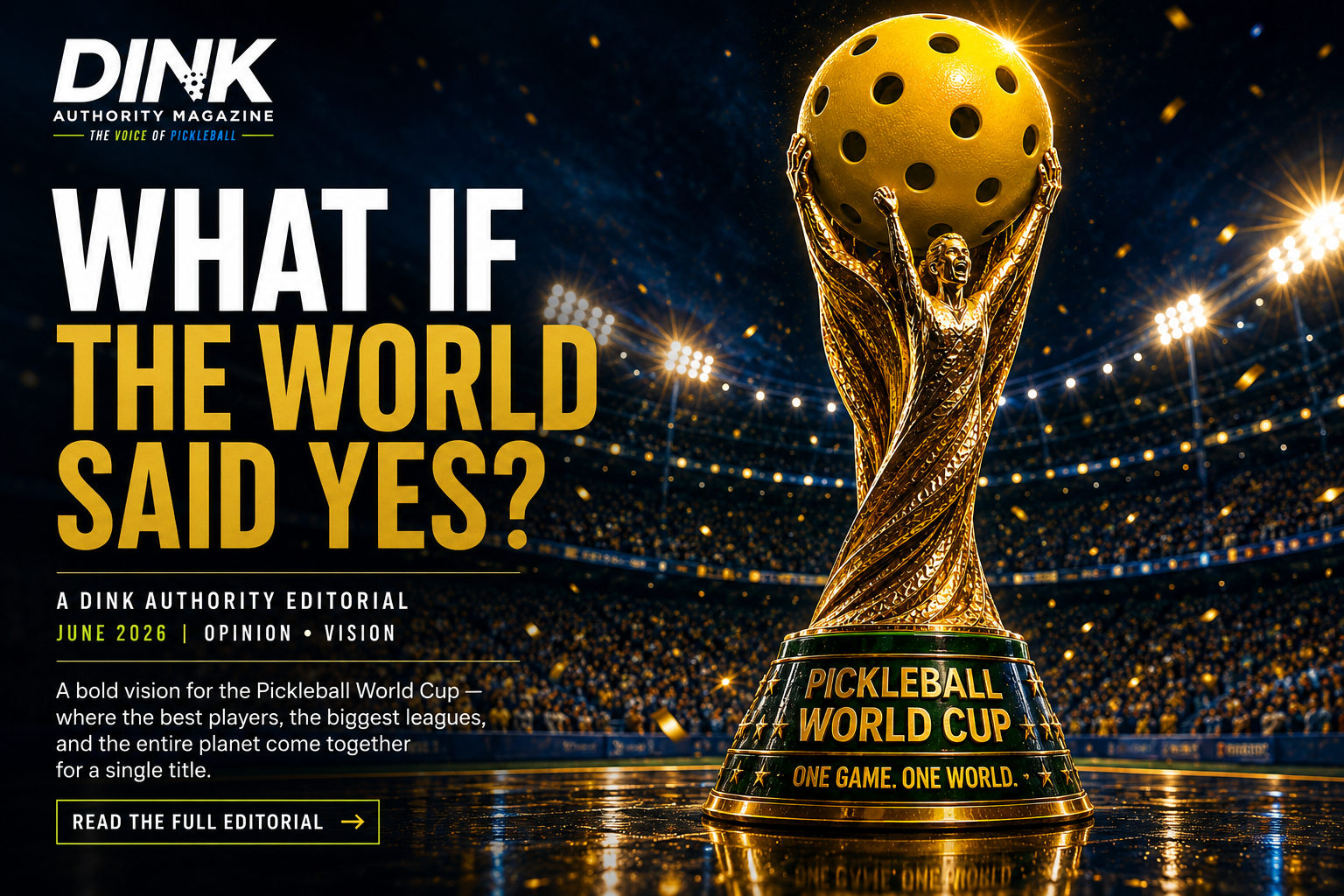
That golden trophy — a human figure raising a pickleball toward the sky, in a packed stadium, with the world watching — doesn't have to be just an illustration. It can be real. It can be the symbol that ten years from now children recognize in any corner of the planet, the same way they recognize the Jules Rimet trophy or the Larry O'Brien.
Pickleball has come too far to settle for being big in North America. Its nature — accessible, multigenerational, competitive and social at the same time — is universally human. The only thing missing is the collective will to build the stage that proves it.
And if that happens, the Pickleball World Cup won't just be the sport's greatest tournament. It will be the moment pickleball became something the entire world recognized as its own.
Dink Authority Editorial Board — The Voice of Pickleball · June 2026
What If the World Said Yes?
A Dink Authority Editorial | June 2026 | Opinion · Vision
There are moments in a sport's history when everyone knows something great is about to happen — but no one dares to take the first step. Pickleball is living that moment right now. Audiences are growing, sponsors are arriving, athletes are evolving. And yet, the most obvious question remains unanswered: When will we see the best players in the world compete together — without restrictions — for a single title?
This is not an article about what exists. It's about what should exist. It's a hypothetical, yes — but one built on a real architecture of interests, tensions, and possibilities. Because sometimes the most honest journalism doesn't describe the present: it imagines the future the sport deserves.
The Current Landscape: Fragmentation as the Norm
To understand the dream, you first have to understand the problem. Professional pickleball in 2026 is divided between parallel ecosystems: the PPA Tour, MLP, the APP Tour, and a constellation of international events operating under different rules, different contracts, and different loyalties. The best players in the world are scattered across exclusivity agreements that prevent them from competing freely.
What blocks the Cup vs. What would make it possible:
What Blocks the CupWhat Would Make It PossibleExclusivity clauses — Players tied to a single league, unable to appear in rival events.An international window, FIFA-style — An agreed period where all leagues release their players for the world event.Territory wars — League owners who see any collaboration as a loss of control.Collective revenue sharing — A model where the Cup generates income that benefits all participating leagues.Different technical standards — Balls, courts, and rules that vary between organizations.A unified technical committee — A neutral ruleset agreed upon only for the event, without affecting local leagues.
Current Issue
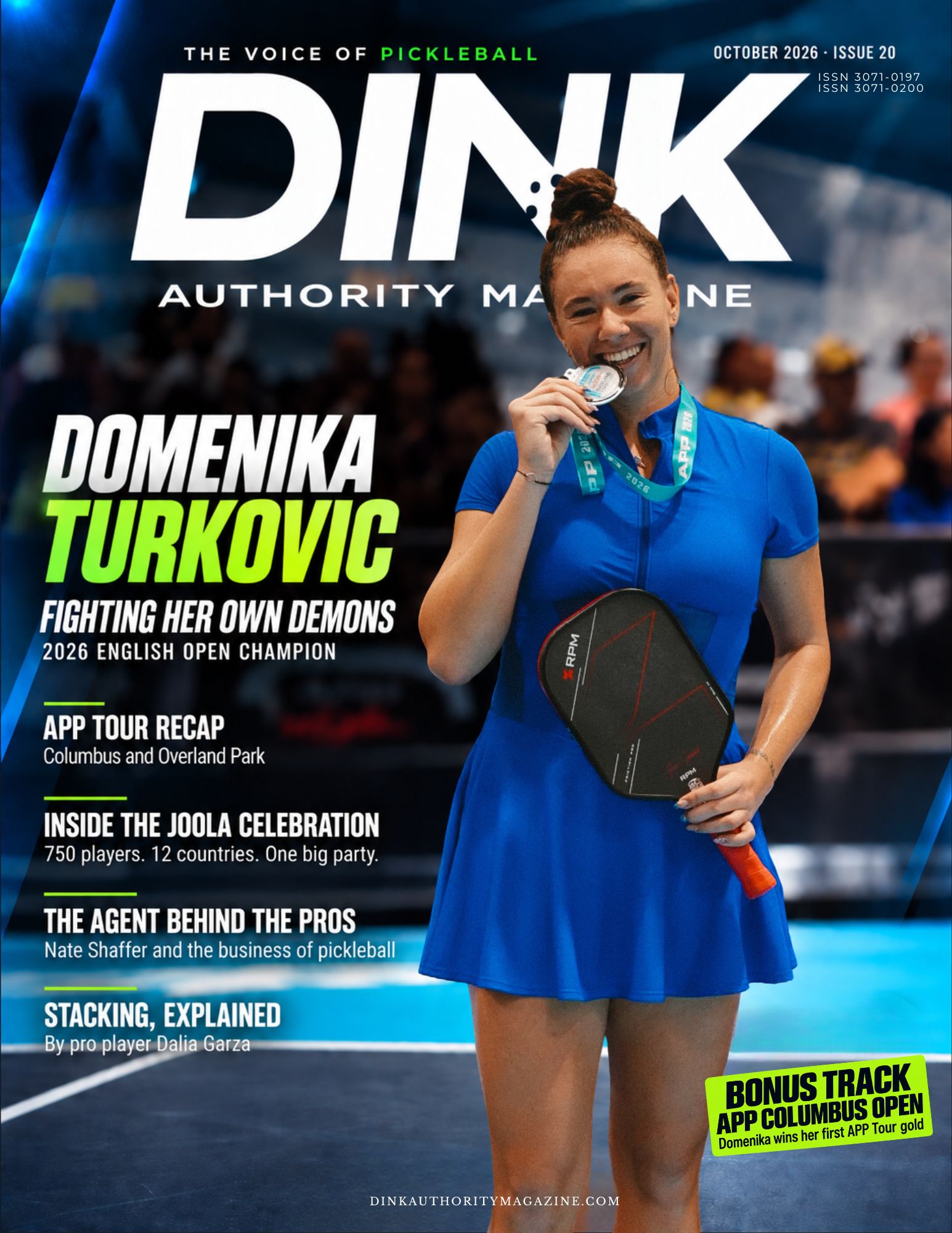
Domenika Turkovic: Fighting Her Own Demons
Read Now →
"The greatest moments in sport don't come from contracts. They come when the entire world looks in the same direction at the same time." — Dink Authority Editorial Board
The Hypothetical: What If Everyone Said Yes?
LOVE PICKLEBALL?
Get Dink Authority Magazine updates, new editions, pro stories and event alerts.
We respect your privacy. Unsubscribe anytime.
Imagine it. It's October 2027. We're in a stadium with a capacity of 18,000 people — in a city that knows big events: Miami, Doha, Singapore, Madrid. Cameras from ESPN, DAZN, and a native pickleball streaming platform are broadcasting simultaneously to 40 countries. The best 64 players on the planet have just cleared their respective national qualification processes. No exceptions. No clauses. No excuses.
On center court, Ben Johns and Tyson McGuffin are preparing to face a Spanish duo formed in Mediterranean paddle academies turned pickleball powerhouses. In the women's bracket, Anna Leigh Waters faces a Brazilian player who three years ago had never heard of the sport. The technical level is astonishing. The narrative, universal.
That is the power of a singular event: it turns players into global icons and turns a niche sport into mass culture.
The Three Pillars
I — League Unity
PPA, MLP, and APP as co-founders of the event. Not rivals — partners in the greatest marketing platform pickleball has ever had.

II — Player Freedom
A mandatory 3-week window where no contract can prevent participation in the world event.
III — Global Governance
An independent international committee — with representation from players, leagues, and federations — that administers the Cup without belonging to any single entity.
Who Wins If This Exists?
The honest question every league owner would ask is: What do I gain from this? And the answer is counterintuitive but solid: everyone wins more when pickleball is bigger.
Football taught us that. The NBA taught us that. Tennis learned it the hard way. Events that transcend local structures are the ones that create global brands — which then come back to benefit those same structures. Ben Johns with a World Cup medal is worth ten times more to his league than Ben Johns without one. The audience that gets hooked watching the world tournament then looks for where to watch more pickleball — and there are the leagues, ready to capture that demand.
The Argument No One Can Refute
No league can create alone what a World Cup creates collectively: an event the world cannot ignore. The Super Bowl exists because the NFL had the vision to concentrate all its energy into a single moment. Pickleball needs its own moment. Its own symbol. Its own trophy that the planet recognizes instantly.
The Real Path: Not Utopia, Just Negotiation

Let's be clear: this doesn't happen on good intentions alone. It happens at a negotiating table where each party understands that the cost of not doing it is greater than the cost of giving something up. The model exists. The Ryder Cup formula in golf, the Champions League model in European football, even the NBA All-Star Weekend — all are examples of structures where direct competitors decided that certain moments were too important to leave to the randomness of fragmentation.
What pickleball needs is an architect. A person, an organization, or a player movement bold enough to put a concrete proposal on the table and say: This is the moment. Who's in?
From Dink Authority, we dare to say that moment is now. The sport has critical mass. It has stars with name recognition. It has sponsors who want global scale. All it's missing is a stage worthy of it.
The Image That Says It All
That golden trophy — a human figure raising a pickleball toward the sky, in a packed stadium, with the world watching — doesn't have to be just an illustration. It can be real. It can be the symbol that ten years from now children recognize in any corner of the planet, the same way they recognize the Jules Rimet trophy or the Larry O'Brien.
Pickleball has come too far to settle for being big in North America. Its nature — accessible, multigenerational, competitive and social at the same time — is universally human. The only thing missing is the collective will to build the stage that proves it.
And if that happens, the Pickleball World Cup won't just be the sport's greatest tournament. It will be the moment pickleball became something the entire world recognized as its own.
Dink Authority Editorial Board — The Voice of Pickleball · June 2026