WHY PICKLEBALL INJURIES ARE RISING IN 2026 — AND WHY PLAYERS ARE FINALLY PAYING ATTENTION
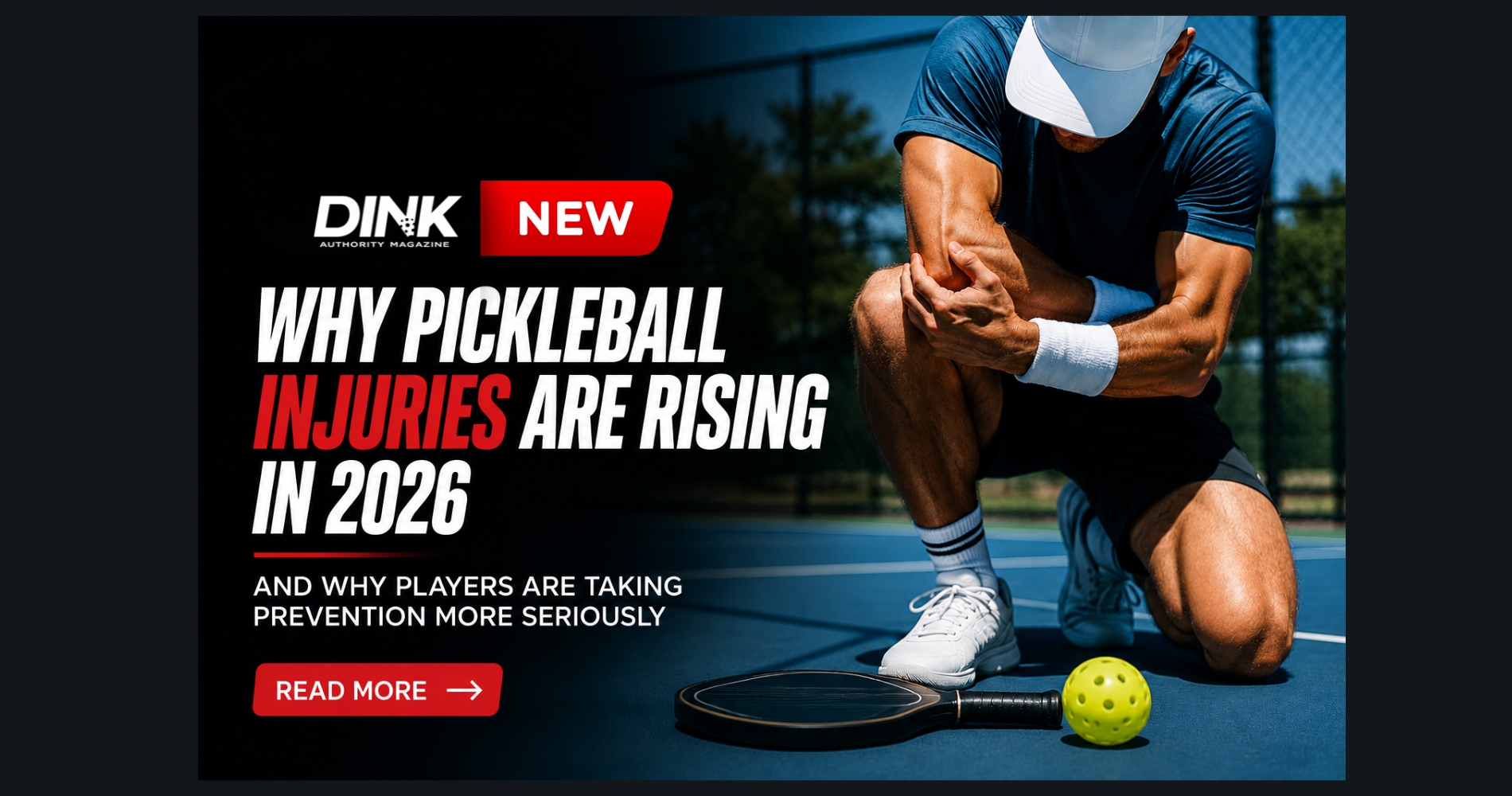
Pickleball is growing faster than almost any sport on the planet. New courts, new tournaments, new leagues, new players — every week, in every corner of the world. Millions of people are discovering a game that combines competition, community, and pure energy in a way very few sports can match.But alongside that growth, a quieter conversation is gaining momentum inside the pickleball community. One that doesn't make the highlight reels. One that doesn't trend on social media. But one that every serious player is starting to feel.Injuries are rising. And the sport is finally starting to take it seriously.FROM BACKYARD GAME TO PHYSICAL DEMANDWhat was once described as a low-impact, easy-to-learn activity has transformed into something considerably more demanding. Today's pickleball is faster, more explosive, and more physically complex than the version played just a few years ago.Matches are longer. Competition is more intense. Players are spending more hours on court. Many athletes now compete multiple times per week — in leagues, tournaments, and open play sessions — without building any recovery, mobility work, or strength training into their routines.And the body eventually responds.Coaches, physical therapists, and sports specialists are increasingly reporting a rise in pickleball-related injuries across all skill levels. Knee pain. Shoulder strain. Tennis elbow. Ankle injuries. Achilles tendon problems. Falls caused by explosive movements and quick directional changes that demand more from the body than many players are prepared for.THE DEMOGRAPHIC SHIFTFor years, pickleball injuries were largely associated with players over 40 — historically one of the sport's strongest demographics. And that remains true. But the trend is no longer limited to older athletes.Younger, more competitive players are now appearing in the conversation. Athletes who are rapidly increasing their training intensity without the physical preparation or recovery habits to support it. Players who treat every session like a tournament without giving their bodies the time and tools to recover between them.The competitive evolution of pickleball is demanding more from every athlete on the court — regardless of age.THE NEW VOCABULARY OF THE SPORTSomething is shifting in how pickleball players talk about their game. Words that once belonged exclusively to professional athletes are becoming part of everyday court conversation.Mobility work. Warm-up routines. Functional strength. Recovery sessions. Hydration protocols. Injury prevention.Specialized court shoes designed for the lateral demands of the game. Stretching routines built for the specific movements pickleball requires. Strength training programs that protect the knees, shoulders, and Achilles tendons that take the most punishment during play.None of these are reserved for the pros anymore. They are becoming essential habits for any player who wants to stay healthy, stay competitive, and stay on the court long term.THE COMPETITIVE ADVANTAGE OF STAYING HEALTHYIn 2026, injury prevention may be one of the most underrated competitive advantages in pickleball.The players who stay off the injury list play more. Train more. Compete more. And over time, they get better faster than the players who are constantly managing pain, recovering from setbacks, or sitting out tournaments they worked hard to enter.The sport is evolving at a remarkable pace. And the players who understand that physical preparation is part of the game — not separate from it — are the ones who will be playing their best pickleball for years to come.At Dink Authority Magazine, we follow every story happening on and off the court. Because the game doesn't stop when the match ends.
LOVE PICKLEBALL?
Get Dink Authority Magazine updates, new editions, pro stories and event alerts.
We respect your privacy. Unsubscribe anytime.
Pickleball is growing faster than almost any sport on the planet. New courts, new tournaments, new leagues, new players — every week, in every corner of the world. Millions of people are discovering a game that combines competition, community, and pure energy in a way very few sports can match.But alongside that growth, a quieter conversation is gaining momentum inside the pickleball community. One that doesn't make the highlight reels. One that doesn't trend on social media. But one that every serious player is starting to feel.Injuries are rising. And the sport is finally starting to take it seriously.FROM BACKYARD GAME TO PHYSICAL DEMANDWhat was once described as a low-impact, easy-to-learn activity has transformed into something considerably more demanding. Today's pickleball is faster, more explosive, and more physically complex than the version played just a few years ago.Matches are longer. Competition is more intense. Players are spending more hours on court. Many athletes now compete multiple times per week — in leagues, tournaments, and open play sessions — without building any recovery, mobility work, or strength training into their routines.And the body eventually responds.Coaches, physical therapists, and sports specialists are increasingly reporting a rise in pickleball-related injuries across all skill levels. Knee pain. Shoulder strain. Tennis elbow. Ankle injuries. Achilles tendon problems. Falls caused by explosive movements and quick directional changes that demand more from the body than many players are prepared for.THE DEMOGRAPHIC SHIFTFor years, pickleball injuries were largely associated with players over 40 — historically one of the sport's strongest demographics. And that remains true. But the trend is no longer limited to older athletes.Younger, more competitive players are now appearing in the conversation. Athletes who are rapidly increasing their training intensity without the physical preparation or recovery habits to support it. Players who treat every session like a tournament without giving their bodies the time and tools to recover between them.The competitive evolution of pickleball is demanding more from every athlete on the court — regardless of age.THE NEW VOCABULARY OF THE SPORTSomething is shifting in how pickleball players talk about their game. Words that once belonged exclusively to professional athletes are becoming part of everyday court conversation.Mobility work. Warm-up routines. Functional strength. Recovery sessions. Hydration protocols. Injury prevention.Specialized court shoes designed for the lateral demands of the game. Stretching routines built for the specific movements pickleball requires. Strength training programs that protect the knees, shoulders, and Achilles tendons that take the most punishment during play.None of these are reserved for the pros anymore. They are becoming essential habits for any player who wants to stay healthy, stay competitive, and stay on the court long term.THE COMPETITIVE ADVANTAGE OF STAYING HEALTHYIn 2026, injury prevention may be one of the most underrated competitive advantages in pickleball.The players who stay off the injury list play more. Train more. Compete more. And over time, they get better faster than the players who are constantly managing pain, recovering from setbacks, or sitting out tournaments they worked hard to enter.The sport is evolving at a remarkable pace. And the players who understand that physical preparation is part of the game — not separate from it — are the ones who will be playing their best pickleball for years to come.At Dink Authority Magazine, we follow every story happening on and off the court. Because the game doesn't stop when the match ends.
LOVE PICKLEBALL?
Get Dink Authority Magazine updates, new editions, pro stories and event alerts.
We respect your privacy. Unsubscribe anytime.