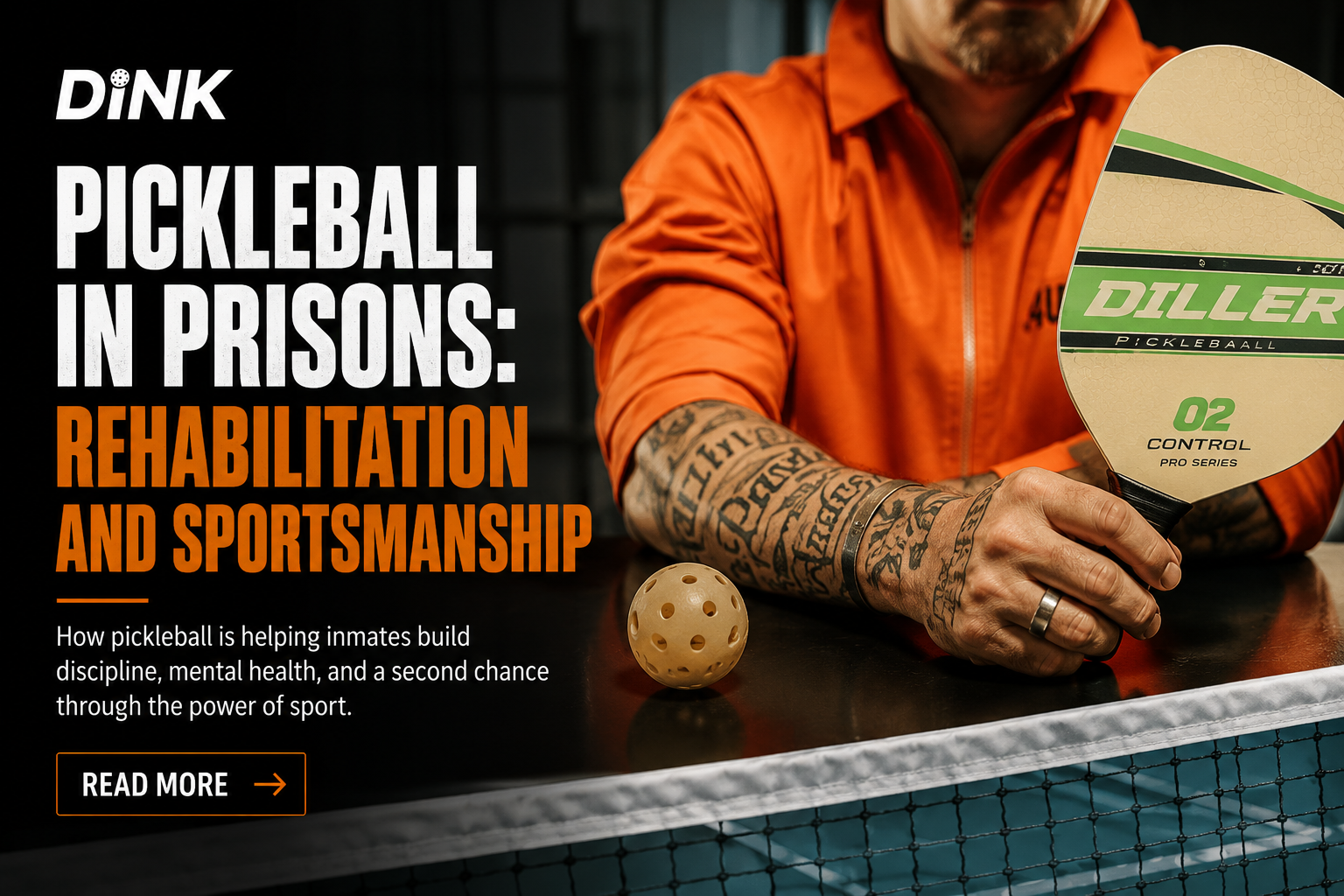
Pickleball in Prisons: Rehabilitation and Sportsmanship
PICKLEBALL IN PRISONS: REHABILITATION AND SPORTSMANSHIP
By the Dink Authority Magazine Editorial Team
LOVE PICKLEBALL?
Get Dink Authority Magazine updates, new editions, pro stories and event alerts.
We respect your privacy. Unsubscribe anytime.
There is a conversation happening inside America's correctional facilities that few people outside those walls are aware of. It doesn't involve policy reform or budget debates. It involves a paddle, a plastic ball, and a sport that is quietly changing lives in some of the most challenging environments imaginable.
Pickleball has entered the prison system. And the results are impossible to ignore.
THE IDEA THAT STARTED IT ALL
It all began with Roger BelAir, a retired banker turned pickleball evangelist. After watching a television episode highlighting the mental and physical toll of incarceration, BelAir approached correctional facilities with a simple idea: introduce pickleball as a tool for rehabilitation. His first pilot program took place in Chicago's Cook County Jail, where inmates immediately took to the game. "I saw how quickly they learned to collaborate and how it changed the atmosphere in the yard," said BelAir. YouTube
That idea grew into something much larger.
Today, the Pickleball for Incarcerated Communities League — known as PICL — operates with the belief that organized sports can serve as a powerful tool for restorative justice. Its mission is to introduce pickleball programs into correctional facilities, offering a holistic approach to rehabilitation that encompasses physical activity, skill acquisition, mental well-being, and social reintegration. fotmob
Now active in 10 states and more than 40 facilities nationwide, the program aims to reduce behavioral incidents during incarceration and lower recidivism after release. fotmob
WHY PICKLEBALL WORKS WHERE OTHER SPORTS HAVEN'T
Not every sport translates well to a correctional environment. Pickleball does — and the reasons go beyond logistics.
Unlike basketball, which often favors the tall and athletic, pickleball is easy to learn and relies on finesse over power. It brings together players across age, skill, and even gang lines — sometimes alongside correctional staff — building bonds that extend beyond the court. fotmob
The growing popularity of pickleball in federal prisons aligns with a broader shift toward rehabilitation-focused corrections practices. Programs like pickleball are seen as tools to reduce recidivism by teaching inmates valuable life skills and helping them develop healthier habits. Some facilities even host pickleball tournaments, adding an element of achievement and recognition for participants, further boosting their self-esteem and sense of accomplishment. YouTube
THE PHYSICAL AND MENTAL BENEFITS
The benefits extend well beyond the court surface.
Pickleball is a low-impact sport accessible to people of all ages and fitness levels — including those who have not been physically active for extended periods. Regular play improves cardiovascular health, builds muscle tone, and supports an active lifestyle. But perhaps more significantly, it addresses something that correctional environments often struggle to manage: mental health.
The doubles format requires players to work together, fostering skills like conflict resolution and collaboration. Inmates build trust through their shared goal, encouraging teamwork and enhancing their interpersonal skills. Physical activity also contributes to reducing anxiety and depression — conditions that are disproportionately common in prison populations. YouTube
Inmates report better morale, less negativity, and a rare sense of camaraderie. Staff cooperation — from setting up courts to joining games — has helped these programs thrive. fotmob
WHERE IT IS HAPPENING
California has been among the leaders in this movement. At Mule Creek State Prison, pickleball is part of the Norwegian model of rehabilitation adopted by the California Department of Corrections, which aims to emphasize rehabilitation and treat inmates with dignity. The program has grown significantly, with donated equipment helping elevate the level of play and the engagement of participants. fotmob
In Massachusetts, pickleball began at the Worcester County House of Correction when enthusiast Bill McConaghy approached the sheriff with the idea of bringing the sport to the jail's STOP unit — a program focused on addiction recovery and behavioral skills. The results were strong enough to inspire expansion across multiple states. fotmob
In Texas, facilities have adopted pickleball as part of their physical activity programs, helping inmates promote health and reduce tensions. In Florida, correctional facilities have integrated pickleball into rehabilitation initiatives, playing the sport in both singles and doubles formats to promote interaction and develop teamwork skills.
A SPORT THAT BUILDS MORE THAN POINTS
The PICL program works to train both staff and incarcerated individuals to learn the fundamentals of the game and ultimately become passionate players who can create sustainable, lasting programs within their facilities. fotmob
The model is designed not just for the time spent inside — but for what comes after. The life skills developed on a pickleball court — patience, communication, respect for opponents, the ability to manage frustration — are the same skills that support successful reintegration into society.
From breaking down barriers to preparing inmates for life after prison, pickleball's simple paddle-and-ball formula is producing powerful results — proving that even in the toughest environments, a little teamwork can go a long way. fotmob
THE BIGGER PICTURE
Pickleball has always been more than a sport. It is a community builder, a health tool, and a connector of people who might otherwise never share a court. What is happening inside America's correctional facilities is simply the most compelling evidence yet of that truth.
The sport didn't ask for permission to make a difference in these places. It simply showed up — easy to learn, hard to put down, and surprisingly powerful in the hands of people who needed it most.
That is exactly what pickleball does.
PICKLEBALL IN PRISONS: REHABILITATION AND SPORTSMANSHIP
By the Dink Authority Magazine Editorial Team
LOVE PICKLEBALL?
Get Dink Authority Magazine updates, new editions, pro stories and event alerts.
We respect your privacy. Unsubscribe anytime.
Current Issue
Domenika Turkovic: Fighting Her Own Demons
Read Now →
There is a conversation happening inside America's correctional facilities that few people outside those walls are aware of. It doesn't involve policy reform or budget debates. It involves a paddle, a plastic ball, and a sport that is quietly changing lives in some of the most challenging environments imaginable.
Pickleball has entered the prison system. And the results are impossible to ignore.
THE IDEA THAT STARTED IT ALL
It all began with Roger BelAir, a retired banker turned pickleball evangelist. After watching a television episode highlighting the mental and physical toll of incarceration, BelAir approached correctional facilities with a simple idea: introduce pickleball as a tool for rehabilitation. His first pilot program took place in Chicago's Cook County Jail, where inmates immediately took to the game. "I saw how quickly they learned to collaborate and how it changed the atmosphere in the yard," said BelAir. YouTube
That idea grew into something much larger.
Today, the Pickleball for Incarcerated Communities League — known as PICL — operates with the belief that organized sports can serve as a powerful tool for restorative justice. Its mission is to introduce pickleball programs into correctional facilities, offering a holistic approach to rehabilitation that encompasses physical activity, skill acquisition, mental well-being, and social reintegration. fotmob
Now active in 10 states and more than 40 facilities nationwide, the program aims to reduce behavioral incidents during incarceration and lower recidivism after release. fotmob
WHY PICKLEBALL WORKS WHERE OTHER SPORTS HAVEN'T
Not every sport translates well to a correctional environment. Pickleball does — and the reasons go beyond logistics.
Unlike basketball, which often favors the tall and athletic, pickleball is easy to learn and relies on finesse over power. It brings together players across age, skill, and even gang lines — sometimes alongside correctional staff — building bonds that extend beyond the court. fotmob
The growing popularity of pickleball in federal prisons aligns with a broader shift toward rehabilitation-focused corrections practices. Programs like pickleball are seen as tools to reduce recidivism by teaching inmates valuable life skills and helping them develop healthier habits. Some facilities even host pickleball tournaments, adding an element of achievement and recognition for participants, further boosting their self-esteem and sense of accomplishment. YouTube
THE PHYSICAL AND MENTAL BENEFITS
The benefits extend well beyond the court surface.
Pickleball is a low-impact sport accessible to people of all ages and fitness levels — including those who have not been physically active for extended periods. Regular play improves cardiovascular health, builds muscle tone, and supports an active lifestyle. But perhaps more significantly, it addresses something that correctional environments often struggle to manage: mental health.
The doubles format requires players to work together, fostering skills like conflict resolution and collaboration. Inmates build trust through their shared goal, encouraging teamwork and enhancing their interpersonal skills. Physical activity also contributes to reducing anxiety and depression — conditions that are disproportionately common in prison populations. YouTube
Inmates report better morale, less negativity, and a rare sense of camaraderie. Staff cooperation — from setting up courts to joining games — has helped these programs thrive. fotmob
WHERE IT IS HAPPENING
California has been among the leaders in this movement. At Mule Creek State Prison, pickleball is part of the Norwegian model of rehabilitation adopted by the California Department of Corrections, which aims to emphasize rehabilitation and treat inmates with dignity. The program has grown significantly, with donated equipment helping elevate the level of play and the engagement of participants. fotmob
In Massachusetts, pickleball began at the Worcester County House of Correction when enthusiast Bill McConaghy approached the sheriff with the idea of bringing the sport to the jail's STOP unit — a program focused on addiction recovery and behavioral skills. The results were strong enough to inspire expansion across multiple states. fotmob
In Texas, facilities have adopted pickleball as part of their physical activity programs, helping inmates promote health and reduce tensions. In Florida, correctional facilities have integrated pickleball into rehabilitation initiatives, playing the sport in both singles and doubles formats to promote interaction and develop teamwork skills.
A SPORT THAT BUILDS MORE THAN POINTS
The PICL program works to train both staff and incarcerated individuals to learn the fundamentals of the game and ultimately become passionate players who can create sustainable, lasting programs within their facilities. fotmob
The model is designed not just for the time spent inside — but for what comes after. The life skills developed on a pickleball court — patience, communication, respect for opponents, the ability to manage frustration — are the same skills that support successful reintegration into society.
From breaking down barriers to preparing inmates for life after prison, pickleball's simple paddle-and-ball formula is producing powerful results — proving that even in the toughest environments, a little teamwork can go a long way. fotmob
THE BIGGER PICTURE
Pickleball has always been more than a sport. It is a community builder, a health tool, and a connector of people who might otherwise never share a court. What is happening inside America's correctional facilities is simply the most compelling evidence yet of that truth.
The sport didn't ask for permission to make a difference in these places. It simply showed up — easy to learn, hard to put down, and surprisingly powerful in the hands of people who needed it most.
That is exactly what pickleball does.