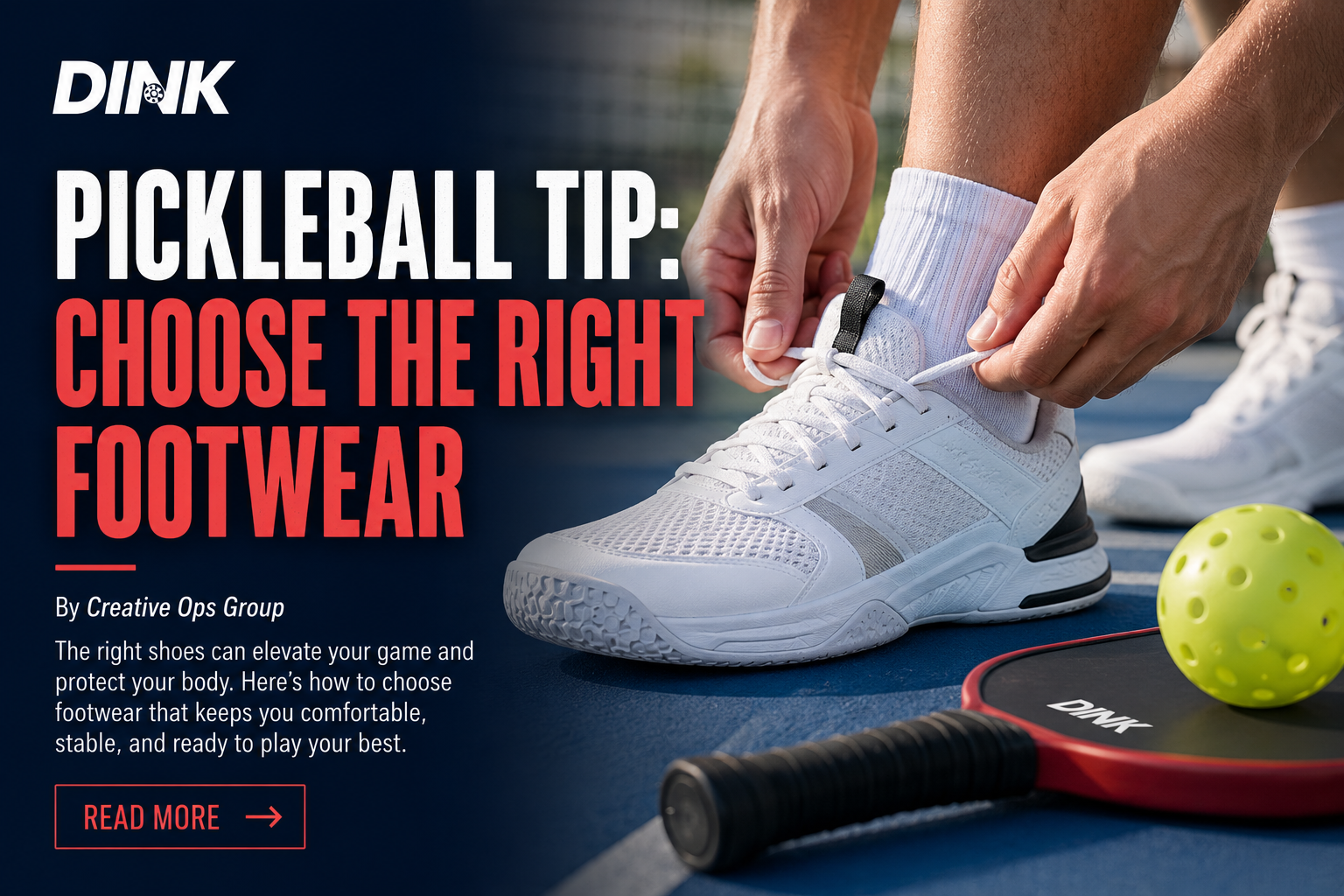
Pickleball Tip: How to Choose the Right Footwear for the Court
DINK AUTHORITY MAGAZINE | TIPS
PICKLEBALL TIP: CHOOSE THE RIGHT FOOTWEAR
By the Dink Authority Magazine Editorial Team
LOVE PICKLEBALL?
Get Dink Authority Magazine updates, new editions, pro stories and event alerts.
We respect your privacy. Unsubscribe anytime.
In pickleball, your paddle gets most of the attention. But ask any experienced player what has made the biggest difference in their game — and many will point down.
Your shoes are the foundation of every movement you make on the court. And choosing the wrong pair doesn't just affect your performance — it can lead to serious injuries that keep you off the court for months.
WHY YOUR REGULAR SNEAKERS AREN'T ENOUGH
This is the mistake most new players make: showing up in running shoes, cross-trainers, or casual sneakers. It feels fine at first. Then comes the first sharp lateral move, the sudden stop at the kitchen line, the pivot on a wide ball — and that's when the wrong shoe becomes a problem.
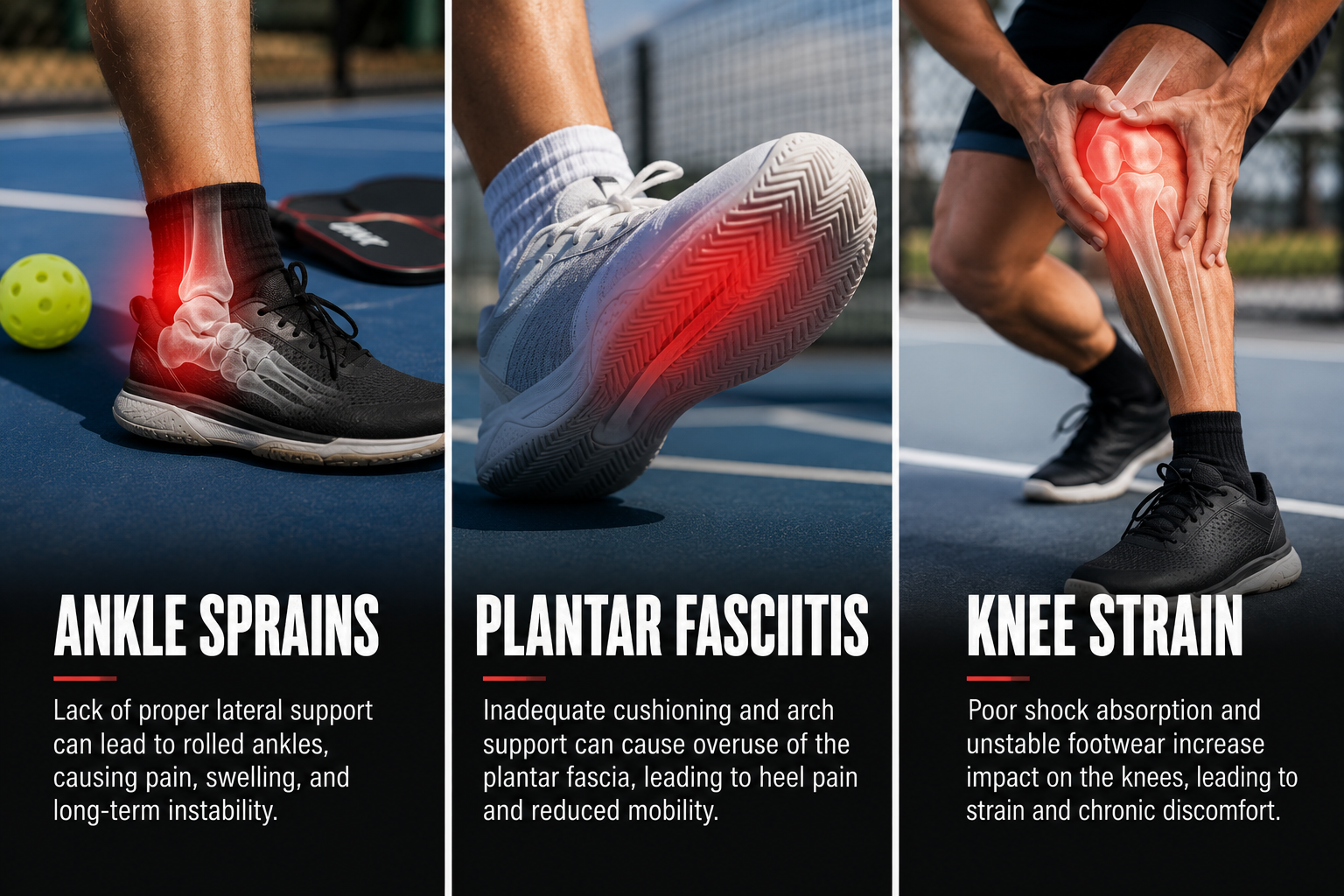
Pickleball demands constant lateral movement, quick pivots, and sudden stops. Regular running shoes are engineered for forward motion only. They are not built for the side-to-side demands of a pickleball court. Using them increases the risk of ankle sprains, knee stress, and foot discomfort — especially during longer sessions.
The solution is simple: court shoes. And once you play in a proper pair, you won't go back.
WHAT TO LOOK FOR IN A PICKLEBALL SHOE
A good pickleball court shoe needs to deliver three things: traction, stability, and durability. The best ones balance those with comfort so you can stay on the court longer without feeling like your feet are cooked after two games.
Here is what matters most:
TRACTION AND SOLE TYPE
The sole is the most important feature. Indoor and outdoor courts require completely different sole types. Using the wrong shoe on the wrong surface destroys your traction and ruins your shoes instantly. For outdoor courts, look for a thick herringbone or gum rubber outsole. For indoor courts, a non-marking gum sole with grip designed for smooth surfaces is essential.
LATERAL SUPPORT
Your ankles take a beating in pickleball. A shoe with a reinforced heel cup, padded ankle collar, and a stable base will protect you during fast exchanges and quick changes of direction. This is non-negotiable — especially for players who are on the court several times a week.
CUSHIONING AND COURT FEEL
The best pickleball shoes for 2026 are leaning into smarter support: stable enough for quick lateral moves and hard stops, but still flexible so your feet feel natural — not locked in. Some players prefer a thinner midsole for a more direct court feel. Others want more cushioning for longer sessions. Know your preference before you buy. fotmob
FIT AND TOE BOX
A wide toe box allows your foot to spread naturally during movement, reducing blisters and improving stability. If you've ever finished a session with sore toes or black toenails, a shoe with more toe room is the answer.
HOW LONG SHOULD A PICKLEBALL SHOE LAST?
If you play frequently — especially outdoors — expect most pickleball shoes to last around 3 to 6 months before traction starts to fade. Once the grip begins to wear down, your game and your joints will feel it. Rotating between two pairs extends the life of both and keeps your feet in better condition between sessions.
Clean your shoes after each session and store them in a ventilated space. Avoid leaving them in a closed bag or car trunk, and use antiseptic powder to keep them fresh and hygienic.
THE BUDGET QUESTION
You don't need to spend a fortune to play well. For a budget under $80, solid options include the Skechers Viper Court and the ASICS Gel-Rocket — both proven court shoes that deliver reliable traction and support without the premium price tag.
For players who are on the court daily or competing at higher levels, investing in a more technical shoe pays off in performance and injury prevention. At the higher end, options like the SQAIRZ — which comes with a six-month wear guarantee on the outsole — offer a level of durability that is rare in pickleball footwear.
ONE FINAL TIP
After an intense session, give your feet a break. Comfortable sandals or slides after playing allow your feet to recover, reduce inflammation, and make the next session feel that much better.
Your paddle can be upgraded anytime. Your knees and ankles cannot. Invest in the right footwear — your body will thank you.
DINK AUTHORITY MAGAZINE | TIPS
PICKLEBALL TIP: CHOOSE THE RIGHT FOOTWEAR
By the Dink Authority Magazine Editorial Team
LOVE PICKLEBALL?
Get Dink Authority Magazine updates, new editions, pro stories and event alerts.
We respect your privacy. Unsubscribe anytime.
In pickleball, your paddle gets most of the attention. But ask any experienced player what has made the biggest difference in their game — and many will point down.
Your shoes are the foundation of every movement you make on the court. And choosing the wrong pair doesn't just affect your performance — it can lead to serious injuries that keep you off the court for months.
WHY YOUR REGULAR SNEAKERS AREN'T ENOUGH
This is the mistake most new players make: showing up in running shoes, cross-trainers, or casual sneakers. It feels fine at first. Then comes the first sharp lateral move, the sudden stop at the kitchen line, the pivot on a wide ball — and that's when the wrong shoe becomes a problem.
Pickleball demands constant lateral movement, quick pivots, and sudden stops. Regular running shoes are engineered for forward motion only. They are not built for the side-to-side demands of a pickleball court. Using them increases the risk of ankle sprains, knee stress, and foot discomfort — especially during longer sessions.
The solution is simple: court shoes. And once you play in a proper pair, you won't go back.
WHAT TO LOOK FOR IN A PICKLEBALL SHOE
A good pickleball court shoe needs to deliver three things: traction, stability, and durability. The best ones balance those with comfort so you can stay on the court longer without feeling like your feet are cooked after two games.
Here is what matters most:
TRACTION AND SOLE TYPE
The sole is the most important feature. Indoor and outdoor courts require completely different sole types. Using the wrong shoe on the wrong surface destroys your traction and ruins your shoes instantly. For outdoor courts, look for a thick herringbone or gum rubber outsole. For indoor courts, a non-marking gum sole with grip designed for smooth surfaces is essential.
LATERAL SUPPORT
Your ankles take a beating in pickleball. A shoe with a reinforced heel cup, padded ankle collar, and a stable base will protect you during fast exchanges and quick changes of direction. This is non-negotiable — especially for players who are on the court several times a week.
CUSHIONING AND COURT FEEL
The best pickleball shoes for 2026 are leaning into smarter support: stable enough for quick lateral moves and hard stops, but still flexible so your feet feel natural — not locked in. Some players prefer a thinner midsole for a more direct court feel. Others want more cushioning for longer sessions. Know your preference before you buy. fotmob
FIT AND TOE BOX
A wide toe box allows your foot to spread naturally during movement, reducing blisters and improving stability. If you've ever finished a session with sore toes or black toenails, a shoe with more toe room is the answer.
HOW LONG SHOULD A PICKLEBALL SHOE LAST?
If you play frequently — especially outdoors — expect most pickleball shoes to last around 3 to 6 months before traction starts to fade. Once the grip begins to wear down, your game and your joints will feel it. Rotating between two pairs extends the life of both and keeps your feet in better condition between sessions.
Clean your shoes after each session and store them in a ventilated space. Avoid leaving them in a closed bag or car trunk, and use antiseptic powder to keep them fresh and hygienic.
THE BUDGET QUESTION
You don't need to spend a fortune to play well. For a budget under $80, solid options include the Skechers Viper Court and the ASICS Gel-Rocket — both proven court shoes that deliver reliable traction and support without the premium price tag.
For players who are on the court daily or competing at higher levels, investing in a more technical shoe pays off in performance and injury prevention. At the higher end, options like the SQAIRZ — which comes with a six-month wear guarantee on the outsole — offer a level of durability that is rare in pickleball footwear.
ONE FINAL TIP
After an intense session, give your feet a break. Comfortable sandals or slides after playing allow your feet to recover, reduce inflammation, and make the next session feel that much better.
Your paddle can be upgraded anytime. Your knees and ankles cannot. Invest in the right footwear — your body will thank you.

Gallery