Pickleball Social Leagues Are Changing How People Connect, Network, and Socialize
Pickleball Social Leagues Are Changing How People Connect, Network, and Socialize
Why Millennials & Gen Z Are Turning Pickleball Into a Lifestyle Movement
Just a few years ago, pickleball carried a reputation that was hard to ignore.
For many people, it was simply the sport of retirees.
A quiet recreational game. Something happening at private clubs at 8 in the morning while birds chirped in the background and someone talked about investments or back pain.
But something changed.
And it changed fast.
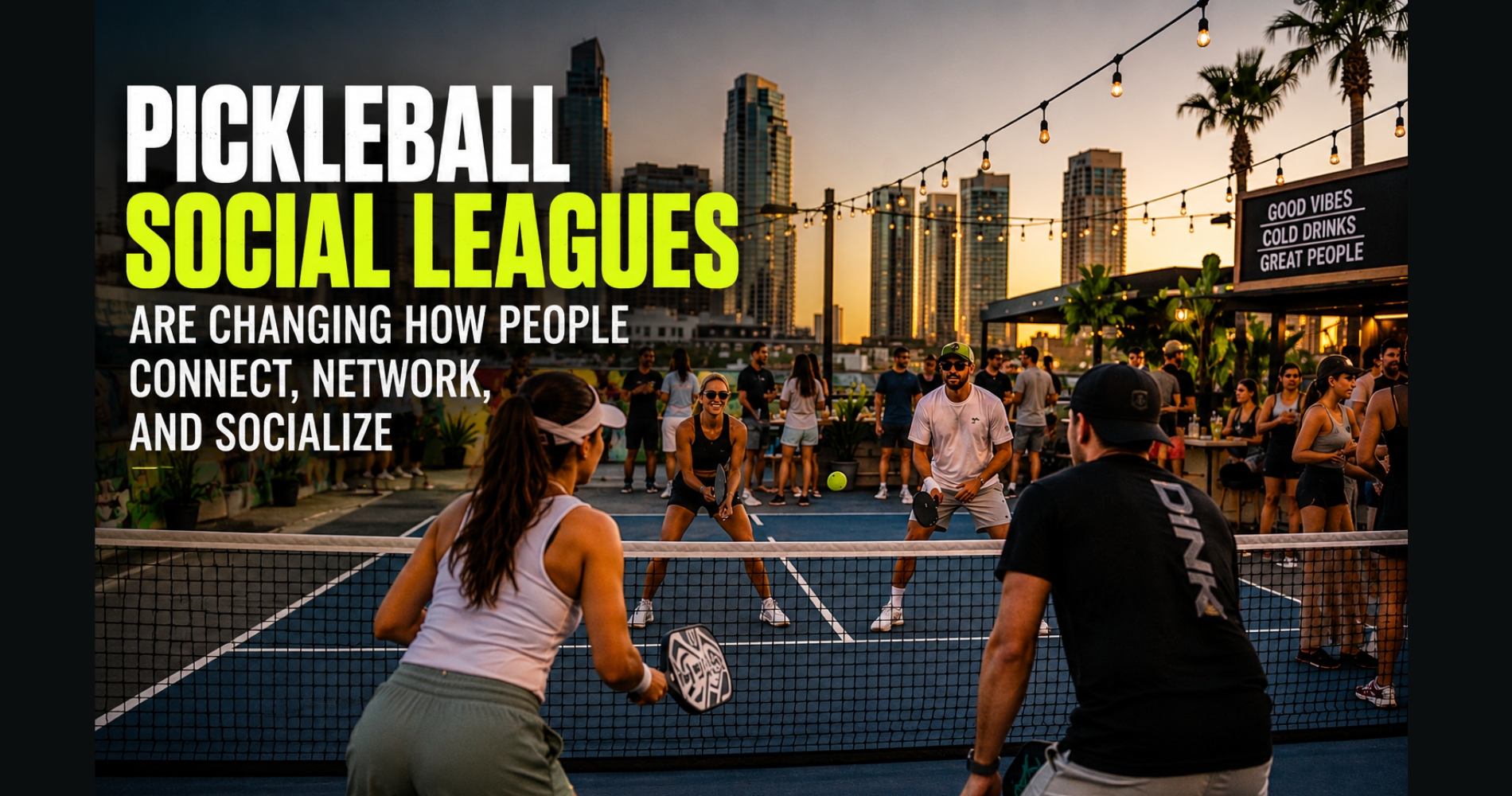
Today, finding an open court after 6 PM in cities like Miami, Austin, Scottsdale, or San Diego is becoming almost impossible. What once looked like a niche sport has quietly evolved into something completely different: a social meeting point.
Because pickleball is no longer only about competition.
Now it’s also:
friends,
after-work hangouts,
networking,
post-game beers,
group chats,
TikToks,
mixed leagues,
travel,
fitness,
content,
and yes… even dating.
Nobody really saw that coming.
And that might be exactly why Millennials and Gen Z are entering pickleball at an absurd speed.
Unlike many traditional sports that require years of technical development before you can truly enjoy them, pickleball gives people something immediate: connection.
The learning curve is fast.
Conversations happen naturally.
And within an hour, complete strangers are playing together like they’ve known each other for months.
LOVE PICKLEBALL?
Get Dink Authority Magazine updates, new editions, pro stories and event alerts.
We respect your privacy. Unsubscribe anytime.
At a time when so much of life happens behind screens, pickleball is filling a void many people didn’t even realize they had.
Real community.
And that’s exactly why “social leagues” are exploding right now.
It’s no longer only about winning matches. Many of these leagues are built around the entire experience:
music,
food trucks,
bars,
fashion,
networking,
night events,
and social dynamics that sometimes feel more like a mix between an urban festival and a recreational sport.
Ironically, the sport that spent years being underestimated for being “too slow” is now creating one of the fastest-growing social scenes in America.
And while some people still think pickleball is only a hobby for retirees, an entirely new generation has already turned the courts into their favorite place to socialize.
And that’s where the phenomenon becomes really interesting.
For decades, golf was seen as the perfect sport for building business relationships. And honestly, it made sense. It doesn’t require extreme physical intensity, it allows long conversations, networking, closing deals, and spending hours together in a relaxed environment.
But pickleball is starting to become something much more modern — and for many people, even better.
Because yes, you can play casually, laugh, socialize, relax, and grab a drink after the match. But at the same time, the sport can also trigger that competitive side that hooks millions of people.
And that’s one of the biggest differences.
In pickleball, you can start casually… and suddenly find yourself obsessed with breaking through that famous 3.5 barrier.
At that point, it’s no longer just about socializing.
Now there’s the desire to improve, compete, move faster, learn strategy, sweat, progress, and feel that personal satisfaction of watching your level genuinely improve.
It’s a strange mix.
And honestly, pretty addictive.
Because very few sports manage to combine:
physical activity,
competition,
community,
networking,
wellness,
and social entertainment all at the same time.
And maybe that’s exactly why so many business-minded people are entering the sport.
On many courts today, you don’t just find players.
You find entrepreneurs, real estate agents, content creators, investors, startup founders, doctors, lawyers, coaches, and people constantly building new ideas and projects.
You are literally one match away from meeting:
a future business partner,
a client,
an investor,
a great employee,
or maybe even… a great date.
And all of that is happening while playing a sport that, honestly, most people were still underestimating just a few years ago.
Because in the end, maybe pickleball’s real growth isn’t only coming from the sport itself.
Maybe it’s coming from something much more human:
the need to belong to something.
Pickleball Social Leagues Are Changing How People Connect, Network, and Socialize
Why Millennials & Gen Z Are Turning Pickleball Into a Lifestyle Movement
Just a few years ago, pickleball carried a reputation that was hard to ignore.
For many people, it was simply the sport of retirees.
A quiet recreational game. Something happening at private clubs at 8 in the morning while birds chirped in the background and someone talked about investments or back pain.
But something changed.
And it changed fast.
Today, finding an open court after 6 PM in cities like Miami, Austin, Scottsdale, or San Diego is becoming almost impossible. What once looked like a niche sport has quietly evolved into something completely different: a social meeting point.
Because pickleball is no longer only about competition.
Now it’s also:
friends,
after-work hangouts,
networking,
post-game beers,
group chats,
TikToks,
mixed leagues,
travel,
fitness,
content,
and yes… even dating.
Current Issue
The Kings of Naples: Champions Take Center Stage in Dink Authority Magazine – May 2026
Read Now →
Nobody really saw that coming.
And that might be exactly why Millennials and Gen Z are entering pickleball at an absurd speed.
Unlike many traditional sports that require years of technical development before you can truly enjoy them, pickleball gives people something immediate: connection.
The learning curve is fast.
Conversations happen naturally.
And within an hour, complete strangers are playing together like they’ve known each other for months.
LOVE PICKLEBALL?
Get Dink Authority Magazine updates, new editions, pro stories and event alerts.
We respect your privacy. Unsubscribe anytime.
At a time when so much of life happens behind screens, pickleball is filling a void many people didn’t even realize they had.
Real community.
And that’s exactly why “social leagues” are exploding right now.
It’s no longer only about winning matches. Many of these leagues are built around the entire experience:
music,
food trucks,
bars,
fashion,
networking,
night events,
and social dynamics that sometimes feel more like a mix between an urban festival and a recreational sport.
Ironically, the sport that spent years being underestimated for being “too slow” is now creating one of the fastest-growing social scenes in America.

And while some people still think pickleball is only a hobby for retirees, an entirely new generation has already turned the courts into their favorite place to socialize.
And that’s where the phenomenon becomes really interesting.
For decades, golf was seen as the perfect sport for building business relationships. And honestly, it made sense. It doesn’t require extreme physical intensity, it allows long conversations, networking, closing deals, and spending hours together in a relaxed environment.
But pickleball is starting to become something much more modern — and for many people, even better.
Because yes, you can play casually, laugh, socialize, relax, and grab a drink after the match. But at the same time, the sport can also trigger that competitive side that hooks millions of people.
And that’s one of the biggest differences.
In pickleball, you can start casually… and suddenly find yourself obsessed with breaking through that famous 3.5 barrier.
At that point, it’s no longer just about socializing.
Now there’s the desire to improve, compete, move faster, learn strategy, sweat, progress, and feel that personal satisfaction of watching your level genuinely improve.

It’s a strange mix.
And honestly, pretty addictive.
Because very few sports manage to combine:
physical activity,
competition,
community,
networking,
wellness,
and social entertainment all at the same time.
And maybe that’s exactly why so many business-minded people are entering the sport.
On many courts today, you don’t just find players.
You find entrepreneurs, real estate agents, content creators, investors, startup founders, doctors, lawyers, coaches, and people constantly building new ideas and projects.
You are literally one match away from meeting:
a future business partner,
a client,
an investor,
a great employee,
or maybe even… a great date.
And all of that is happening while playing a sport that, honestly, most people were still underestimating just a few years ago.
Because in the end, maybe pickleball’s real growth isn’t only coming from the sport itself.
Maybe it’s coming from something much more human:
the need to belong to something.