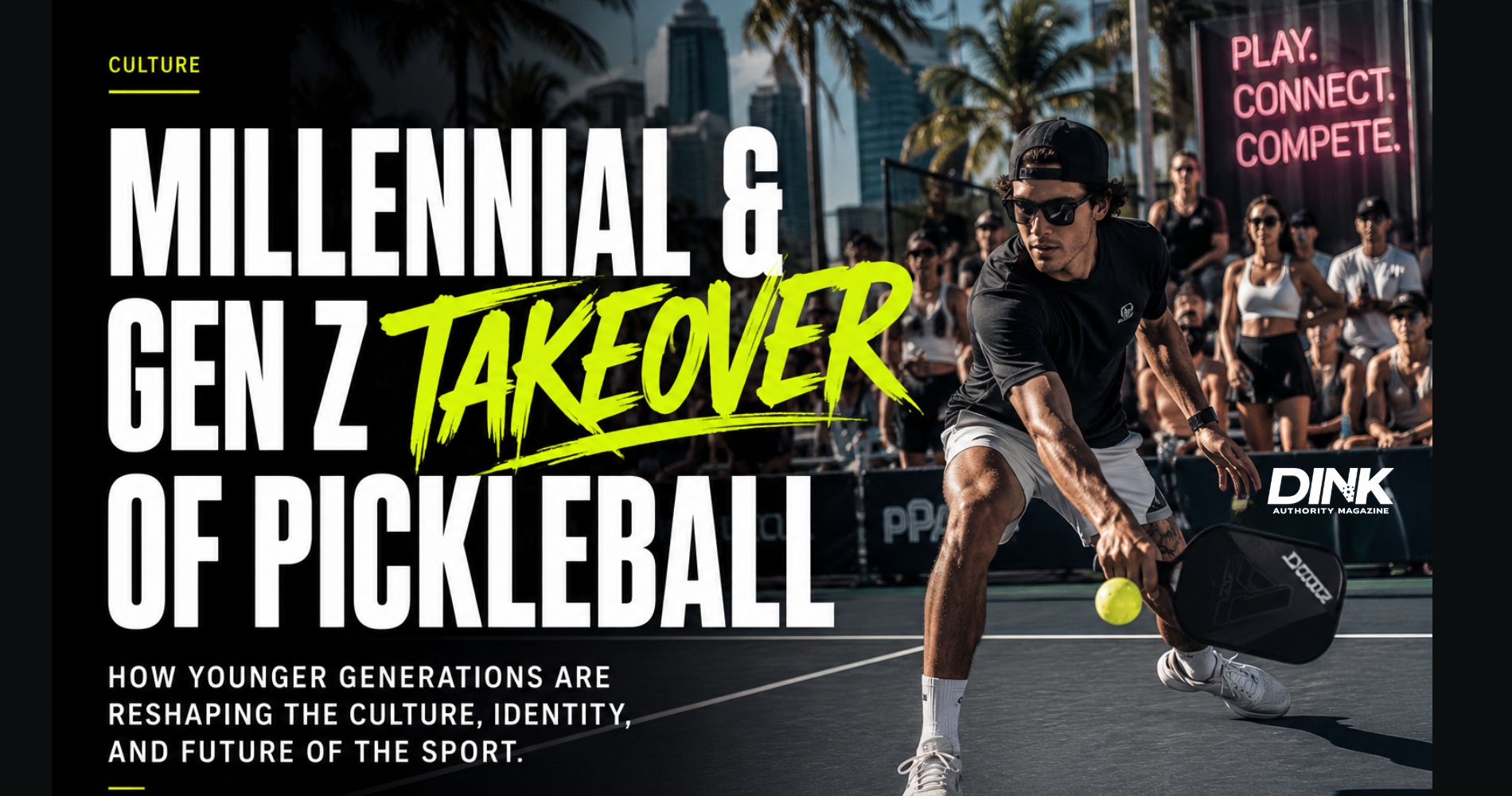
Millennial & Gen Z Takeover of Pickleball: How Younger Generations Are Reshaping the Sport
Millennial & Gen Z Takeover of Pickleball
How Younger Generations Are Transforming the Culture, Identity, and Future of the Sport
For years, pickleball carried a reputation that was impossible to ignore.
It was often labeled as a retirement sport — a recreational activity primarily associated with older adults and country club communities.
But that perception is rapidly changing.
Across the United States and increasingly around the world, Millennials and Gen Z are entering pickleball in massive numbers, reshaping not only the demographics of the sport, but also its culture, aesthetics, business ecosystem, and long-term future.
What was once viewed as a niche recreational game is now evolving into one of the most dynamic lifestyle-driven sports movements in modern culture.
And the transformation is accelerating.
Pickleball Is Becoming a Lifestyle Sport
One of the biggest reasons younger generations are embracing pickleball is because the sport fits perfectly into modern social behavior.
It is:
highly social,
easy to learn,
fast-paced,
accessible,
content-friendly,
and community-driven.
Unlike many traditional sports that require years of technical development before players can fully enjoy competition, pickleball creates instant engagement. New players can rally quickly, compete almost immediately, and become socially connected within minutes.
For Millennials and Gen Z — generations heavily shaped by digital life, remote work, social media, and the growing search for authentic real-world interaction — that accessibility is incredibly powerful.
Pickleball is no longer just exercise.
It is becoming:
social networking,
wellness culture,
entertainment,
competitive recreation,
creator content,
and community identity.
Social Media Changed Everything
The explosive rise of pickleball among younger audiences cannot be separated from the influence of social media.
Platforms like TikTok, Instagram, and YouTube have helped modernize the image of the sport through:
fast-paced rally clips,
dramatic hands battles,
lifestyle-oriented pickleball content,
creator collaborations,
fashion trends,
paddle reviews,
and viral tournament moments.
The sport photographs well.
It moves quickly.
It creates energy on camera.
That combination has made pickleball highly compatible with short-form content culture.
For younger audiences discovering the sport online, pickleball no longer feels slow or outdated.
It feels modern.
LOVE PICKLEBALL?
Get Dink Authority Magazine updates, new editions, pro stories and event alerts.
We respect your privacy. Unsubscribe anytime.
The Rise of Pickleball Culture
The modern pickleball movement is no longer confined to traditional clubs or retirement communities.
Today, the sport is rapidly expanding into:
urban entertainment venues,
rooftop courts,
college campuses,
luxury resorts,
nightlife-inspired pickleball concepts,
social leagues,
creator events,
and hybrid fitness communities.
This evolution is creating an entirely new identity around the game.
Younger players are not simply participating in pickleball.
They are building culture around it.
Fashion, music, branding, social experiences, travel, content creation, and influencer marketing are now becoming part of the ecosystem surrounding the sport.
That cultural shift is one of the strongest indicators that pickleball’s growth may have long-term staying power.
Why Millennials and Gen Z Are Driving Growth
The appeal of pickleball for younger generations goes far beyond the game itself.
The sport offers something many modern activities struggle to create:
real human interaction.
At a time when loneliness, screen fatigue, and digital isolation continue growing globally, pickleball provides a highly social environment where people can:
meet organically,
compete casually,
stay active,
and build community.
The barrier to entry is also significantly lower than many other sports.
Players do not need:
elite athletic backgrounds,
expensive equipment,
years of training,
or large teams to participate.
That accessibility allows pickleball to spread rapidly across different demographics and social groups.
Brands and Investors Are Paying Attention
The cultural evolution of pickleball is attracting serious business attention.
Major brands, investors, athletes, celebrities, and media companies are increasingly entering the space because they recognize something important:
Pickleball is no longer simply growing as a sport.
It is growing as a cultural ecosystem.
That distinction matters.
The combination of:
participation growth,
social media visibility,
lifestyle integration,
and multi-generational appeal
has positioned pickleball as one of the most commercially attractive sports markets in North America.
And younger generations are at the center of that momentum.
The Future of Pickleball May Be Defined by Culture
The most important transformation happening inside pickleball today is not just demographic.
It is cultural.
Millennials and Gen Z are redefining:
how the sport looks,
how it is marketed,
how it is consumed,
and how it integrates into everyday lifestyle.
The result is a sport that increasingly feels less like a traditional recreational activity — and more like a modern social movement.
If current trends continue, pickleball may evolve into far more than a competitive sport.
It may become one of the defining lifestyle and community-driven sports of the next decade.
And for the younger generations leading that movement, the appeal is clear:
Pickleball is not just something you play.
It is becoming something you belong to.
— Dink Authority Magazine
The Voice Of Pickleball™
Millennial & Gen Z Takeover of Pickleball
How Younger Generations Are Transforming the Culture, Identity, and Future of the Sport
For years, pickleball carried a reputation that was impossible to ignore.
It was often labeled as a retirement sport — a recreational activity primarily associated with older adults and country club communities.
But that perception is rapidly changing.
Across the United States and increasingly around the world, Millennials and Gen Z are entering pickleball in massive numbers, reshaping not only the demographics of the sport, but also its culture, aesthetics, business ecosystem, and long-term future.
What was once viewed as a niche recreational game is now evolving into one of the most dynamic lifestyle-driven sports movements in modern culture.
And the transformation is accelerating.
Pickleball Is Becoming a Lifestyle Sport
One of the biggest reasons younger generations are embracing pickleball is because the sport fits perfectly into modern social behavior.
It is:
highly social,
easy to learn,
fast-paced,
accessible,
content-friendly,
and community-driven.
Unlike many traditional sports that require years of technical development before players can fully enjoy competition, pickleball creates instant engagement. New players can rally quickly, compete almost immediately, and become socially connected within minutes.
For Millennials and Gen Z — generations heavily shaped by digital life, remote work, social media, and the growing search for authentic real-world interaction — that accessibility is incredibly powerful.
Pickleball is no longer just exercise.
It is becoming:
Current Issue

The Kings of Naples: Champions Take Center Stage in Dink Authority Magazine – May 2026
Read Now →
social networking,
wellness culture,
entertainment,
competitive recreation,
creator content,
and community identity.
Social Media Changed Everything
The explosive rise of pickleball among younger audiences cannot be separated from the influence of social media.
Platforms like TikTok, Instagram, and YouTube have helped modernize the image of the sport through:
fast-paced rally clips,
dramatic hands battles,
lifestyle-oriented pickleball content,
creator collaborations,
fashion trends,
paddle reviews,
and viral tournament moments.
The sport photographs well.
It moves quickly.
It creates energy on camera.
That combination has made pickleball highly compatible with short-form content culture.
For younger audiences discovering the sport online, pickleball no longer feels slow or outdated.
It feels modern.
LOVE PICKLEBALL?
Get Dink Authority Magazine updates, new editions, pro stories and event alerts.
We respect your privacy. Unsubscribe anytime.
The Rise of Pickleball Culture
The modern pickleball movement is no longer confined to traditional clubs or retirement communities.
Today, the sport is rapidly expanding into:
urban entertainment venues,
rooftop courts,
college campuses,
luxury resorts,
nightlife-inspired pickleball concepts,
social leagues,
creator events,
and hybrid fitness communities.
This evolution is creating an entirely new identity around the game.
Younger players are not simply participating in pickleball.
They are building culture around it.
Fashion, music, branding, social experiences, travel, content creation, and influencer marketing are now becoming part of the ecosystem surrounding the sport.

That cultural shift is one of the strongest indicators that pickleball’s growth may have long-term staying power.
Why Millennials and Gen Z Are Driving Growth
The appeal of pickleball for younger generations goes far beyond the game itself.
The sport offers something many modern activities struggle to create:
real human interaction.
At a time when loneliness, screen fatigue, and digital isolation continue growing globally, pickleball provides a highly social environment where people can:
meet organically,
compete casually,
stay active,
and build community.
The barrier to entry is also significantly lower than many other sports.
Players do not need:
elite athletic backgrounds,
expensive equipment,
years of training,
or large teams to participate.
That accessibility allows pickleball to spread rapidly across different demographics and social groups.
Brands and Investors Are Paying Attention
The cultural evolution of pickleball is attracting serious business attention.
Major brands, investors, athletes, celebrities, and media companies are increasingly entering the space because they recognize something important:
Pickleball is no longer simply growing as a sport.
It is growing as a cultural ecosystem.
That distinction matters.
The combination of:

participation growth,
social media visibility,
lifestyle integration,
and multi-generational appeal
has positioned pickleball as one of the most commercially attractive sports markets in North America.
And younger generations are at the center of that momentum.
The Future of Pickleball May Be Defined by Culture
The most important transformation happening inside pickleball today is not just demographic.
It is cultural.
Millennials and Gen Z are redefining:
how the sport looks,
how it is marketed,
how it is consumed,
and how it integrates into everyday lifestyle.
The result is a sport that increasingly feels less like a traditional recreational activity — and more like a modern social movement.
If current trends continue, pickleball may evolve into far more than a competitive sport.
It may become one of the defining lifestyle and community-driven sports of the next decade.
And for the younger generations leading that movement, the appeal is clear:
Pickleball is not just something you play.
It is becoming something you belong to.
— Dink Authority Magazine