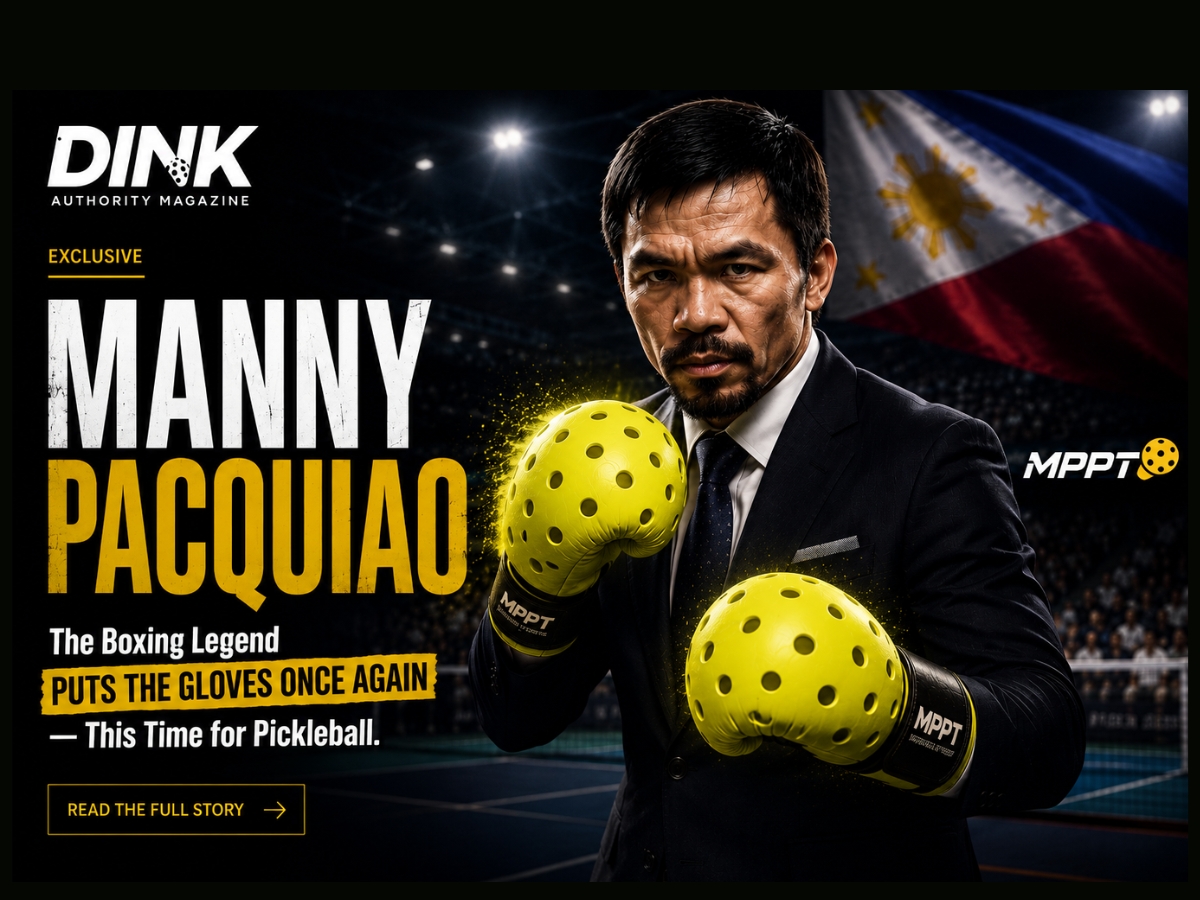
Manny Pacquiao and the Moment the Philippines Decided to Take Pickleball Seriously
Manny Pacquiao and the Moment the Philippines Decided to Take Pickleball Seriously
The man who conquered boxing now wants to build something completely different: a sports revolution around pickleball.
Some sports grow slowly.
Others suddenly find the right person.
In the Philippines, that person might be Manny Pacquiao.
For years, pickleball moved quietly through Asia as a growing curiosity. New courts here. Small communities there. Viral videos. Celebrities occasionally playing. A steady but relatively quiet rise, still far from the massive mainstream momentum seen today in the United States.
Then something changed when Pacquiao decided to get involved.
Because Manny is not simply another celebrity supporting a trend.
Manny Pacquiao changes ecosystems.
And that is exactly what could begin happening with the launch of the Maharlika Pilipinas Pickleball Tour, the new professional league project backed by one of the most influential athletes in Asian sports history.
The idea does not feel improvised.
Eight regional franchises.
City representation.
Local identity.
Team competition.
Major prize money.
And most importantly, a structure designed to create belonging.
That is not accidental.
In many ways, it mirrors the same philosophy Pacquiao used to help transform Philippine basketball through the MPBL, a league that connected entire communities through regional teams and restored territorial identity to the sport.
Now he wants to do something similar with pickleball.
LOVE PICKLEBALL?
Get Dink Authority Magazine updates, new editions, pro stories and event alerts.
We respect your privacy. Unsubscribe anytime.
And that is where the story becomes more than simply interesting.
Because this could become a turning point for the sport in Asia.
While the United States built pickleball around clubs, professional tours, television events, and elite competition, the Philippines appears to be betting on something different: community culture, regional pride, and popular storytelling.
More emotional.
More territorial.
More deeply connected to identity.
And perhaps because of that, incredibly powerful.
What makes this even more fascinating is that Pacquiao is not approaching the sport from a distance.
Local reports indicate he recently started playing pickleball alongside his wife, Jinkee, inside his private gym in General Santos City. Soon after, he publicly began discussing leagues, expansion, and competitive development.
That detail matters.
Because it signals something very different from a superficial investment.
It signals genuine curiosity.
Real interest.
And historically, pickleball has grown exactly this way: one person discovers the game, falls in love with it, and eventually builds a community around it.
The difference this time is that the person discovering the sport is Manny Pacquiao.
And when Manny Pacquiao decides to build something, the world pays attention.
Suddenly, the Philippines enters the global pickleball conversation with surprising speed.
Not by accident.
Not because of hype.
But because one of the most recognizable athletes on the planet publicly decided to invest his energy into the sport.
That changes perception.
It attracts investors.
Activates media.
Creates legitimacy.
And opens doors that normally take years to unlock.
But perhaps the most important thing behind all of this is the message it sends.
Because global pickleball growth no longer looks the way it did three years ago.
The sport is no longer only about recreation.
It is becoming industry.
Platform.
Entertainment.
Cultural identity.
And while many people are still trying to figure out how big pickleball can become, Manny Pacquiao appears to have already made a far more aggressive decision:
Not to wait and see what happens.
But to become part of the people building it.
Manny Pacquiao and the Moment the Philippines Decided to Take Pickleball Seriously
The man who conquered boxing now wants to build something completely different: a sports revolution around pickleball.
Some sports grow slowly.
Others suddenly find the right person.
In the Philippines, that person might be Manny Pacquiao.
For years, pickleball moved quietly through Asia as a growing curiosity. New courts here. Small communities there. Viral videos. Celebrities occasionally playing. A steady but relatively quiet rise, still far from the massive mainstream momentum seen today in the United States.
Then something changed when Pacquiao decided to get involved.
Because Manny is not simply another celebrity supporting a trend.
Manny Pacquiao changes ecosystems.
And that is exactly what could begin happening with the launch of the Maharlika Pilipinas Pickleball Tour, the new professional league project backed by one of the most influential athletes in Asian sports history.
The idea does not feel improvised.
Eight regional franchises.
City representation.
Local identity.
Current Issue
The Kings of Naples: Champions Take Center Stage in Dink Authority Magazine – May 2026
Read Now →
Team competition.
Major prize money.
And most importantly, a structure designed to create belonging.
That is not accidental.
In many ways, it mirrors the same philosophy Pacquiao used to help transform Philippine basketball through the MPBL, a league that connected entire communities through regional teams and restored territorial identity to the sport.
Now he wants to do something similar with pickleball.
LOVE PICKLEBALL?
Get Dink Authority Magazine updates, new editions, pro stories and event alerts.
We respect your privacy. Unsubscribe anytime.
And that is where the story becomes more than simply interesting.
Because this could become a turning point for the sport in Asia.
While the United States built pickleball around clubs, professional tours, television events, and elite competition, the Philippines appears to be betting on something different: community culture, regional pride, and popular storytelling.
More emotional.
More territorial.
More deeply connected to identity.
And perhaps because of that, incredibly powerful.
What makes this even more fascinating is that Pacquiao is not approaching the sport from a distance.

Local reports indicate he recently started playing pickleball alongside his wife, Jinkee, inside his private gym in General Santos City. Soon after, he publicly began discussing leagues, expansion, and competitive development.
That detail matters.
Because it signals something very different from a superficial investment.
It signals genuine curiosity.
Real interest.
And historically, pickleball has grown exactly this way: one person discovers the game, falls in love with it, and eventually builds a community around it.
The difference this time is that the person discovering the sport is Manny Pacquiao.
And when Manny Pacquiao decides to build something, the world pays attention.
Suddenly, the Philippines enters the global pickleball conversation with surprising speed.
Not by accident.
Not because of hype.
But because one of the most recognizable athletes on the planet publicly decided to invest his energy into the sport.
That changes perception.

It attracts investors.
Activates media.
Creates legitimacy.
And opens doors that normally take years to unlock.
But perhaps the most important thing behind all of this is the message it sends.
Because global pickleball growth no longer looks the way it did three years ago.
The sport is no longer only about recreation.
It is becoming industry.
Platform.
Entertainment.
Cultural identity.
And while many people are still trying to figure out how big pickleball can become, Manny Pacquiao appears to have already made a far more aggressive decision:
Not to wait and see what happens.
But to become part of the people building it.