
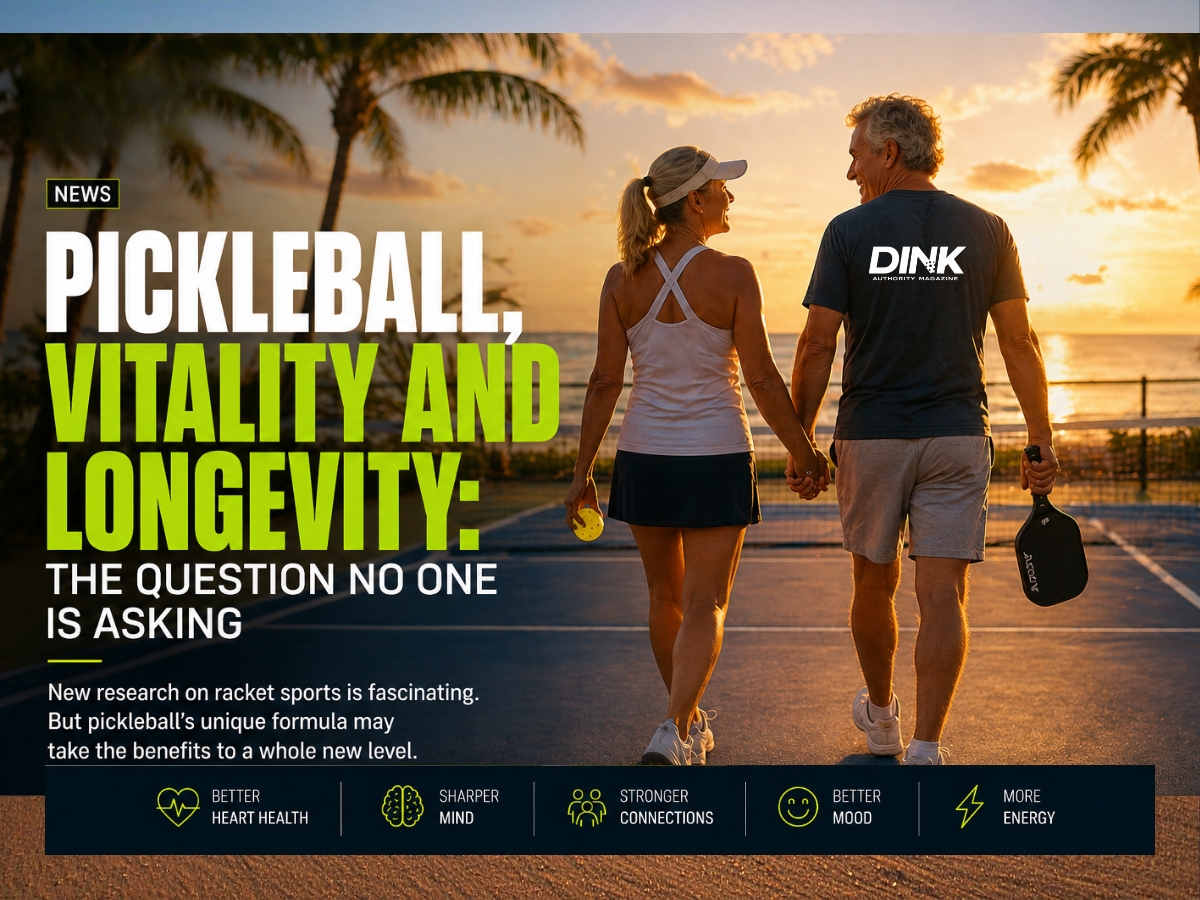
Could Pickleball Be the Secret to Longevity? The Vitality Question No One Is Asking
Pickleball, Vitality… and the Question No One Is Asking
For years, several studies have suggested that racket sports may be among the activities most strongly associated with longevity.
One of the most frequently cited analyses — the Copenhagen City Heart Study — found that people who played tennis lived significantly longer than those with sedentary lifestyles.
But the explanation goes far beyond simple exercise.
Tennis combines intermittent cardiovascular activity, constant decision-making, mind-body coordination, and a strong social component. That combination appears to be a particularly powerful formula for both physical and mental health.
Now, the explosive growth of pickleball raises an interesting question.
What happens when a sport emerges that shares many of those same benefits…
but people play it far more often?
Pickleball contains many of the same ingredients that make tennis special:
• cardiovascular activity
• quick reflexes and decision-making
• hand-eye coordination
• social interaction
• friendly competition
But it adds a factor that may be even more important.
Adherence.
The game is more accessible, easier on the joints, and surprisingly social. Because of that, many people don’t just play occasionally.
They play frequently.
LOVE PICKLEBALL?
Get Dink Authority Magazine updates, new editions, pro stories and event alerts.
We respect your privacy. Unsubscribe anytime.
It’s not unusual to find recreational players spending two or even three hours on the court almost every day of the week.
That changes the equation.
General health guidelines often recommend about one hour of moderate physical activity three to four times per week to generate measurable cardiovascular and metabolic benefits.
But many pickleball players far exceed that amount of time.
Not because they feel obligated to train.
But because they enjoy doing it.
And when an activity is enjoyable, it becomes sustainable.
In health science, consistency often matters more than intensity.
That’s why racket sports appear to have such a unique effect: they combine movement, mental challenge, and social connection in a way that keeps people coming back again and again.
And when someone stays consistently active, noticeable changes often begin to appear:
• improved cardiovascular health
• better metabolism
• lower stress levels
• improved mood
• increased self-confidence
• greater daily energy
All of that can be summarized in a word that appears more and more often in conversations about well-being:
vitality.
When someone starts moving again, regains physical condition, socializes, and feels competitive once more, it’s common for them to experience a broader increase in energy, confidence, and overall well-being.
Many pickleball players describe it this way:
they feel more active, more alert, more alive.
And that leads to an interesting thought experiment.
If tennis has shown longevity benefits with just a few hours of play per week…
what might happen when a sport with similar characteristics is played two or three times more often?
Long-term studies do not yet exist to answer that question with precision.
But the logic is difficult to ignore.
Because for the millions of people now filling pickleball courts around the world…
the experiment is already underway.
Pickleball, Vitality… and the Question No One Is Asking
For years, several studies have suggested that racket sports may be among the activities most strongly associated with longevity.
One of the most frequently cited analyses — the Copenhagen City Heart Study — found that people who played tennis lived significantly longer than those with sedentary lifestyles.
But the explanation goes far beyond simple exercise.
Tennis combines intermittent cardiovascular activity, constant decision-making, mind-body coordination, and a strong social component. That combination appears to be a particularly powerful formula for both physical and mental health.
Now, the explosive growth of pickleball raises an interesting question.
What happens when a sport emerges that shares many of those same benefits…
but people play it far more often?
Pickleball contains many of the same ingredients that make tennis special:
• cardiovascular activity
• quick reflexes and decision-making
• hand-eye coordination
• social interaction
• friendly competition
Current Issue

Domenika Turkovic: Fighting Her Own Demons
Read Now →
But it adds a factor that may be even more important.
Adherence.
The game is more accessible, easier on the joints, and surprisingly social. Because of that, many people don’t just play occasionally.
They play frequently.
LOVE PICKLEBALL?
Get Dink Authority Magazine updates, new editions, pro stories and event alerts.
We respect your privacy. Unsubscribe anytime.
It’s not unusual to find recreational players spending two or even three hours on the court almost every day of the week.
That changes the equation.
General health guidelines often recommend about one hour of moderate physical activity three to four times per week to generate measurable cardiovascular and metabolic benefits.
But many pickleball players far exceed that amount of time.
Not because they feel obligated to train.

But because they enjoy doing it.
And when an activity is enjoyable, it becomes sustainable.
In health science, consistency often matters more than intensity.
That’s why racket sports appear to have such a unique effect: they combine movement, mental challenge, and social connection in a way that keeps people coming back again and again.
And when someone stays consistently active, noticeable changes often begin to appear:
• improved cardiovascular health
• better metabolism
• lower stress levels
• improved mood
• increased self-confidence
• greater daily energy
All of that can be summarized in a word that appears more and more often in conversations about well-being:
vitality.
When someone starts moving again, regains physical condition, socializes, and feels competitive once more, it’s common for them to experience a broader increase in energy, confidence, and overall well-being.

Many pickleball players describe it this way:
they feel more active, more alert, more alive.
And that leads to an interesting thought experiment.
If tennis has shown longevity benefits with just a few hours of play per week…
what might happen when a sport with similar characteristics is played two or three times more often?
Long-term studies do not yet exist to answer that question with precision.
But the logic is difficult to ignore.
Because for the millions of people now filling pickleball courts around the world…
the experiment is already underway.